Waiting until a named storm is approaching is one of the hardest times to discover loose tiles, cracked sealant, soft decking, or a small leak that has been hiding under the surface. For homeowners in Miami-Dade, Broward, Palm Beach, and Monroe County, a pre-season roof inspection is one of the most practical steps you can take before tropical weather arrives. South Florida roofs deal with wind-driven rain, salt air, high humidity, heavy sun exposure, and fast-moving storm systems. A professional Miami roof inspection helps identify weak points early, document the current condition of your roof, and give you a clear repair or replacement plan before the calendar gets busy.
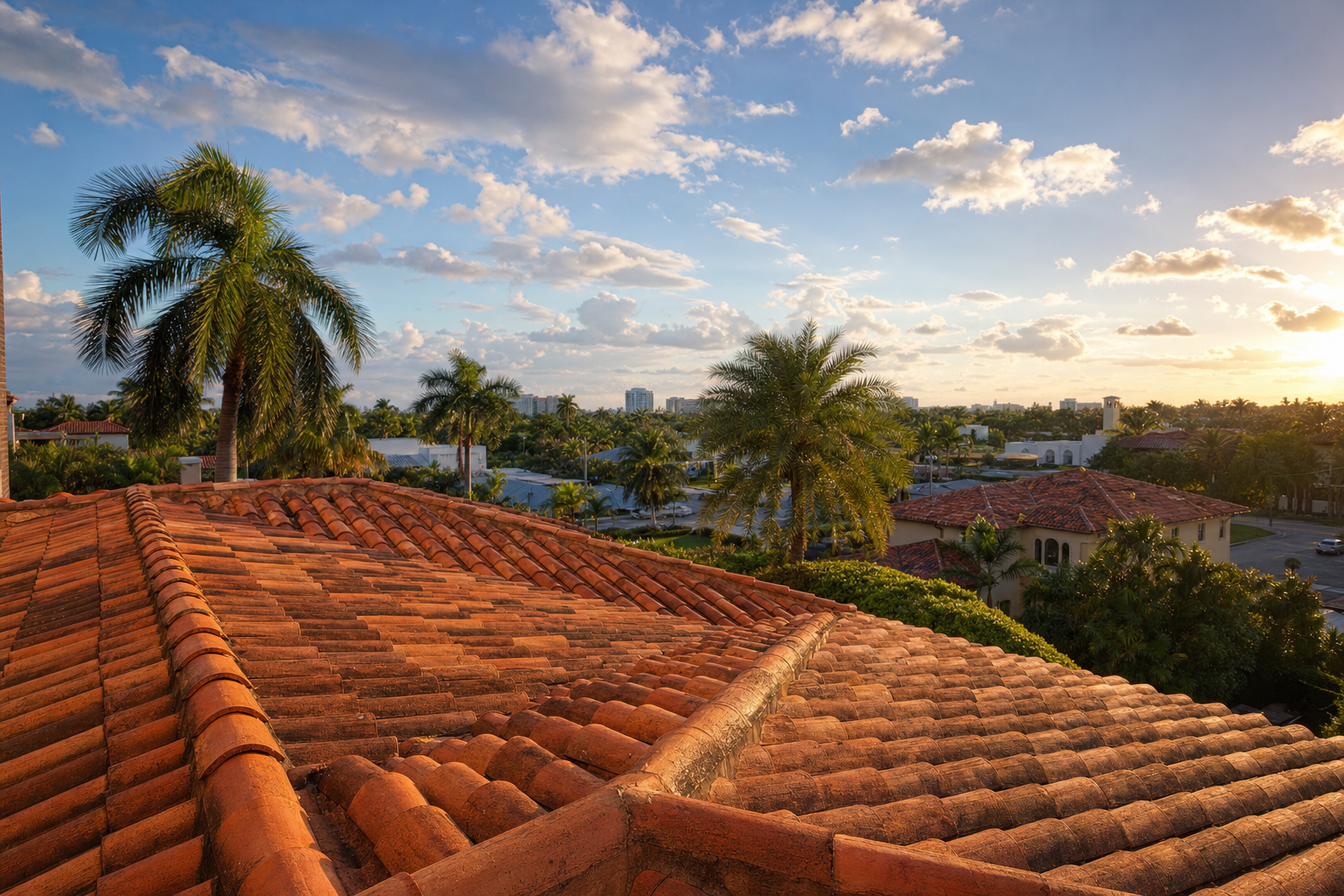
Why a Pre-Season Roof Inspection Matters in South Florida
The Atlantic hurricane season officially runs from June 1 through November 30, with storms capable of bringing high winds, heavy rain, flying debris, and prolonged moisture to South Florida communities. [1]
For a roof, the problem is not only the strongest wind gust. It is the combination of pressure, rain, and existing wear. A Miami roof inspection before hurricane season should focus on both visible roof damage and hidden moisture risks.
A roof that looks “fine” from the driveway may still have:
- Lifted shingles or tiles
- Cracked mortar or loose ridge caps
- Damaged flashing around vents, valleys, skylights, or chimneys
- Deteriorated sealant
- Rusted metal components from salt-air exposure
- Soft or stained decking under old leaks
- Clogged roof drainage points
- Missing fasteners or loose edge metal
In Miami-Dade County and parts of South Florida, roofing systems are also expected to perform under strict wind-resistance conditions because of the High-Velocity Hurricane Zone building requirements. The High-Velocity Hurricane Zone, or HVHZ, is a Florida Building Code designation for Miami-Dade and Broward areas with stricter wind-resistance requirements. Miami-Dade County’s Product Control system is one way roofing materials and assemblies are evaluated for code compliance in this region. [2]
A pre-season inspection gives you time to make decisions before there is a named storm approaching. It also helps create a clean record of your roof’s condition before hurricane season activity increases.
Miami Roof Inspection Checklist: What Contractors Should Check Before Hurricane Season
You do not need to climb on your roof to be proactive. In fact, homeowners should avoid walking on tile, metal, or steep roofing systems without proper training and safety equipment. But you can understand what a licensed roofing contractor should be checking during a hurricane-season inspection.
A general roof inspection may focus on age, wear, visible leaks, and routine maintenance. A hurricane roof inspection in Miami should go further by looking closely at wind uplift points, roof edges, drainage, flashing, penetrations, and documentation that may matter before and after tropical weather.
1. Roof Covering Condition
The roof covering is the visible outer layer: shingles, tile, metal panels, or another approved roofing material. During an inspection, the contractor should look for signs of movement, cracking, slipping, punctures, or missing pieces.
For asphalt shingles, warning signs may include curling edges, granule loss, exposed mat, lifted tabs, or missing shingles.
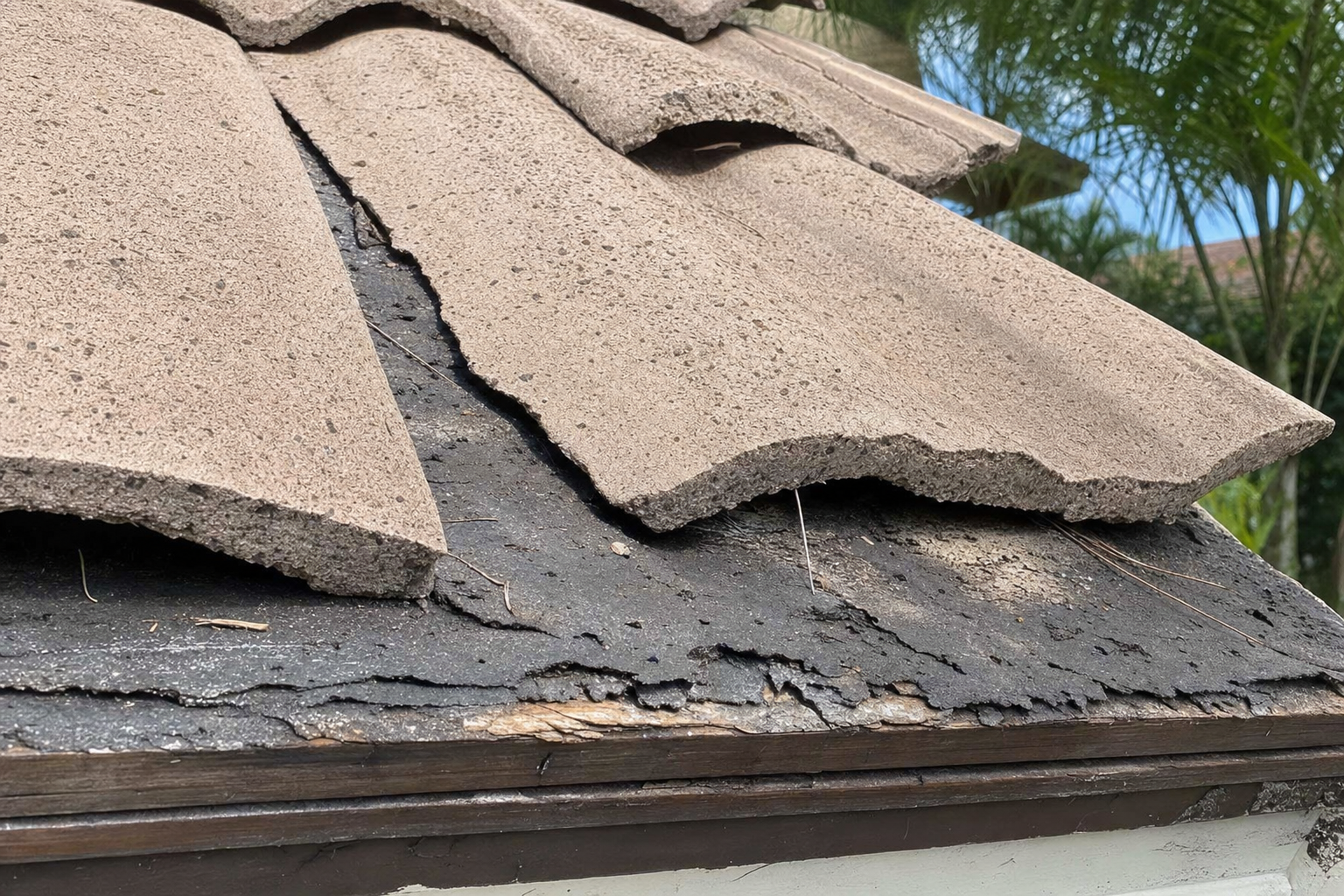
For tile roofs, warning signs may include cracked tiles, displaced tiles, broken ridge pieces, or exposed underlayment. Roof underlayment is the water-resistant layer installed beneath the visible roof covering.
For metal roofs, warning signs may include loose panels, backed-out fasteners, corrosion, open seams, or failed sealant.
The goal is to identify anything that could allow water intrusion or become more vulnerable under wind pressure.
2. Flashing, Valleys, and Penetrations
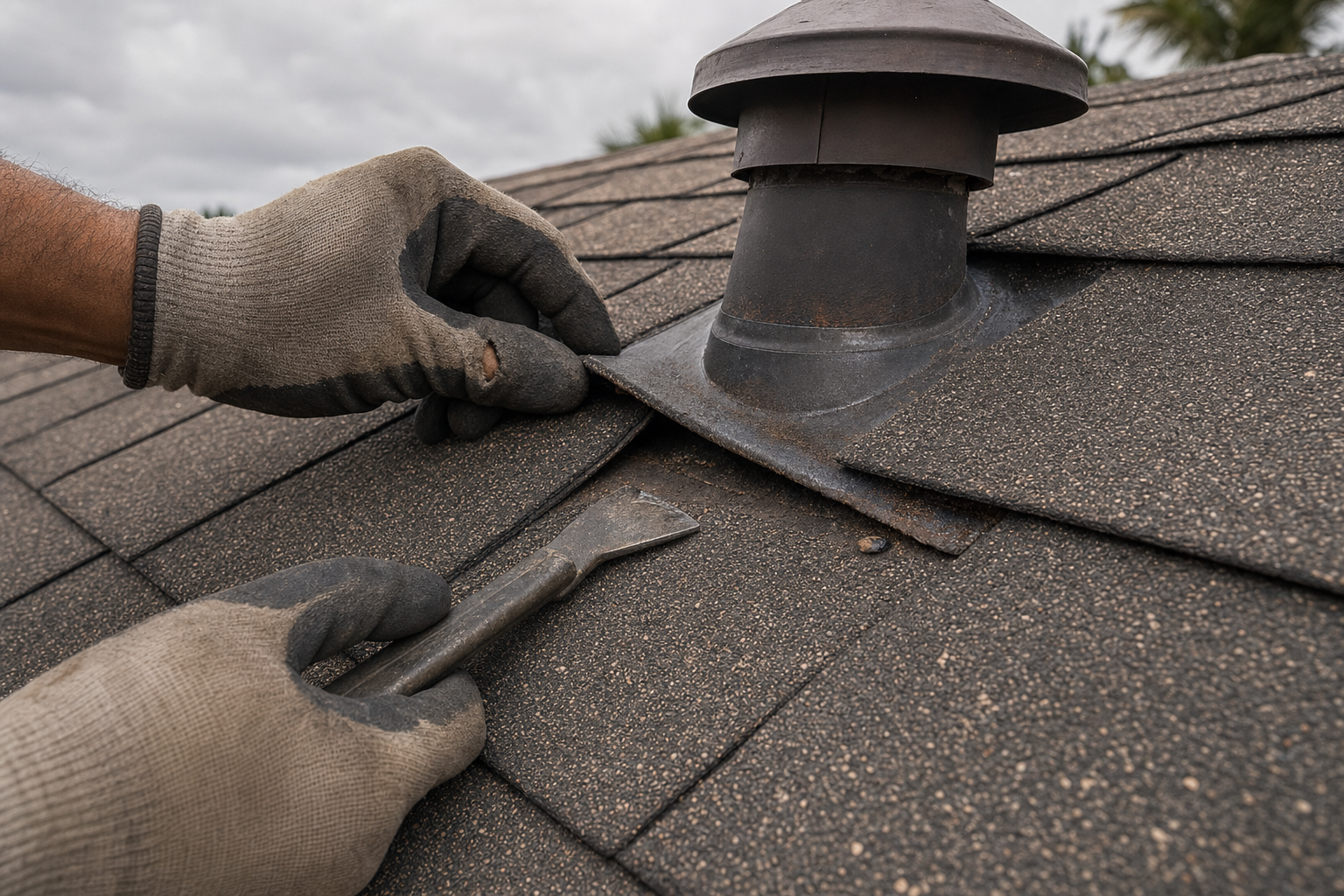
Many roof leaks begin around the areas where the roof changes direction or where something passes through it. Flashing is metal or waterproofing material installed around roof transitions and penetrations to direct water away from vulnerable areas.
These areas include:
- Plumbing vents
- Exhaust vents
- Roof valleys
- Chimneys
- Skylights
- Wall-to-roof transitions
- Satellite or equipment attachment points
Flashing is the metal or waterproofing detail that helps move water away from these vulnerable areas. If flashing is bent, rusted, loose, poorly sealed, or missing, wind-driven rain can find a path inside. This is one of the most important parts of a Miami roof inspection because wind-driven rain often enters through small flashing failures.
3. Roof Edges and Wind Uplift Points
Wind uplift happens when moving air creates pressure that can pull upward on roofing materials. Roof edges, corners, eaves, and ridges are especially important because wind forces are often stronger at these transition points.
During a Miami roof inspection, the contractor should look for loose edge metal, separated fascia transitions, lifted shingles, unstable ridge caps, and open gaps where wind can get underneath the roof covering.
The National Hurricane Center defines hurricane strength beginning at 74 mph sustained winds on the Saffir-Simpson Hurricane Wind Scale. Hurricane-force winds begin at 74 miles per hour on the Saffir-Simpson Hurricane Wind Scale, which classifies hurricanes by sustained wind speed. Even lower-end hurricane winds can expose weak roof details if existing damage is present. [3]
4. Interior Warning Signs
A roof inspection should not stop outside. Interior evidence often confirms whether the roof system has already allowed moisture through.
Look inside your home for:
- Ceiling stains
- Peeling paint near upper walls
- Musty odors in attic areas
- Damp insulation
- Light visible through roof decking
- Water marks around vents or ceiling fixtures
If you notice interior signs, document them with dated photos and schedule a professional inspection. Small stains can indicate a larger roof issue, especially after repeated wind-driven rain events.
5. Gutters, Drainage, Fascia, and Soffit
Drainage matters during tropical rain. Clogged gutters, blocked scuppers, backed-up drainage points, loose fascia, and damaged soffit can worsen water intrusion around roof edges and exterior transitions.
A contractor should check whether water has a clear path off the roof and away from vulnerable areas. Homeowners can also look from the ground for sagging gutters, visible debris, staining, or signs that water is overflowing where it should not.
What to Document Before Hurricane Season
Good documentation helps homeowners make better decisions. It can also support communication with your insurance carrier if storm damage occurs later. Your Miami roof inspection report should include photos, roof age notes, visible damage, and repair recommendations. A roofing contractor should provide clear notes and photos, but homeowners can also keep their own records.
Before hurricane season, gather:
- Date-stamped photos of each roof slope, if safely visible from the ground
- Photos of ceilings and attic areas if there are old stains
- Prior roof repair invoices
- Roof replacement records, permits, or warranties
- Insurance policy information
- Notes on roof age and known problem areas
- Photos of gutters, fascia, soffit, and roof edges
After a storm, do not assume every leak or missing material is automatically storm damage. Roof age, maintenance history, installation quality, and pre-existing wear can all matter. A licensed roofing contractor can inspect and document visible roof conditions, but your insurance carrier determines coverage under your policy.
Avoid any contractor who promises guaranteed insurance approval, says your roof will be “free,” or pressures you into signing documents before you understand the work. Florida has also changed rules around Assignment of Benefits and property insurance litigation in recent years, so homeowners should be careful about what they sign and should communicate directly with their insurer when making a claim. [4]
Roof Age, Salt Air, and Miami Wear Patterns
South Florida roofs age differently than roofs in cooler, inland climates. Miami-area homes deal with intense UV exposure, high humidity, tropical rain, and salt air near coastal zones. These conditions can accelerate wear on sealants, fasteners, metal flashing, underlayment, and exposed components.
Roof age matters because older systems may have less remaining service life even if there is no major visible damage from the street. In Florida, insurers may request inspections or additional documentation for older roofs, and homeowners should be prepared to show roof condition clearly during renewal or underwriting conversations. Florida law also limits certain insurer actions based only on roof age when an inspection shows the roof has sufficient remaining useful life. [5]
A professional inspection can help answer practical questions:
- Is the roof repairable, or is replacement more realistic?
- Are there isolated problem areas or system-wide wear?
- Is the underlayment aging beneath a tile roof?
- Are there salt-air corrosion issues on metal details?
- Are previous repairs holding up?
- Is there evidence of active leaking?
For homeowners in Miami-Dade, Broward, Palm Beach, and Monroe County, this matters because storm season can make small roofing issues worse quickly.
What a Roof Inspection Does Not Guarantee
A roof inspection documents visible roof conditions; it does not determine insurance coverage. It also does not guarantee that a roof will survive a future storm without damage.
That distinction matters. A South Florida roof inspection can reduce uncertainty, identify repair needs, and create useful documentation before storms increase. But hurricanes can bring changing wind direction, debris impact, heavy rainfall, and conditions that no inspection can fully predict.
A roofing contractor can explain visible roof concerns, repair options, replacement options, and documentation. Your insurance carrier determines coverage based on your policy, the cause of damage, and the claim review process.
When to Schedule a Roof Inspection Before a Storm
The best time to schedule a roof inspection is before a named storm is in the forecast. In May or early June, roofing contractors can usually provide a calmer assessment, recommend repairs, and help you understand timing. Scheduling a Miami roof inspection in May or early June gives homeowners more time to complete repairs before storms increase.
Once a storm is approaching, the focus often shifts to immediate safety and emergency protection. Materials may be harder to source, schedules tighten, and homeowners have less time to compare options.
A smart inspection schedule for South Florida homeowners looks like this:
- May to early June: pre-season roof inspection and maintenance planning
- During hurricane season: check after major wind or rain events from the ground
- After a storm: schedule a professional inspection if you see missing materials, leaks, debris impact, or new interior stains
- Before insurance renewal: request updated roof documentation if your roof is older or has had repairs
If a contractor finds damage, ask for a written scope of work, photos, and a clear explanation of repair vs. replacement options. A quality roofing estimate should explain what is being repaired, why it matters, and what materials or code requirements apply.
FAQ: Miami Roof Inspection Before Hurricane Season
When should I schedule a Miami roof inspection before hurricane season?
Schedule a Miami roof inspection in May or early June when possible, before named storms create emergency demand and reduce repair scheduling flexibility. Most South Florida homeowners should consider a professional roof inspection at least once a year, especially before hurricane season. You should also schedule an inspection after a major wind event, visible roof damage, interior water stain, or roof leak.
What should a hurricane roof inspection include?
A hurricane roof inspection should include the roof covering, flashing, valleys, penetrations, roof edges, drainage areas, interior leak signs, and photo documentation. A licensed contractor should also look for signs of wind uplift risk, aging underlayment, loose materials, and areas where wind-driven rain could enter.
Is a roof inspection required before hurricane season in Miami?
A roof inspection is not always legally required before hurricane season, but it is a practical step for identifying repair needs and documenting roof condition before storms. If your roof is older, has prior repairs, or has shown signs of leaking, a pre-season inspection can help you make decisions before emergency demand increases.
Can I inspect my own roof before hurricane season?
You can check for warning signs from the ground, inside the attic, and around ceilings, but avoid climbing on the roof. Tile roofs can crack under foot traffic, and storm-season inspections require safety training. A licensed roofing contractor can assess roof covering, flashing, uplift points, drainage, and leak risks more thoroughly.
What is wind uplift?
Wind uplift is upward pressure that can pull roofing materials away from the roof deck during strong winds. Edges, corners, ridges, and loose materials are common concern areas. If wind gets under a lifted shingle, tile, or metal edge, damage can spread.
Should I repair small roof issues before hurricane season?
Yes, small roof issues should be reviewed before hurricane season. A cracked tile, loose shingle, failed sealant joint, clogged drainage point, or open flashing area may allow wind-driven rain into the home. A contractor can tell you whether a minor repair is appropriate or whether the roof has broader age-related concerns.
Do roof inspection photos help with insurance?
Photos and written inspection notes can help establish your roof’s condition before and after a storm. They do not guarantee coverage or claim approval. Your insurance carrier makes coverage decisions based on your policy, the cause of damage, and their claim review process.
What roof problems are most important before a hurricane?
Loose roofing materials, failed flashing, open roof edges, cracked tiles, lifted shingles, clogged drainage, and active leaks should be reviewed before hurricane season. Wind-driven rain can enter through small failures in flashing, roof edges, valleys, and penetrations.
Need a Miami Roof Inspection Before Hurricane Season?
If the inspection finds loose materials, active leaks, aging underlayment, drainage concerns, or roof edges that need attention, Duke Contractors can explain repair and replacement options before storm demand increases.
For homeowners who already see signs of Florida storm roof damage, scheduling an inspection early can help clarify whether you need routine maintenance, Miami roof repair, a roofing estimate in Miami, or storm damage roof repair in Miami.
Closing CTA
If you live in Miami-Dade, Broward, Palm Beach, Monroe County, or anywhere in South Florida, now is the right time to schedule a Miami roof inspection before hurricane season gets active. Duke Contractors provides practical roof inspections, roofing estimates, and repair or replacement guidance for homeowners who want clear answers without pressure. Schedule a consultation today and get your roof checked before the next storm system is on the radar.
References
- NOAA National Hurricane Center — Tropical Cyclone Climatology / Atlantic hurricane season dates ↩
- Miami-Dade County Product Control / Florida Building Code High-Velocity Hurricane Zone roofing requirements ↩
- NOAA National Hurricane Center — Saffir-Simpson Hurricane Wind Scale ↩
- Florida Office of Insurance Regulation — Property insurance reforms / Assignment of Benefits consumer information ↩
- Florida Statutes Section 627.7011 — roof age and remaining useful life provisions ↩
