A South Florida roof rarely fails all at once. For many homeowners, the roof repair vs replacement decision starts with one leak. More often, the question starts with a stain on the ceiling, a few loose tiles, lifted shingles after a windy week, or ponding water on a flat commercial roof. The right answer depends on age, roof type, damage pattern, code requirements, and how much useful life is left. For homeowners in Miami-Dade, Broward, Palm Beach, and Monroe County, the choice also has to account for hurricane exposure, salt air, UV, and wind-driven rain. Here is a practical way to think through the decision before you request a roofing estimate.
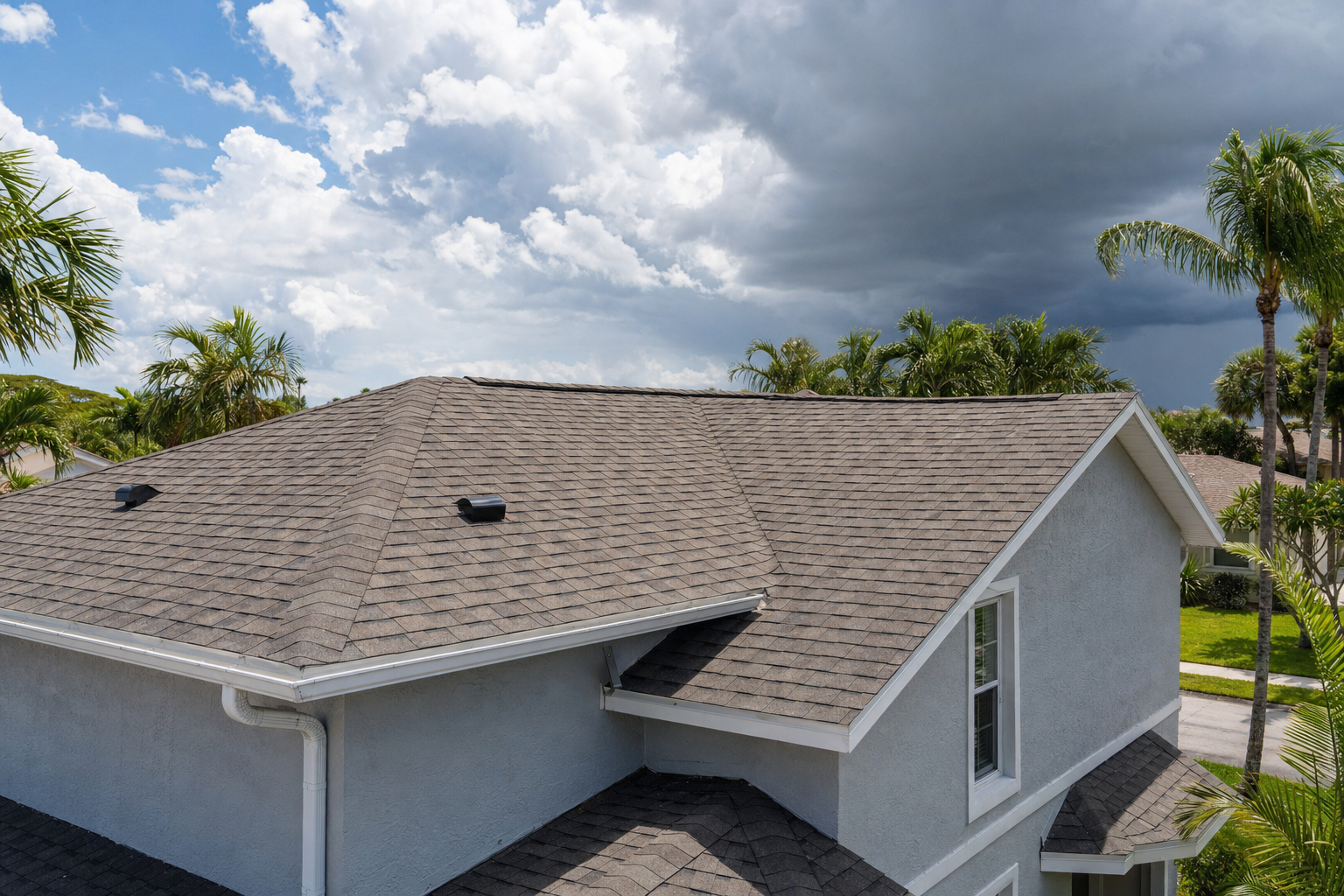
Roof Repair vs Replacement: Quick Decision Checklist
| Repair may fit when… | Replacement may fit when… | | — | — | | Damage is isolated to one area | Leaks or damage appear in multiple areas | | The surrounding roof system still has useful life | Materials are brittle, worn, or near the end of service life | | Flashing, vent boots, tiles, shingles, or seams can be corrected cleanly | Underlayment, decking, drainage, or system-wide components are failing | | The repair addresses the cause, not just the visible symptom | Similar repairs keep returning after storms or heavy rain | | The roof inspection documents a limited scope | The inspection shows widespread storm roof damage or age-related failure |
Roof repair is usually strongest when damage is isolated and the surrounding roof system still has useful life. Roof replacement becomes more likely when damage is widespread, recurring, or tied to aging system components.
Start With the Scope of the Damage
A roof repair usually makes sense when the problem is isolated and the rest of the roof system is still performing. In a roof repair vs replacement evaluation, examples include a small flashing leak, a few cracked roof tiles, a localized shingle blow-off, a damaged vent boot, or a limited section of membrane damage on a flat roof. Homeowners comparing South Florida roof repair options should start with the actual damage pattern, not the fear that every leak means a full replacement.
Replacement becomes more likely when the problem is spread across the roof. Multiple leaks in different rooms, widespread granule loss, brittle shingles, large areas of cracked tile, recurring flat-roof ponding, or rotten decking can point to system-wide failure instead of a single repair point. Ponding water means water remains on a flat roof after rainfall because drainage is not clearing properly.
A simple rule: if the roof has one clear problem area, inspect for repair. If the roof has several unrelated problem areas, inspect for remaining service life.
Factor in South Florida Weather
South Florida roofs deal with more than normal aging. UV exposure dries out asphalt shingles and roof membranes. Salt air can speed corrosion around fasteners, metal flashings, and roof penetrations. Tropical systems can push rain under lifted edges, loose tiles, poorly sealed vents, and weak flashing.
Category 1 hurricane winds are 74-95 mph, and the National Hurricane Center notes that even Category 1 winds can damage roof coverings, shingles, siding, and gutters. [1]
That does not mean every storm calls for replacement. It means the inspection should look beyond the obvious leak. A roof may need only a targeted repair, but the repair decision should be based on the full roof surface, not just the stain inside the home. If damage appears after a tropical system, a hurricane roof inspection can help separate storm roof damage from older wear.
Consider Roof Age and Material
Age matters, but it is not the only factor. A 7-year-old roof with one flashing issue may be a repair candidate. A 22-year-old roof with recurring leaks, brittle materials, and worn underlayment may not be worth chasing with repeated repairs. Underlayment is the water-shedding layer beneath tile, shingles, or metal, and its condition can change the roof repair vs replacement answer even when the surface looks acceptable.
Asphalt Shingle Roofs
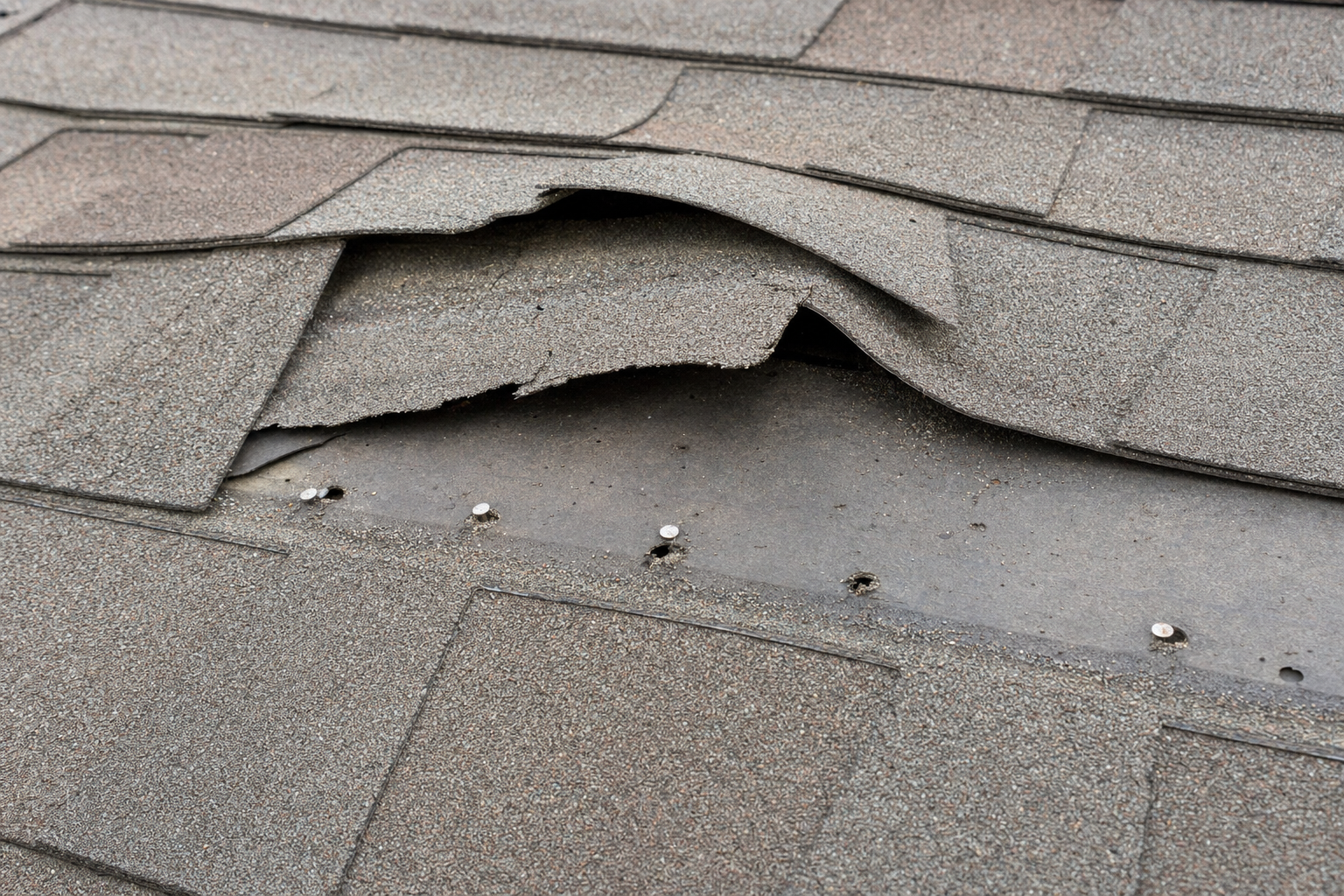
For asphalt shingle roofs, look for curling, missing granules, lifted tabs, soft decking, and repeated nail pops. If the damage is limited, repair may work. If granule loss, brittleness, and lifted tabs are widespread, replacement may be more practical.
Tile Roofs
For tile roofs, the visible tile is only part of the system. Cracked tiles, slipped tiles, deteriorated underlayment, and failed flashing all matter. Flashing is the metal or waterproofing detail around roof transitions, walls, vents, valleys, and penetrations.
Metal Roofs
For metal roofs, corrosion, fastener wear, panel movement, and sealant failure should be checked. Small sealant or fastener issues may be repairable, but widespread corrosion or panel movement can point toward a larger scope.
Flat Roofs
For commercial flat roofs, pay close attention to seams, penetrations, UV wear, blistering, drainage, wet insulation, and ponding water. Flat roof repair may help when the membrane is still sound, but recurring leaks, saturated insulation, failing seams, or poor drainage across large sections can make replacement more likely.
Miami-Dade and Broward County are part of Florida’s High-Velocity Hurricane Zone, or HVHZ, where roofing work is subject to stricter wind and product-approval requirements than many other areas. [2] Roof assemblies and rooftop structures are also governed by Florida Building Code requirements that affect how roof systems are specified and installed. [3]
Compare Repair Cost to Remaining Life
A repair is not automatically the cheaper decision if it only buys a few months. The roof repair vs replacement question should include cost, but it should also include remaining service life. Ask two practical questions:
- How much roof life is realistically left?
- Is this repair solving the cause or only the symptom?
If a repair is modest and the roof has years of useful life remaining, repair can be the right move. If the proposed repair is expensive, the roof is near the end of its life, or similar repairs have already been done, replacement may be the better long-term investment. For homeowners comparing Miami roof replacement or roof replacement Miami options, the goal is not to replace too early; it is to avoid spending repeatedly on repairs that do not stop the pattern.
This is especially important with flat commercial roofs. Coating, patching, or seam work may help when the membrane is still sound. But if drainage is poor, insulation is wet, or seams are failing across the roof, repeated patching can become a cycle.
Know What a Good Inspection Should Document
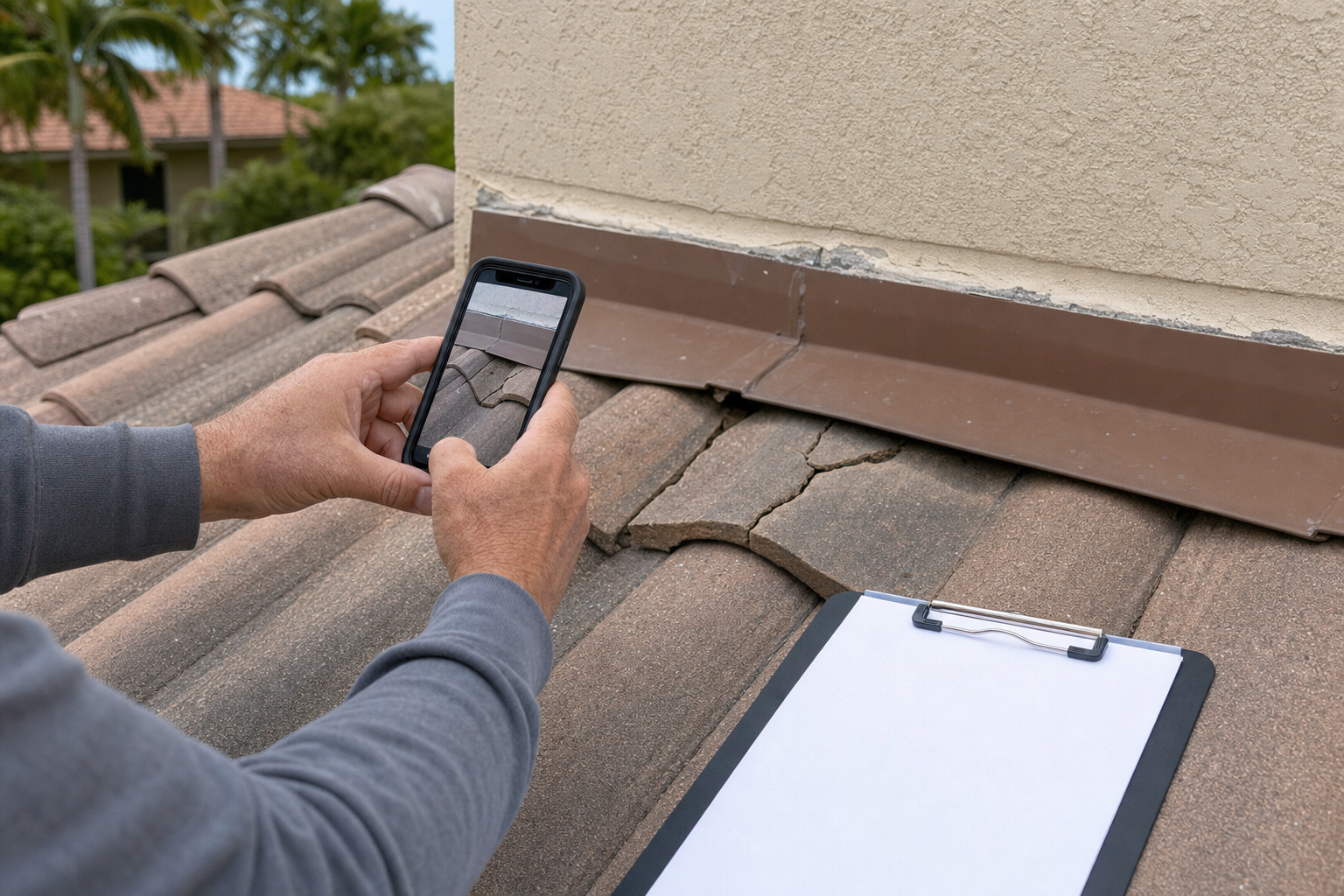
A useful inspection should give you more than a verbal opinion. A roof inspection should document roof covering, flashing, penetrations, drainage, decking concerns, and visible leak evidence. You should expect clear photos, locations of concern, notes on roof type, visible damage, drainage conditions, flashing, penetrations, and any safety or access limitations.
Documentation matters because it helps homeowners make a clean decision. It also helps separate a true roof-system issue from a small maintenance item. For example, a ceiling stain may come from a roof leak, but it can also come from HVAC condensation, plumbing, or a wall opening. A roof inspection South Florida homeowners can rely on should narrow the cause instead of guessing.
Avoid any contractor who makes promises about outcomes outside the roof work itself. A licensed roofing contractor can inspect, document, estimate, repair, and replace roofing systems. The homeowner stays in control of any insurance-related decisions and timing.
Duke Contractors LLC serves Miami-Dade, Broward, Palm Beach, Monroe County, Doral, and surrounding South Florida communities with residential roofing services in South Florida and practical inspection-first recommendations.
Roof Repair vs Replacement FAQ
How do I know if I need roof repair or replacement?
Start with a documented inspection. In most roof repair vs replacement decisions, repair is more likely when damage is isolated; replacement is more likely when leaks, age, decking issues, or material failure are widespread.
Is roof repair cheaper than roof replacement?
Usually, but not always. A repair can cost less upfront, but repeated repairs on an aging roof may cost more than planning replacement.
Should I replace my roof before hurricane season in South Florida?
Not automatically. The better first step is a roof inspection that checks age, damage, drainage, underlayment, flashing, and wind-exposed areas.
Can a flat roof be repaired instead of replaced?
Yes, if the membrane and drainage are still sound. Replacement is more likely when ponding, wet insulation, seam failure, or recurring leaks affect large areas.
Does one roof leak mean I need a new roof?
No. One leak may come from flashing, vents, skylights, valleys, or a small damaged area. Multiple leaks or repeated leaks point more toward replacement.

Closing CTA
If you are weighing roof repair vs replacement in Miami-Dade, Broward, Palm Beach, Monroe County, Doral, or anywhere in South Florida, Duke Contractors can inspect the roof, document visible conditions, and provide a clear roofing estimate. Schedule a free consultation and get a practical recommendation based on the roof you actually have, not a one-size-fits-all answer.
References
- NOAA National Hurricane Center Saffir-Simpson Hurricane Wind Scale, https://www.nhc.noaa.gov/aboutsshws.php ↩
- Florida Building Code Online Product Approval Search, https://www.floridabuilding.org/pr/pr_app_srch.aspx ↩
- Florida Building Code, Chapter 15 Roof Assemblies and Rooftop Structures, https://codes.iccsafe.org/content/FLBC2023P1/chapter-15-roof-assemblies-and-rooftop-structures ↩
