A tile roof can look solid from the street and still have weak points that show up fast when hurricane season starts. In South Florida, the problem is not just one cracked tile. It is wind-driven rain, lifted ridge caps, salt-air corrosion, old underlayment, clogged valleys, and small openings around vents or flashing. Wind-driven rain is rain pushed sideways or upward by storm winds into vulnerable roof openings. The Atlantic hurricane season runs from June 1 through November 30, so May and early June are the right time to check your roof before storms are in the forecast. [1] For South Florida tile roof hurricane prep, the highest-value goal is finding loose, exposed, or aging roof-system details before wind-driven rain tests them. This South Florida tile roof hurricane prep checklist is built for homeowners in Miami-Dade, Broward, Palm Beach, Monroe County, and nearby communities including Doral, Miami, Coral Gables, Kendall, Homestead, and Fort Lauderdale.
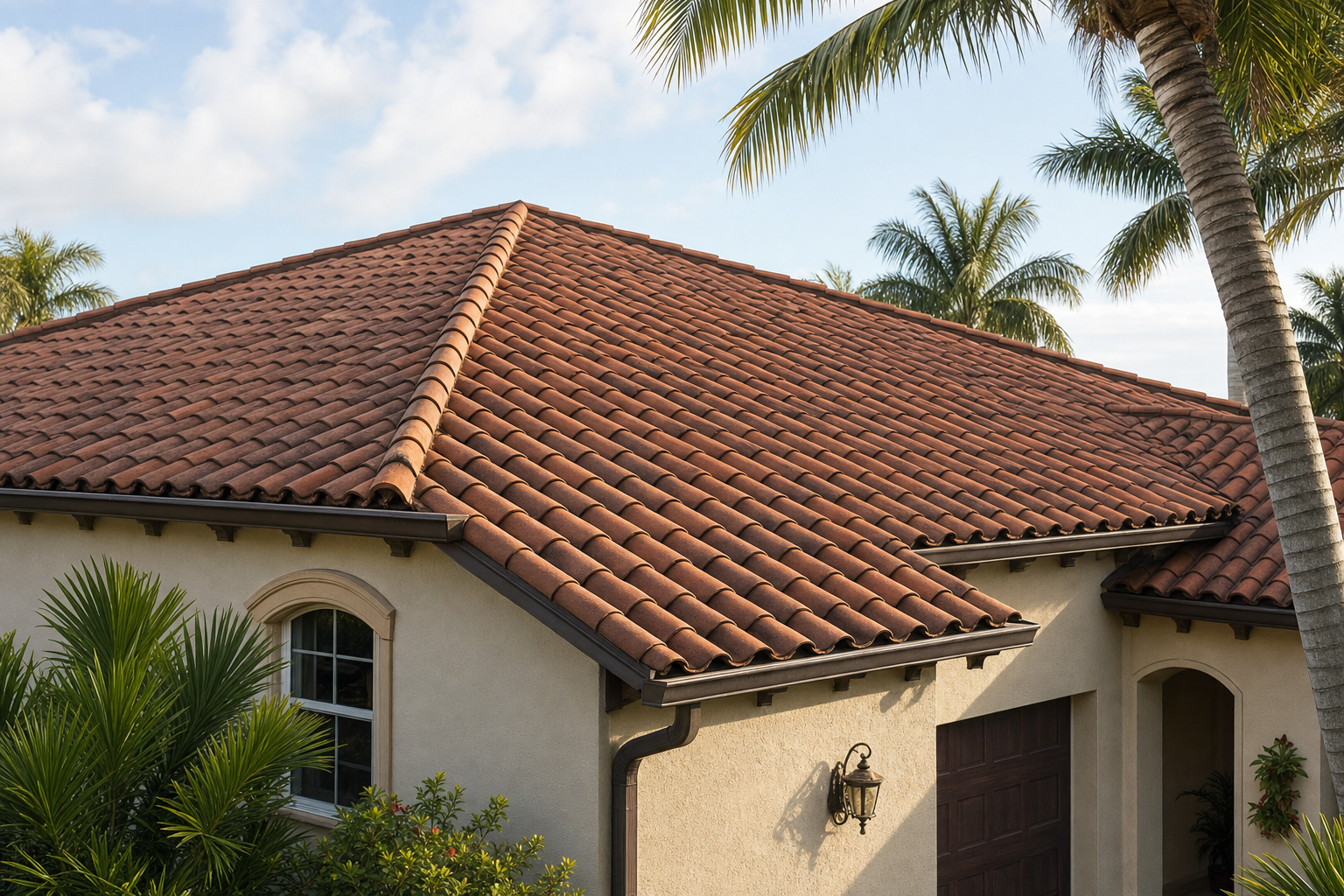
Start With What You Can See From the Ground
Do not walk on your tile roof to “take a quick look.” Clay and concrete tiles can crack under foot traffic, and a small crack can become a leak path later. Florida’s Hurricane Retrofit Guide warns homeowners not to walk on tile roofs because walking can crack tiles or break mortar bonds. [2]
From the ground, look for:
- Missing, slipped, or uneven tiles
- Broken corners or visible cracks
- Ridge caps that look raised, separated, or out of line
- Dark stains under eaves or along fascia
- Sagging gutters or blocked downspouts
- Tree branches touching or hanging over the roof
- Debris gathered in valleys or behind chimneys
A ridge cap is the tile or covering installed along the roof peak. Flashing is the metal or waterproofing detail used where the roof meets walls, vents, chimneys, valleys, or other transitions.
Use binoculars or your phone camera zoom if needed. The goal is not to diagnose everything yourself. The goal is to spot signs that a licensed roofing contractor should inspect before the first named storm is nearby. If you are comparing roof types or maintenance needs, review South Florida tile roofing.
Check Tile Movement, Ridge Caps, and Edges
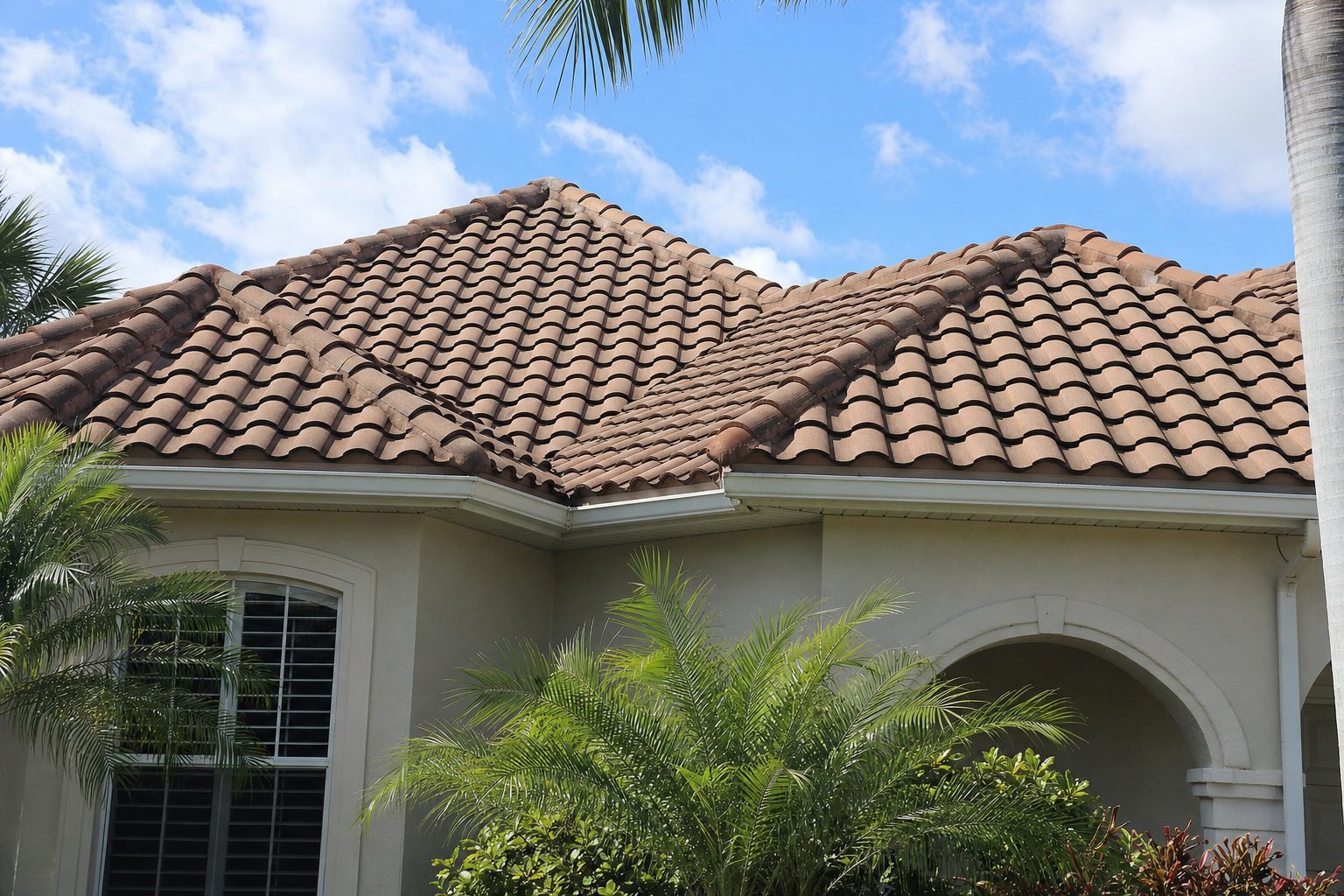
Tile roofs perform best when every piece is properly secured. During high winds, roof edges, corners, ridges, and hips usually see some of the strongest uplift forces. Wind uplift is the upward force created as wind moves across and around a roof. Tile roof edges, ridges, hips, and corners face elevated wind-uplift stress during severe storms.
FEMA notes that clay and concrete roof tiles can be damaged or blown off during hurricanes, tornadoes, high winds, or hailstorms, exposing the underlayment, flashing, and sheathing beneath. [3] FEMA also warns that broken tile fragments can strike other tiles and lead to cascading damage. [4]
Pay close attention to:
- Ridge caps along the top peaks
- Hip tiles on angled roof lines
- Eave tiles along the lower roof edge
- Rake edges on gable ends
- Cut tiles around valleys and roof transitions
- Any tile that looks higher, lower, or more rotated than the surrounding field
Clay tile and concrete tile can both be durable in South Florida, but they do not fail in exactly the same way. Clay tile can be more brittle under foot traffic or impact, while concrete tile can show surface wear, cracks, or movement over time. For both systems, the inspection should focus on the roof as a system, not just the visible tile.
If you see movement, do not try to push the tile back from a ladder. Tile attachment is a roofing system issue. A proper inspection checks the tile, the fastening method, the surrounding tiles, and the underlayment condition below. If you see obvious tile roof wind damage, have the roof reviewed before another storm cycle.
Look for Water Entry Clues Inside the Home
Hurricane prep is not only outside. Wind-driven rain can find gaps that normal afternoon storms miss. Before the season starts, walk through the attic if it is safe and accessible. Use a flashlight. Look around vents, valleys, chimneys, skylights, and roof-to-wall transitions.
Inside the attic, look for:
- Water stains on roof decking
- Dark streaks around nails or fasteners
- Damp insulation
- Light coming through unexpected openings
- Rusted nails
- Musty odors after heavy rain
- Stains on ceiling drywall below roof penetrations
A tile roof is a layered system. The tiles shed water, but the underlayment is a major part of the roof’s water protection. If tiles are cracked or displaced and the underlayment is aged, punctured, or brittle, the risk of interior water damage increases.
This is especially important for older South Florida homes. In coastal areas, UV exposure, humidity, heat cycles, and salt air can age roof components at different speeds. The tile may still look serviceable while flashings, fasteners, sealants, or underlayment are closer to failure.
Understand the Underlayment Risk Beneath Tile
Underlayment is the water-resistant layer installed beneath roof tile. A tile roof uses the tile surface and the underlayment together to manage water intrusion risk. The tile sheds most rainwater, while the underlayment provides backup protection when wind-driven rain gets beneath the surface or when a tile breaks, slips, or lifts.
This is why a tile roof underlayment South Florida inspection matters before hurricane season. A roof can look acceptable from the street while the waterproofing layer underneath is aged, brittle, punctured, or nearing the end of its useful life. Loose or broken roof tiles can expose underlayment, flashing, and sheathing during high-wind events. [4]
A licensed roofer should look for clues, not make guesses from the curb. Those clues may include recurring ceiling stains, brittle exposed edges, older repair patches, lifted tile sections, or visible wear around valleys, hips, ridges, and penetrations. If the issue is localized, repair may be enough. If the underlayment is broadly worn or the roof has repeated leak history, replacement planning may need to be discussed.
For active leaks or recurring stains, review roof leak repair options.
Inspect Flashing, Valleys, Vents, and Roof Penetrations
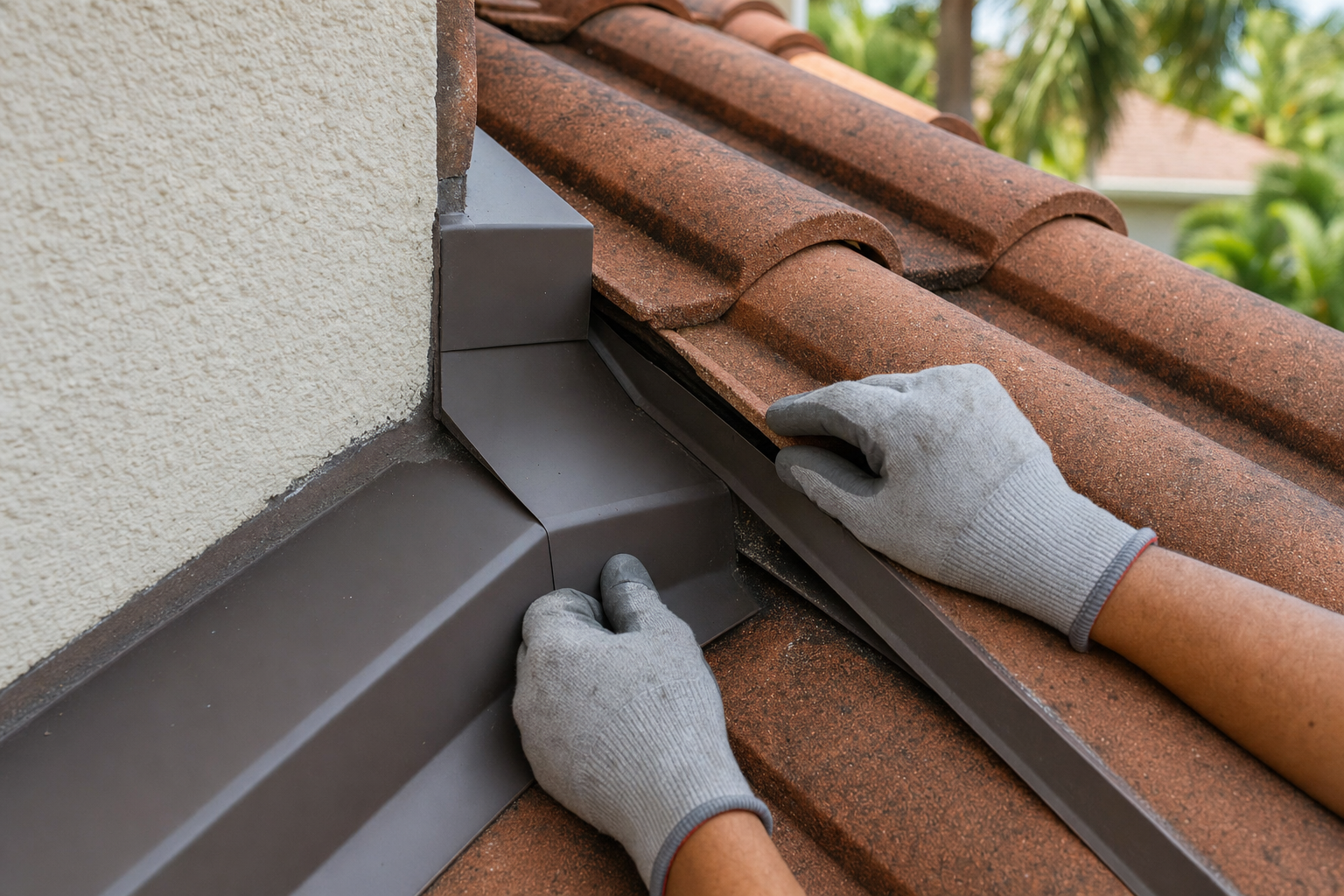
Most leaks do not start in the middle of a perfect roof plane. They start where the roof changes direction or where something passes through it. That means flashing matters.
Have a contractor check:
- Valley metal and debris buildup
- Plumbing vent boots
- Chimney flashing
- Wall flashing
- Skylight curbs
- Roof vents
- Satellite or old equipment penetrations
- Mortar at hips, ridges, and edges
- Corrosion on exposed metal components
The Insurance Institute for Business & Home Safety notes that roof penetrations for vents and pipes can create vulnerabilities on any roof and should be inspected regularly. [5]
Salt air is part of the South Florida roof story, especially near the coast in Miami-Dade, Broward, Palm Beach, and Monroe County. Corroded fasteners, stained flashing, or loose metal details should not be ignored. These are small items before the season. They can become larger problems when wind-driven rain pushes water sideways across the roof.
Clear Debris Before It Becomes a Drainage Problem
Tile roofs need clean water paths. Leaves, palm fronds, seed pods, and small branches can collect in valleys and gutters. Once debris blocks drainage, water can back up under tile laps or sit against flashing longer than it should.
Before hurricane season:
- Trim branches back from the roofline
- Clear gutters and downspouts
- Remove debris from roof valleys
- Check that downspouts discharge away from the foundation
- Confirm gutters are firmly attached
- Look for tile chips or broken fragments in gutters
Do not pressure wash the roof as a shortcut. Aggressive cleaning can damage tile surfaces, loosen mortar, or force water into areas that are not designed for direct pressure. If roof cleaning is needed, ask a roofing professional what is safe for your specific tile system.
Document the Roof Before There Is a Storm
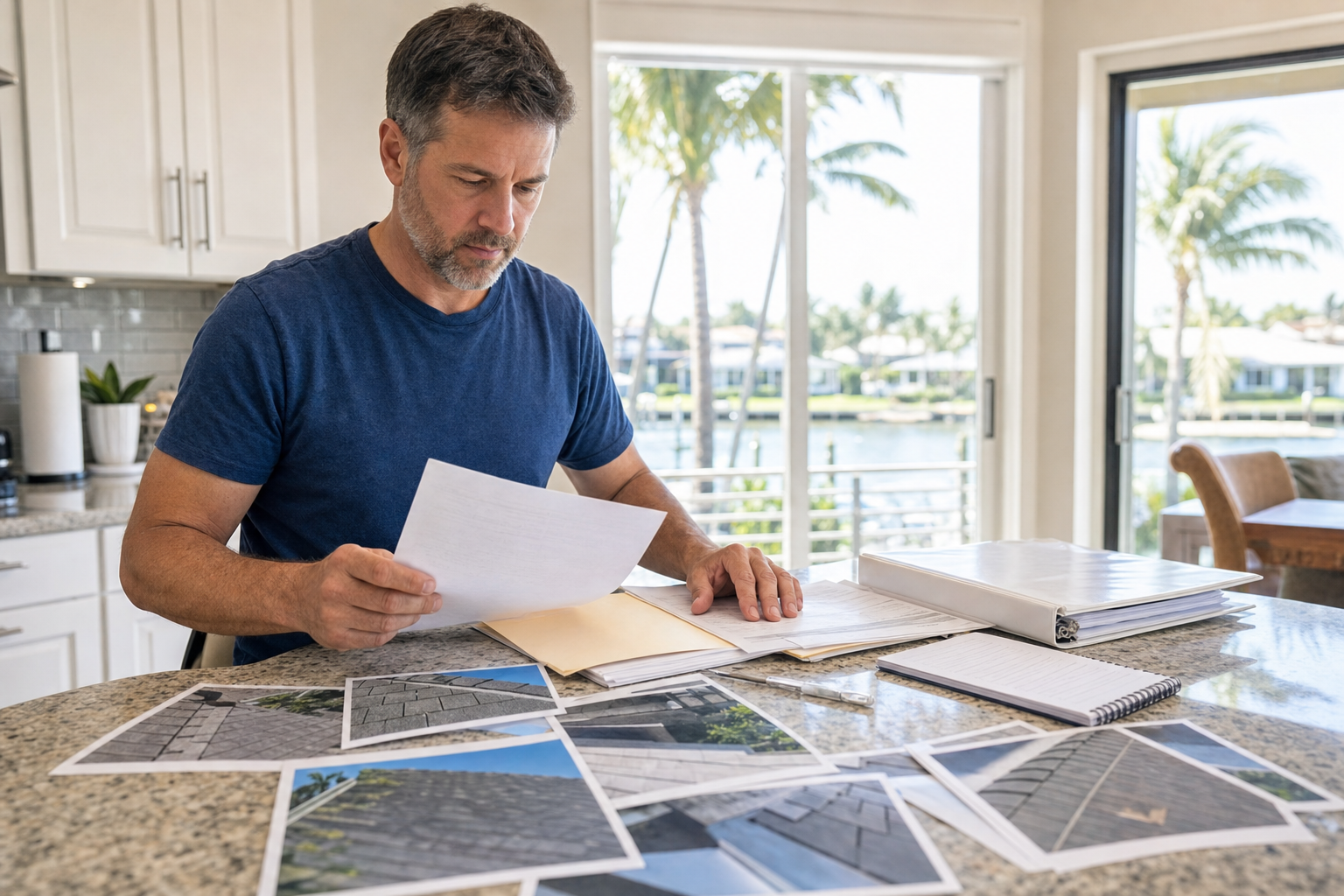
Good documentation helps homeowners make better decisions. It also gives you a clean before-storm record if damage needs to be reviewed later by your insurance carrier.
Take photos and videos of:
- Each side of the roof from the ground
- Roof edges and ridge lines
- Gutters and downspouts
- Any existing cracked or missing tile
- Interior ceilings below known roof areas
- Attic conditions, if safely accessible
- Prior repair areas
- Receipts, permits, and previous roof inspection reports
Keep those files in a cloud folder with the date in the file name. If a storm affects your neighborhood later, take new photos from the same angles after it is safe. Do not climb the roof after a storm. Broken tile, wet surfaces, and hidden damage are not homeowner work.
For insurance context, Florida law says an insurer may not refuse to issue or renew a homeowners policy solely because a roof is less than 15 years old, and for roofs at least 15 years old, the homeowner must be allowed to obtain an authorized inspection before replacement is required as a condition of coverage. [6] That does not mean every roof qualifies or every claim is covered. It means documentation and condition matter.
If a storm has already caused visible roof damage, ask about storm damage roof repair in Miami.
Know When to Call a Roofing Contractor
Some checks are fine from the ground. Others need a licensed roofer. Call for a roof inspection before hurricane season if you notice missing tiles, ceiling stains, loose ridge caps, repeated gutter overflow, visible corrosion, or a roof that is approaching an insurance review age.
A professional South Florida tile roof hurricane prep inspection should document tile movement, flashing condition, underlayment risk clues, and drainage issues. In Miami-Dade and Broward, where high-wind roofing requirements are a practical part of the local roofing environment, roof edges, ridges, hips, corners, and attachment details deserve careful review. [7]
You should also schedule an inspection if:
- Your tile roof is 15 years or older
- You do not know when the underlayment was last replaced
- You bought the home recently
- The roof has had several small repairs
- A neighbor’s similar roof had storm damage last season
- You see cracked mortar or displaced hip and ridge tiles
- You have had leaks during heavy wind-driven rain
A good inspection should be practical. It should show what is sound, what needs maintenance, what needs repair, and what should be monitored. It should include photos. It should not start with scare tactics.
South Florida Tile Roof Hurricane Prep FAQ
When should South Florida homeowners schedule tile roof hurricane prep?
May and early June are ideal because the Atlantic hurricane season begins June 1 and runs through November 30. Scheduling early gives you more time to complete repairs before tropical weather becomes active.
What should a tile roof hurricane inspection include?
It should check loose or broken tiles, ridge caps, hips, valleys, flashing, penetrations, drainage, attic water stains, and photo documentation. A Miami tile roof inspection should also note whether repair may be enough or whether replacement planning needs to be discussed.
Why is underlayment important on a tile roof?
Tile sheds most rainwater, but underlayment is the backup water-protection layer beneath the tile when wind-driven rain gets past the surface. If the underlayment is aged, punctured, or brittle, a small tile issue can become a larger water-intrusion risk.
Can homeowners inspect a tile roof from the ground?
Yes. Homeowners can use ground-level photos, binoculars, and attic checks, but they should not walk on tile roofs. Tile can crack under foot traffic, and roof access should be handled by a licensed roofing professional.
Does Duke Contractors guarantee insurance claim approval?
No. Duke Contractors LLC can inspect the roof and provide clear photo documentation of observed roof conditions. Homeowners should speak directly with their insurance carrier or licensed insurance professional about policy coverage and claim decisions.
Schedule a South Florida Tile Roof Inspection
If you own a tile roof in Miami-Dade, Broward, Palm Beach, Monroe County, or anywhere in South Florida, schedule a roof inspection with Duke Contractors before hurricane season gets busy. We will inspect the visible roof condition, document areas of concern, and give you clear next steps for repair, maintenance, or a roofing estimate.
References
- NOAA/AOML Hurricane FAQ ↩
- Florida Division of Emergency Management, Hurricane Retrofit Guide: Tile Roofs ↩
- FEMA Building America Solution Center, Clay or Concrete Tile Roofs ↩
- FEMA P-499, Tile Roofing for High Wind Regions ↩
- Insurance Institute for Business & Home Safety, Natural Weathering and Hazard Exposure ↩
- Florida Statutes, Section 627.7011 ↩
- Florida Building Code, High-Velocity Hurricane Zone provisions ↩
