Commercial flat roof maintenance in South Florida is not just about stopping leaks after they show up on a ceiling tile. For businesses in Miami-Dade County, Broward County, Palm Beach County, Monroe County, Miami, Fort Lauderdale, West Palm Beach, and the Florida Keys, a low-slope roof takes year-round punishment from UV exposure, heavy rain, tropical weather, rooftop equipment, and salt-heavy coastal air. Small roof issues can quietly become interior water damage, tenant disruption, inventory loss, or emergency repair costs. A practical maintenance plan helps property managers and business owners spot membrane wear, drainage problems, flashing movement, and storm-related roof stress while there is still time to address them.
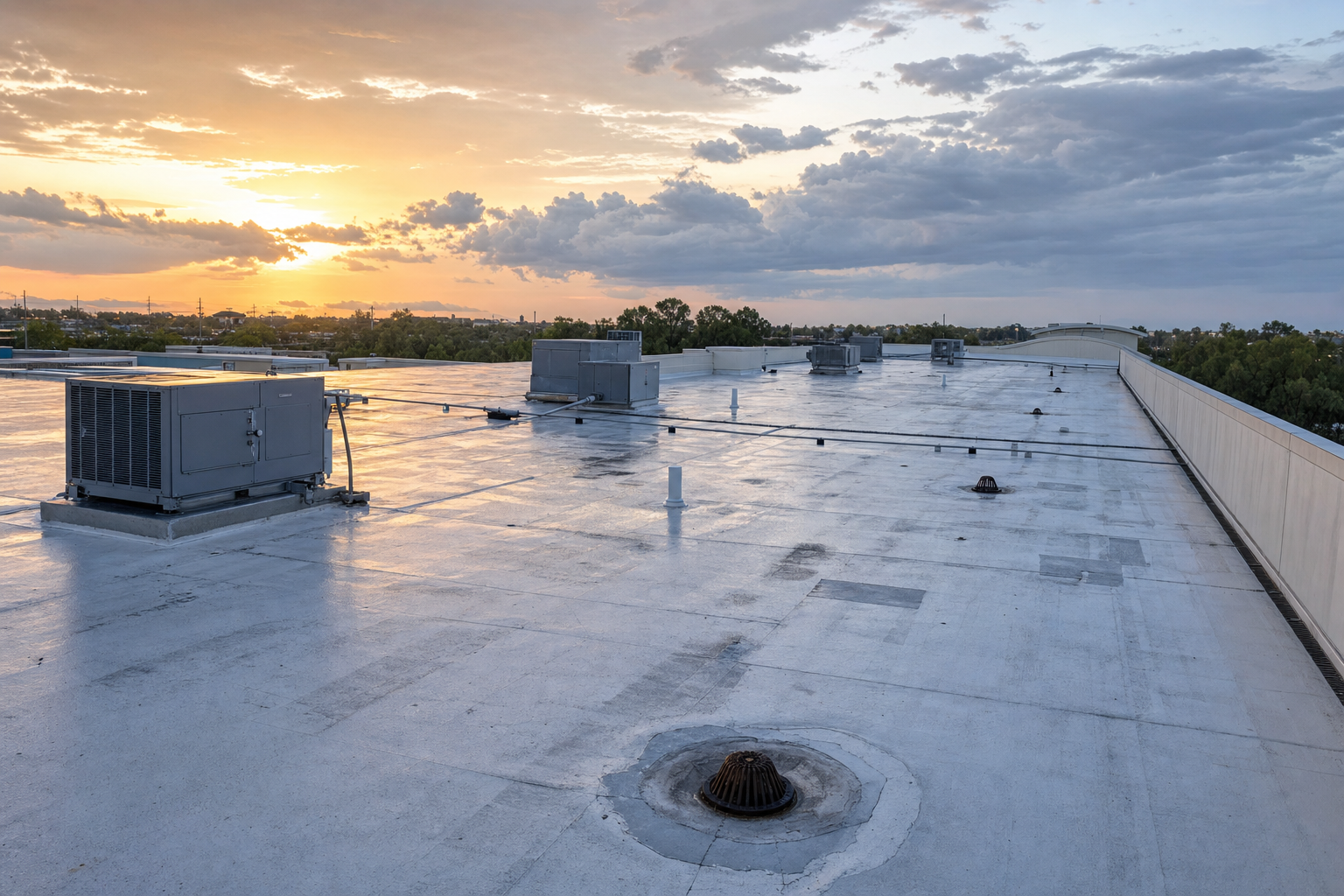
Commercial Flat Roof Maintenance South Florida Businesses Should Schedule Before Storm Season
Most commercial “flat” roofs are actually low-slope systems, meaning they are designed with enough pitch to move water toward internal drains, scuppers, gutters, or overflow drainage instead of letting water sit across the roof surface. In South Florida, that drainage design matters because short, intense rain can test every low spot on the roof.
The Atlantic hurricane season runs from June 1 through November 30, which makes late spring a smart time to review roof condition, drainage, and rooftop penetrations. [1]
Commercial flat roof maintenance South Florida property owners schedule before storm season should focus on roof evidence, not guesswork. Retail centers, warehouses, offices, medical buildings, condo associations, and multifamily properties all need enough documentation to understand what is normal wear, what needs maintenance, and what may require repair planning.
Common South Florida flat-roof stressors include:
- UV degradation that dries or weakens exposed roofing surfaces
- Ponding water around drains, seams, and HVAC curbs
- Wind-driven rain entering weak flashing points
- Salt-air corrosion on metal components near coastal areas
- Debris buildup from palms, nearby trees, and rooftop equipment service
- Membrane punctures from foot traffic, dropped tools, or vendor access
The goal is simple: keep water moving, keep seams sealed, and keep the roof documented.
What a Commercial Flat Roof Maintenance Visit Should Check
A maintenance visit should be more detailed than a quick walk across the roof. For TPO, modified bitumen, and other low-slope commercial roofing systems, the inspection should look at the full roof assembly and the details that usually fail first. Commercial flat roof maintenance South Florida businesses can rely on should document drains, seams, flashing, rooftop equipment, and interior warning signs.
TPO, or thermoplastic polyolefin, is a single-ply roofing membrane commonly used on commercial low-slope roofs. Modified bitumen is an asphalt-based commercial roof system installed in rolls and often surfaced with granules or coating. Both systems can perform well, but they fail in different ways when drainage, seams, traffic, or flashing details are ignored.
Drainage
Drainage should be checked first because water movement affects every other part of the roof. Internal drains, drain strainers, scuppers, gutters, downspouts, and overflow drainage should be clear enough to move water off the roof after heavy rain.
Ponding water is standing water that remains on a low-slope roof after rain instead of draining properly. One inch of standing water adds about 5.2 pounds per square foot to a roof area, which is why repeated ponding deserves attention on older or already-stressed roof assemblies. [2]
Key drainage items to review include:
- Blocked drain strainers
- Debris around scuppers and gutters
- Slow drainage or staining around low areas
- Water lines near HVAC curbs, parapets, or wall transitions
- Areas where previous ponding has left residue or membrane wear
Membrane and Seams
The field membrane should be reviewed for cracks, punctures, blisters, open laps, worn coating, exposed reinforcement, and aging repairs. Seams and transitions should be checked for separation, fishmouths, loose edges, or prior patches that are starting to fail.
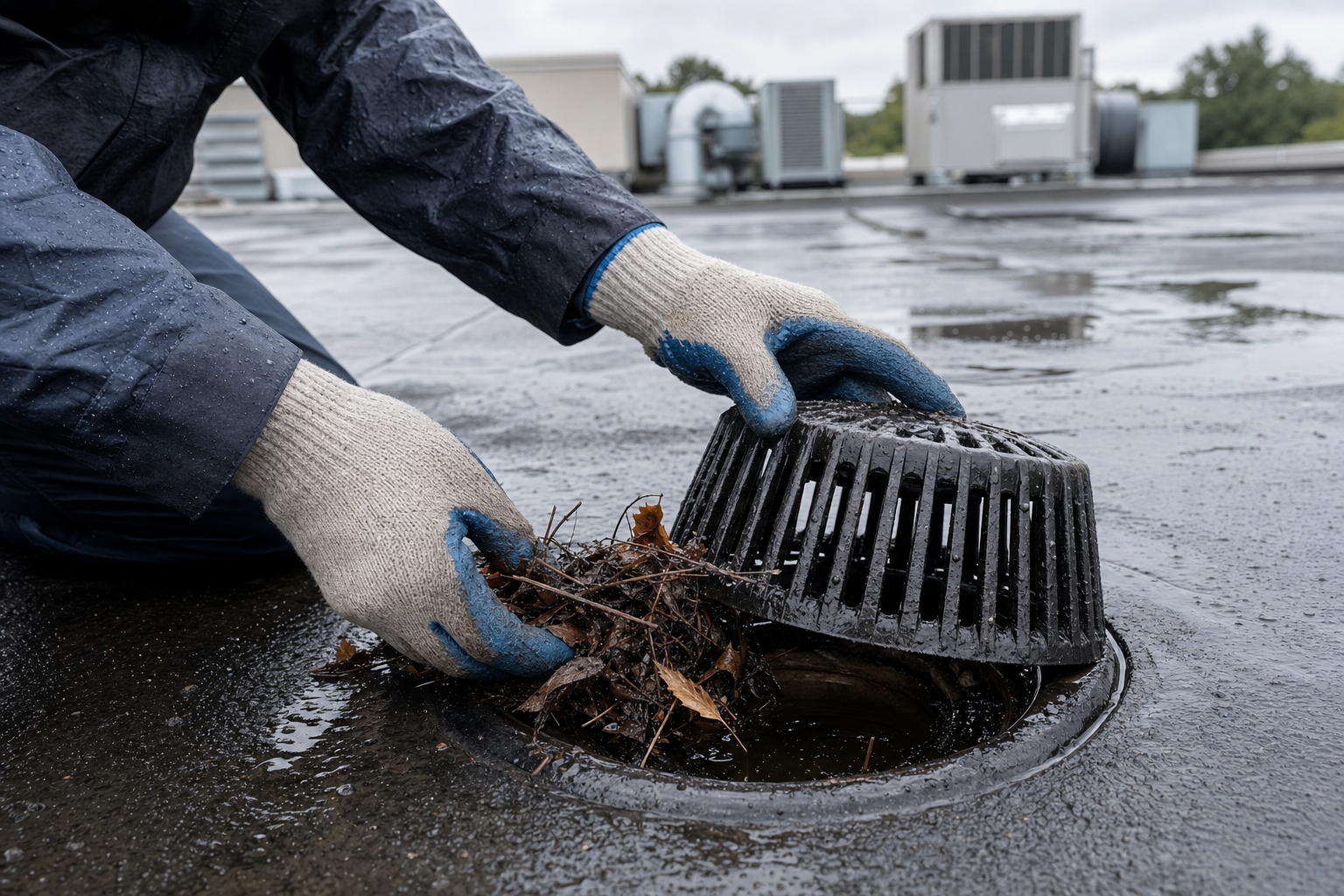
Ponding water that remains longer than 48 hours can be detrimental to a low-slope roof assembly. [3]
Flashing and Rooftop Equipment
Flashing is the material used to seal roof edges, walls, curbs, vents, skylights, parapets, and other transition points. A roof penetration is any point where equipment, piping, vents, drains, or structural details pass through the roof surface.
Flashing and rooftop equipment should be reviewed for movement around walls, curbs, vents, skylights, and parapets. Rooftop units also need attention because HVAC service panels, condensation lines, access doors, and curb seals can create leak paths when they are damaged or poorly maintained.
Metal edges should be checked for loose coping, corrosion, uplift marks, or failed sealant. Roof access control also matters: HVAC vendors, sign companies, and other trades may need roof access, but repeated walking can damage membranes if walk pads and access paths are not maintained.
Interior Warning Signs
Interior clues can help connect roof findings to real building impact. Ceiling stains, musty smells, wall streaks, damp insulation, or repeated leaks in the same area should be documented and compared with the roof surface above.
A useful maintenance report should include dated photos, roof-zone notes, drain and scupper locations, membrane and seam findings, flashing observations, rooftop equipment concerns, interior leak notes, repair history, and recommended next steps.
Maintenance Timing: Pre-Season, Mid-Season, and After Major Weather
For South Florida businesses, flat roof maintenance works best as a schedule, not a one-time reaction. Commercial flat roof maintenance South Florida property managers schedule consistently can help separate routine wear from new storm-related roof stress.
A useful rhythm is:
- Pre-season inspection in May or early June
- Mid-season check during active storm months if the roof has known drainage issues
- Post-storm condition review after major wind, heavy rain, or flying debris
- End-of-year inspection for aging roofs, renewal planning, and budget forecasting
This does not mean every weather event requires major repair work. It means the roof should be looked at with enough consistency to catch small changes. A lifted edge, clogged drain, cracked flashing seal, or new puncture can be easier to address early than after repeated rain cycles.
Documentation also matters. Clear photos, dated observations, repair notes, and roof-area maps help a business understand what changed over time. They also help separate normal wear from storm-related damage without guessing.
Inspection, Maintenance, Repair, or Replacement: What Comes Next?
A flat roof inspection is the condition review. Maintenance is the planned work that keeps drainage, seams, flashing, and roof access details in better shape. Repair addresses a specific failure, leak path, puncture, seam issue, flashing gap, or damaged roof area. Replacement becomes part of the conversation when the roof system is too deteriorated, wet, repeatedly patched, or near the end of its service life.
That distinction helps business owners decide when to monitor, when to call a contractor, and when to budget for larger work. A small amount of water immediately after a storm may be monitored if it drains quickly and the roof has no related damage. Standing water that remains beyond 48 hours, recurring leaks, visible membrane openings, loose flashing, or signs of wet insulation should be reviewed by a commercial roofing contractor.
For businesses comparing [commercial roofing systems in South Florida], this decision path also helps connect maintenance findings to [roof repair options] or [roof replacement services] without jumping to the most expensive conclusion first.
TPO and Modified Bitumen: What to Watch For
Duke Contractors works with commercial flat-roof systems including TPO and modified bitumen, and each material has its own maintenance concerns. Commercial flat roof maintenance South Florida buildings need should account for the roof material, age, drainage layout, rooftop traffic, and storm exposure.
TPO roof maintenance South Florida businesses should prioritize includes seam integrity, punctures, heat-welded lap issues, membrane shrinkage, and dirt buildup that can hide small defects. White reflective surfaces can make some damage easier to miss in bright sun, so close inspection matters.
Modified bitumen roof maintenance should focus on granule loss, splits, blistering, open seams, deteriorated flashing, and areas where previous repairs are aging. On older systems, repeated patching may signal that the roof needs a broader repair plan instead of another temporary fix.
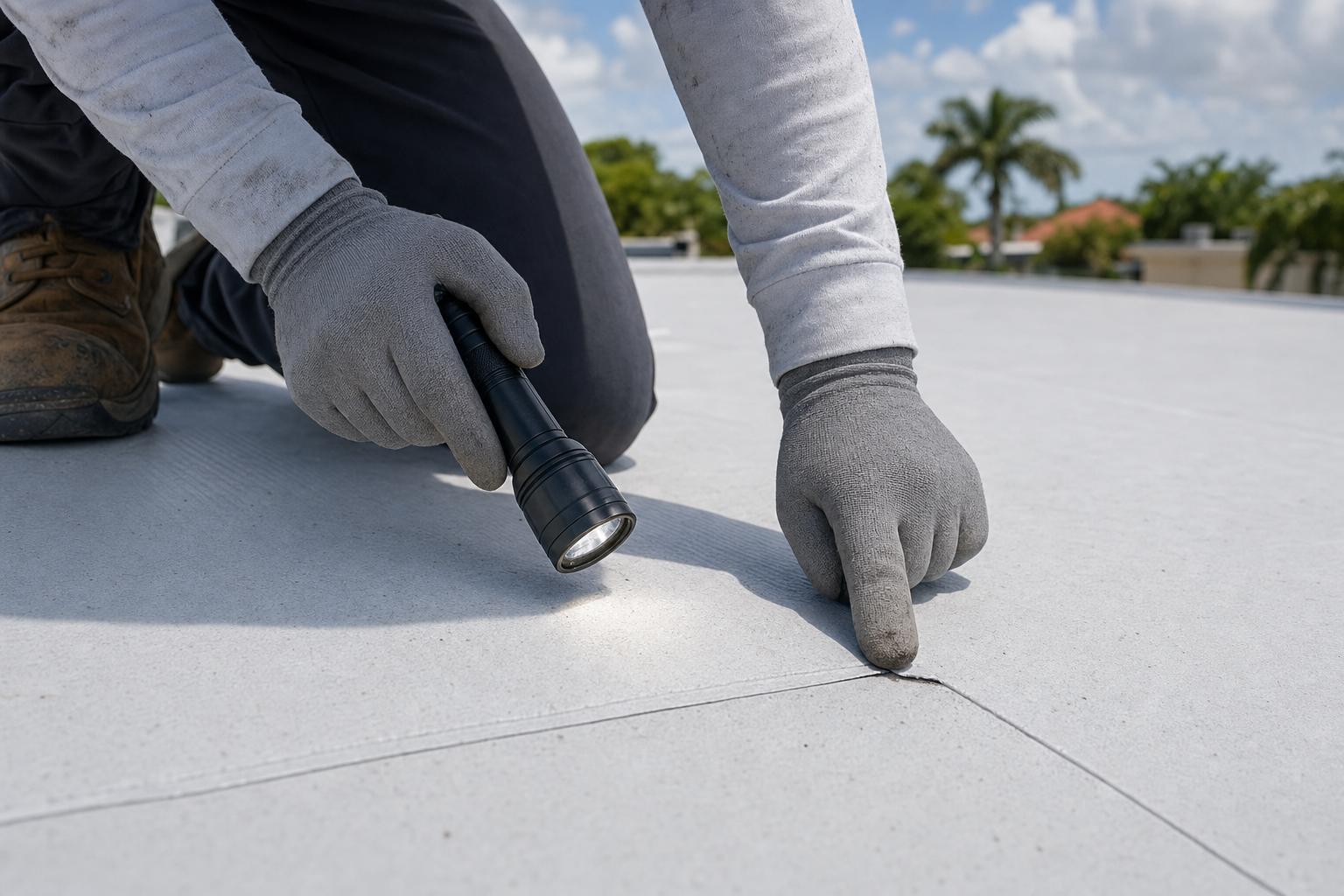
For both systems, foot traffic should be controlled. Walk pads, designated access paths, and clear roof-access rules help reduce punctures and surface wear from HVAC service, sign work, telecom vendors, and other trades.
When Maintenance Turns Into a Repair Conversation
Maintenance is meant to extend service life, but it can also reveal when repair planning is the better business decision. Warning signs include recurring leaks in the same area, wide membrane deterioration, insulation that may be holding moisture, repeated ponding, or flashing failures around multiple penetrations.
For commercial buildings in Miami-Dade, Broward, Palm Beach, and Monroe County, repair planning should account for the roof system, building use, drainage layout, and local wind exposure. Florida Building Code Chapter 15 covers roof assemblies and rooftop structures, including high-wind considerations in applicable areas. [4]
Commercial flat roof maintenance South Florida businesses document before and after severe weather can also support clearer conversations about [storm damage roofing in Miami], repair scope, and next-step planning. It should not be treated as an insurance outcome guarantee; it is a practical record of roof condition, visible damage, and recommended roofing work.

FAQ: Commercial Flat Roof Maintenance in South Florida
How often should South Florida businesses schedule commercial flat roof maintenance?
Most South Florida commercial flat roofs should be inspected at least twice a year, with additional checks after major wind, heavy rain, debris impact, or known drainage problems. [5] Commercial flat roof maintenance South Florida businesses schedule before and after storm season gives property managers a clearer record of roof condition.
What is the most common flat roof maintenance issue in South Florida?
Drainage is one of the most common issues because clogged drains, low spots, and blocked scuppers can leave ponding water on the roof after heavy rain.
What is ponding water on a flat roof?
Ponding water is standing water that remains on a low-slope roof after rain instead of draining properly. Water that remains beyond 48 hours is a warning sign for many commercial roof systems. [3]
Does ponding water mean a commercial roof must be replaced?
Not always. Ponding water may point to drainage, slope, insulation, or structural deflection issues, so the roof should be inspected before deciding between maintenance, repair, or replacement.
What should a business do if it sees ceiling stains?
Document the visible stain, protect inventory or equipment below the area, and schedule a roof inspection. The roof surface, penetrations, drainage, and nearby interior areas should be reviewed together.
Can maintenance prevent every leak?
No. Maintenance cannot stop every future roof problem, especially during severe weather. It can reduce avoidable risks by finding weak points, clogged drains, open seams, and flashing issues before they become larger problems.
Can Duke Contractors inspect TPO and modified bitumen commercial roofs?
Yes, Duke Contractors works with commercial flat-roof systems including TPO and modified bitumen and can document maintenance, repair, and planning needs for South Florida commercial properties.
Schedule a Commercial Flat Roof Inspection in South Florida
If your South Florida business has a flat roof in Miami-Dade, Broward, Palm Beach, Monroe County, or nearby areas, Duke Contractors can help you understand its current condition. Schedule a free commercial roof inspection or [request a roofing estimate] and get clear, photo-documented recommendations for maintenance, repair, or next-step planning.
Commercial flat roof maintenance South Florida property owners schedule before small issues spread can help reduce avoidable leak risk, improve drainage planning, and support smarter roof budgeting.
References
- NOAA/AOML Hurricane FAQ, https://www.aoml.noaa.gov/hrd/tcfaq/A7.html ↩
- International Association of Certified Home Inspectors, Roof Ponding, https://www.nachi.org/roof-ponding.htm ↩
- NRCA, Proper roof slope and drainage are important to prevent excessive water accumulation, https://www.nrca.net/roofingguidelines/pdf?id=167646&k=1831265 ↩
- 2023 Florida Building Code, Building, Chapter 15 Roof Assemblies and Rooftop Structures, https://codes.iccsafe.org/content/FLBC2023P1/chapter-15-roof-assemblies-and-rooftop-structures ↩
- International Institute of Building Enclosure Consultants, Roof Maintenance Program, https://iibec.org/roof-maintenance-program/ ↩
