If you own a home or commercial building in South Florida, roof age is not a casual detail. It affects maintenance planning, replacement timing, storm readiness, and the questions you may face during inspections or property updates. So, how long does a roof last in Florida? If you are searching for how long does a roof last Florida, the better question is which roof system you have and how it has handled South Florida weather. The honest answer depends on material, installation quality, ventilation, exposure to salt air, and whether the roof has been maintained after tropical weather. A roof in Miami-Dade, Broward, Palm Beach, Monroe County, or coastal areas near Doral works harder than the same material in a milder inland climate because heat, UV, wind-driven rain, and hurricane-season stress all add up.
Quick Answer: Florida Roof Lifespan by Material
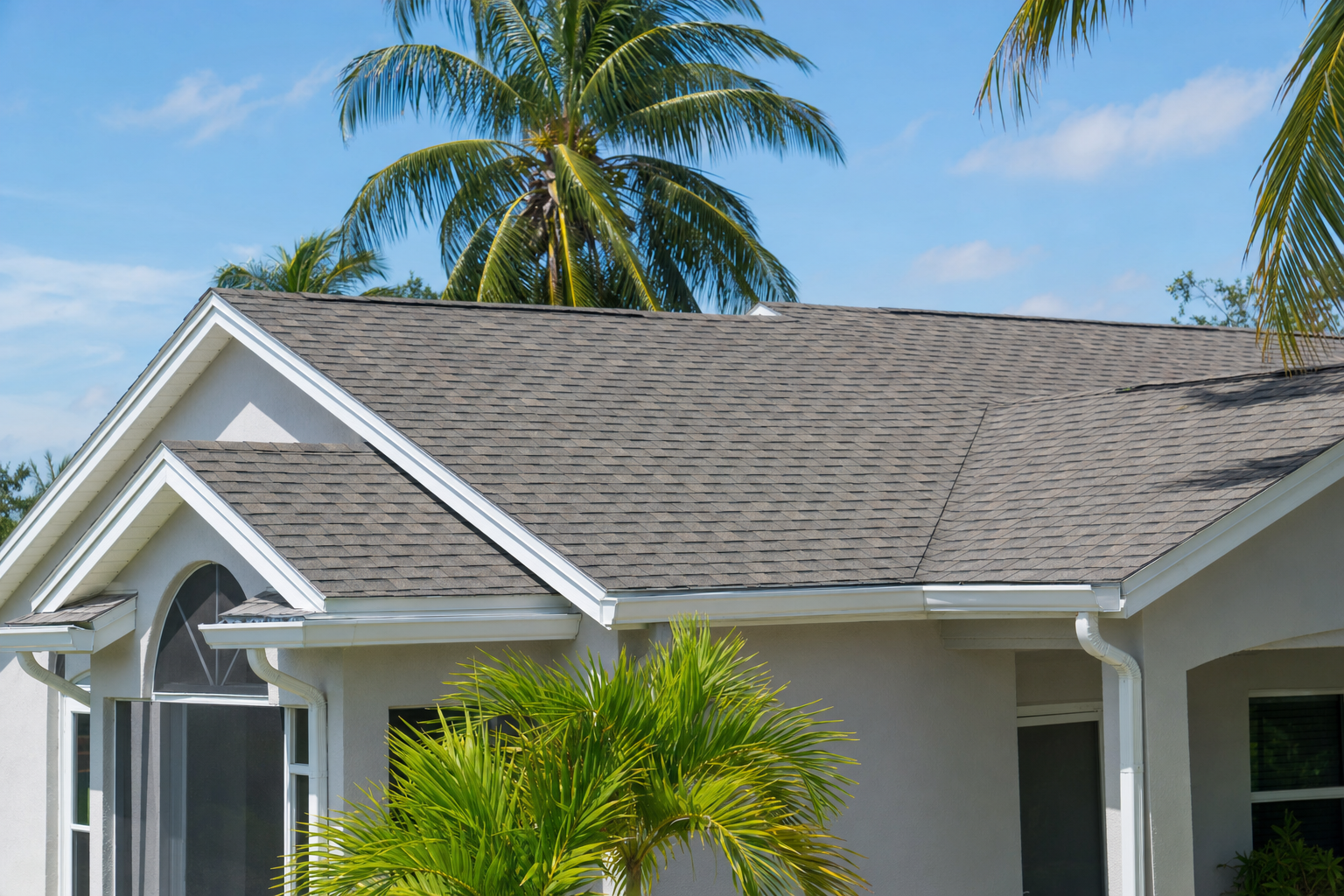
A Florida roof lifespan depends on the full roof system, not only the visible roofing material. The short answer to how long does a roof last in Florida is usually 10 to 20 years for many shingle and flat systems, with tile surfaces lasting longer but system components aging sooner.
For homeowners comparing Florida roofing materials, the most important distinction is material lifespan versus system lifespan. Underlayment is the waterproofing layer beneath the visible roof covering. On a tile roof, the tile surface may last for decades, but the underlayment, flashing, fasteners, and roof penetrations can age much sooner.
Average Florida Roof Lifespan by Material
Florida roof lifespans are usually shorter than national averages because roofing materials are exposed to intense sun, high humidity, wind, salt air, and tropical weather. InterNACHI’s Florida life expectancy chart notes that components exposed to saltwater, wind, sun, and heat are especially vulnerable to premature failure, and lists Florida-specific roof lifespan ranges by material. [1]
Here is a practical South Florida planning range:
| Roof material | Planning lifespan in Florida | Main risk | Inspection note | | — | — | — | — | | 3-tab asphalt shingles | About 10 to 12 years | Heat, UV exposure, wind uplift, granule loss | Check for curling, bald patches, lifted tabs, and exposed fasteners. | | Architectural asphalt shingles | About 15 to 20 years | Attic heat, UV exposure, storm wear, poor ventilation | Inspect after major tropical weather and watch for granules in gutters. | | Clay or concrete tile | Tile material often 80+ years | Underlayment, flashing, fasteners, cracked or slipped tiles | Separate tile surface condition from the waterproofing system below. | | Metal roofing | About 17 to 20 years according to the Florida chart | Salt-air corrosion, fastener movement, coating damage | Pay close attention near coastal exposure and roof transitions. | | Modified bitumen flat roofing | About 10 years | Ponding water, seam failure, UV exposure | Check drains, scuppers, flashing, blisters, and soft spots. | | TPO flat roofing | About 10 to 12 years | Ponding water, punctures, open seams, rooftop equipment traffic | Inspect membrane seams, HVAC curbs, drains, and standing water after rain. |
Those numbers are planning ranges, not guarantees. A well-installed roof with good ventilation and routine maintenance can perform better. A neglected roof with ponding water, poor flashing, loose fasteners, or repeated storm damage can fail earlier.
If your roof is already showing wear, a Miami roof inspection can help document whether repair, maintenance, or replacement makes more sense. For service details, see residential roofing in Miami and commercial roofing in Miami.
Asphalt Shingle Roofs: Common, Affordable, and Heat-Sensitive
Architectural asphalt shingles are common on South Florida homes because they balance cost, appearance, and wind-rated product options. A 3-tab asphalt shingle roof in Florida often has a planning lifespan of about 10 to 12 years. Architectural asphalt shingles in Florida often last about 15 to 20 years when installed and maintained properly.
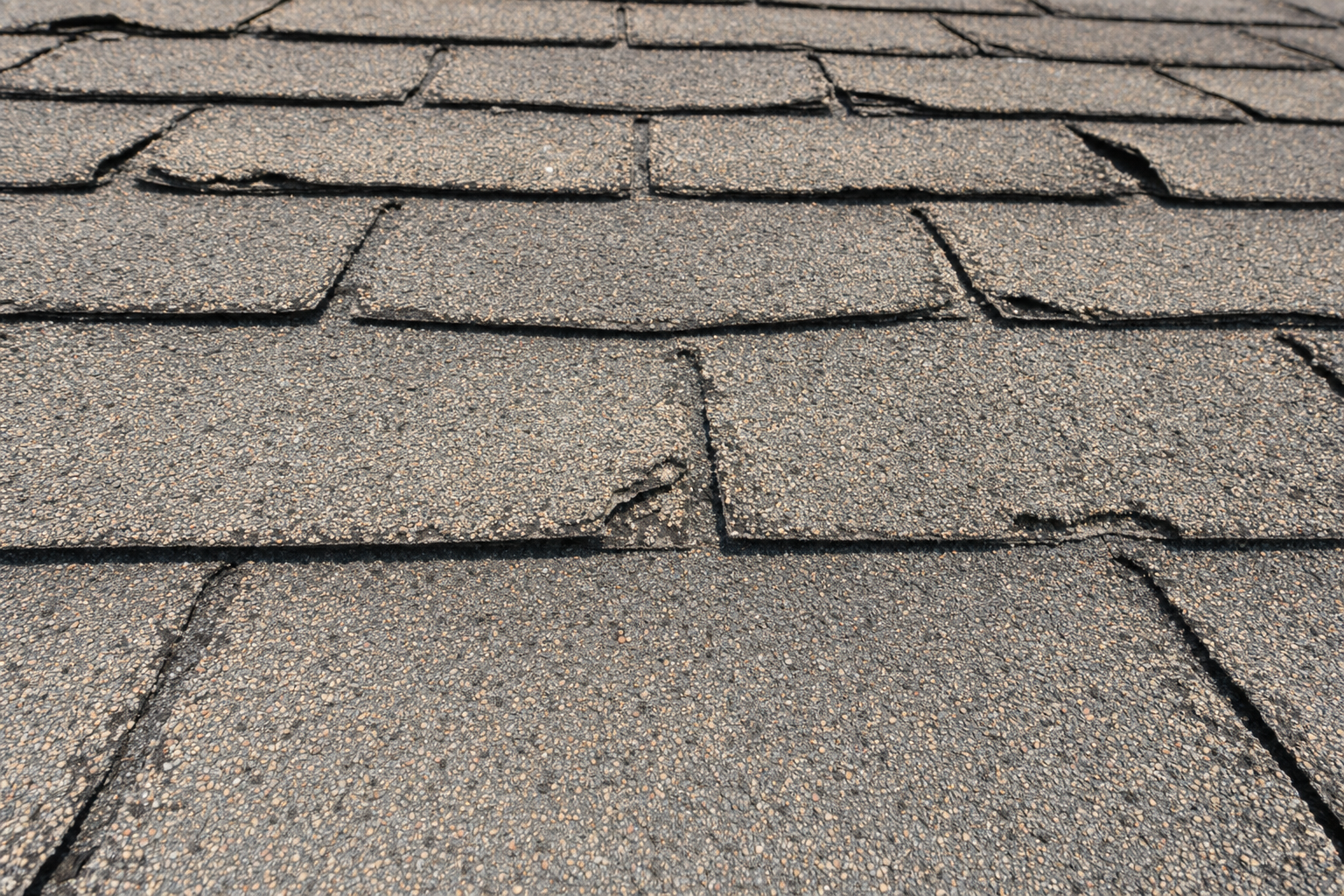
The biggest enemies are heat and UV exposure. Granules protect the asphalt layer underneath. When granules wear away, shingles can dry out, crack, curl, or lose sealing strength. Ventilation matters too because trapped attic heat can accelerate shingle aging from below, especially when roof decks stay hot through long South Florida afternoons.
On older shingle roofs, pay attention to:
- Bald or shiny patches where granules are missing.
- Lifted shingles at edges or ridges.
- Cracked tabs.
- Exposed nail heads.
- Water staining in the attic after wind-driven rain.
Wind-driven rain is rain pushed under roof edges, laps, vents, or damaged materials by strong wind. The National Hurricane Center classifies hurricanes as storms with sustained winds of 74 mph or higher, and even Category 1 winds can damage roof shingles, siding, and gutters on well-built homes. [2]
Tile Roofs: Long-Lived Surface, Shorter-Lived Details
Tile is a strong fit for many South Florida homes because clay and concrete tiles handle heat well and can last a long time as a material. The key point is that “tile roof lifespan” does not only mean the visible tiles.
Tile roof surfaces can last much longer than the underlayment, flashing, and fastening components beneath them. A tile roof system includes underlayment, battens or fastening systems, flashing, valleys, vents, and penetrations. The tiles may still look solid while the waterproofing layer below them is aging. That is why older tile roofs in Miami, Coral Gables, Kendall, Fort Lauderdale, Boca Raton, Doral, and the Keys should be inspected for cracked tiles, slipped tiles, worn underlayment, and flashing gaps.
If you see one broken tile, do not assume the whole roof is failing. But do not ignore it either. Broken or displaced tile can let wind-driven rain reach the underlayment and accelerate wear.
Metal Roofs: Durable, but Salt Air Matters
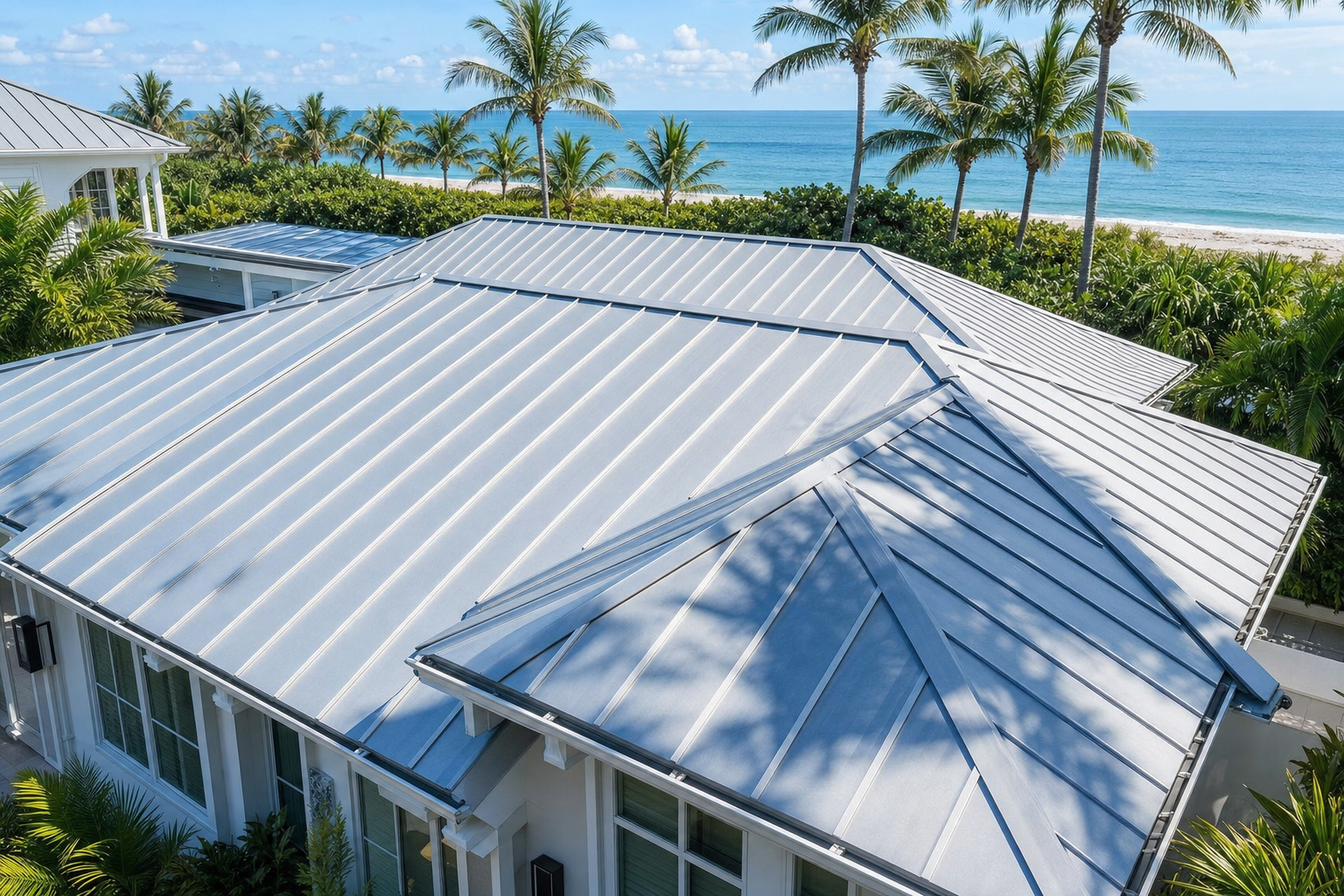
Metal roofing can be a strong option in South Florida, especially when installed with the right panels, coatings, fasteners, and edge details. The weak point is usually not the idea of metal itself. It is the environment around it.
Near coastal areas in Miami-Dade, Broward, Palm Beach, and Monroe County, salt air can speed up corrosion if coatings are damaged or fasteners are not appropriate for the exposure. A roof closer to salt spray, open water, or constant coastal wind generally needs closer inspection than a similar metal roof farther inland.
Metal roofs should be checked for:
- Rust or coating failure.
- Loose or backed-out fasteners.
- Sealant breakdown at penetrations.
- Edge metal movement.
- Scratches that expose bare metal.
Metal also needs careful installation around roof transitions. A small detail at a vent, ridge, or wall connection can become a leak point during wind-driven rain.
Commercial Flat Roofs: TPO and Modified Bitumen Need Drainage
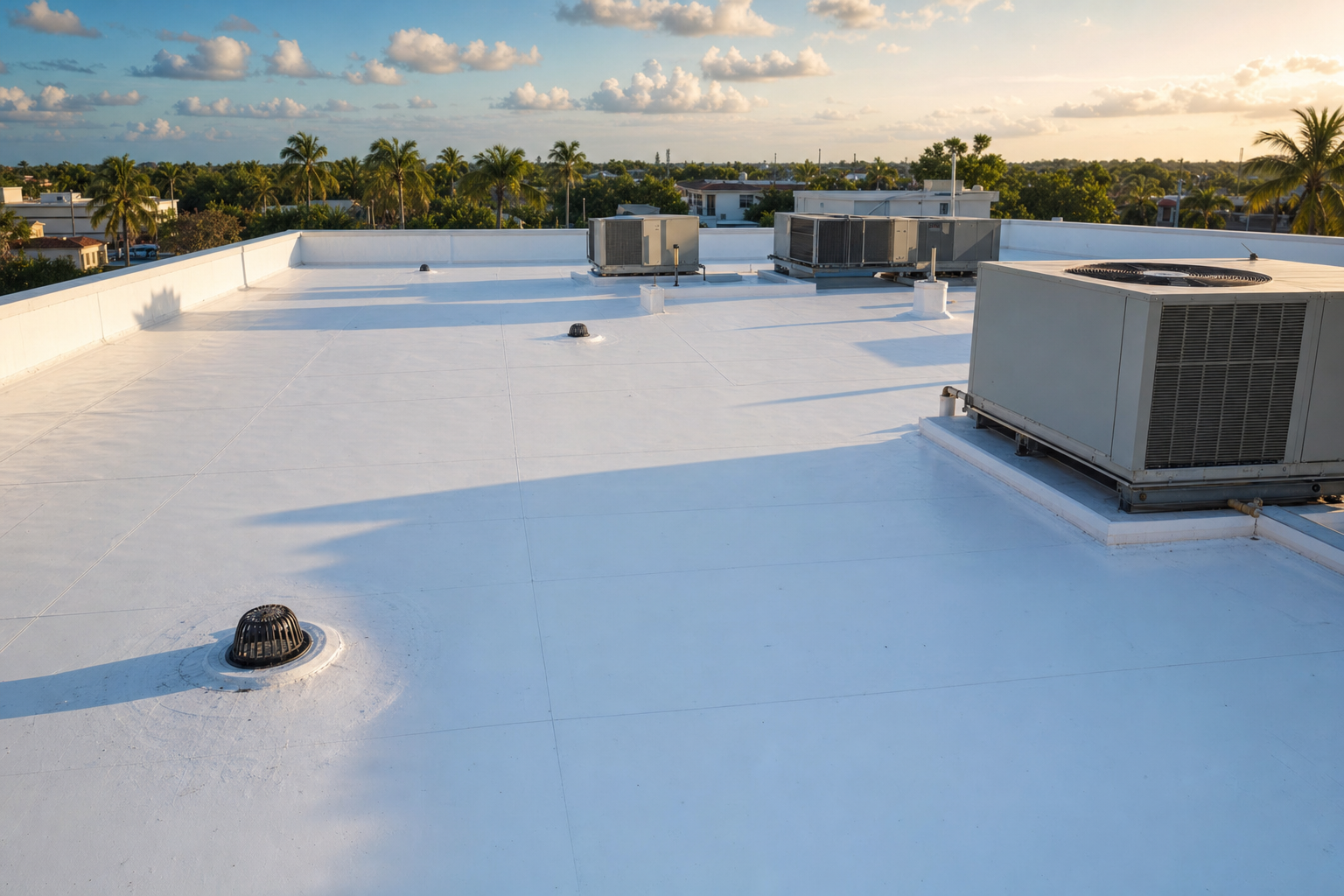
For commercial buildings in South Florida, roof lifespan depends heavily on drainage. TPO and modified bitumen systems can perform well, but low-slope roofs are vulnerable to ponding water, UV exposure, membrane punctures, seam issues, and clogged drains.
TPO stands for thermoplastic polyolefin, a single-ply reflective membrane often used on flat and low-slope commercial roofs. Modified bitumen is an asphalt-based membrane system, commonly installed in rolls, that is built for low-slope applications. Ponding water is standing water that remains on a low-slope roof after rain.
Watch for:
- Standing water after rain.
- Blisters or bubbles.
- Open seams.
- Soft spots underfoot.
- Cracked flashing around HVAC curbs.
- Debris blocking drains or scuppers.
The Atlantic hurricane season runs from June 1 to November 30, and the average Atlantic season has 14 named storms, 7 hurricanes, and 3 major hurricanes based on 1991-2020 climate normals. [3]
When Roof Age Becomes a Real Concern
Age matters most when it lines up with visible wear. A 16-year-old architectural shingle roof may still have service life left if it was installed well and maintained. A 9-year-old flat roof with ponding water and open seams may need serious work.
Book a professional inspection if you notice:
- Repeated leaks in different areas.
- Missing shingles, loose tiles, or lifted metal panels.
- Sagging roof decking.
- Interior ceiling stains.
- Granules collecting in gutters.
- Cracked flat-roof seams.
- Roof damage after a tropical storm.
A licensed roofing contractor can document the roof condition with photos, explain what is repairable, and provide replacement options when the system is near the end of its useful life. For active leaks or storm-related concerns, see South Florida roof repairs and storm damage roof inspection.
Warranty language should not be treated as the same thing as real-world roof lifespan in South Florida. Product warranties, workmanship coverage, ventilation requirements, maintenance requirements, and storm exclusions can all affect what is covered. The Institute for Business & Home Safety also emphasizes stronger roof details as part of roof resilience in severe weather areas. [4]
How to Extend Roof Life in South Florida
The best way to stretch roof lifespan in South Florida is to catch small problems before they become system-wide damage. That starts with annual inspections, especially before or after hurricane season, and continues with practical maintenance.
Helpful steps include:
- Keep gutters, drains, and scuppers clear.
- Repair lifted shingles, cracked tiles, loose flashing, and open seams early.
- Check attic ventilation on shingle roofs.
- Remove debris from valleys and flat-roof drainage areas.
- Inspect metal roof fasteners, coatings, edges, and sealants.
- Document roof condition with photos after tropical weather.
- Schedule service when leaks repeat or damage appears in more than one area.
A South Florida roof replacement is not always the first answer. Sometimes targeted maintenance or repair can extend service life. But when the roof system is near the end of its useful life, replacement planning gives you more control than waiting for a leak during heavy rain.
Florida Roof Lifespan FAQs
How long does a roof last in Florida by material?
Asphalt shingles often fall in the 10 to 20 year planning range, flat roofing is often around 10 to 12 years, metal depends heavily on coating and coastal exposure, and tile surfaces can last longer while underlayment and flashing may need earlier service.
How long does an asphalt shingle roof last in Florida?
A 3-tab asphalt shingle roof may last about 10 to 12 years in Florida, while architectural shingles are often closer to 15 to 20 years depending on installation, ventilation, sun exposure, and storm history. [1]
What shortens roof life in South Florida?
Heat, UV exposure, salt air, high humidity, wind-driven rain, poor ventilation, ponding water, loose flashing, and unrepaired storm damage can all shorten roof life.
Do tile roofs last longer than shingle roofs in South Florida?
Yes, the tile material can last much longer than asphalt shingles, but the underlayment, flashing, and attachment system still need inspection and service over time.
Should I replace my roof based only on age?
No. Age is a starting point. Condition, leaks, fastening, ventilation, underlayment, drainage, and storm exposure matter just as much.
How often should a Miami-Dade roof be inspected?
A practical schedule is once a year, plus after major tropical weather, visible damage, or repeated leaks. Commercial flat roofs may need closer drainage checks after heavy rain.
Closing CTA
If your roof is getting older and you are not sure whether it needs repair, maintenance, or replacement, schedule a free roof inspection with Duke Contractors. We serve Miami-Dade County, Broward County, Palm Beach County, Monroe County, and South Florida with residential and commercial roofing estimates built around clear photos, practical recommendations, and quality workmanship. To plan your next step, request a roofing estimate in Miami.
References
- InterNACHI Florida Estimated Life Expectancy Chart for Homes, https://www.nachi.org/florida-life-expectancy.htm ↩
- NOAA National Hurricane Center Saffir-Simpson Hurricane Wind Scale, https://www.nhc.noaa.gov/aboutsshws.php ↩
- NOAA National Hurricane Center Tropical Cyclone Climatology, https://www.nhc.noaa.gov/climo/ ↩
- IBHS FORTIFIED Roof, https://fortifiedhome.org/roof/ ↩
