Florida roof age insurance requirements often come up during a renewal, home purchase, or inspection request. The confusing part is that “old roof” does not always mean “replace the roof today.” Florida has specific roof-age rules, and insurers also look at visible condition, remaining useful life, roof material, permits, leaks, and storm-resistance details.
For homeowners in Miami-Dade, Broward, Palm Beach, and Monroe County, the smartest move is to understand what the roof record actually shows, then get clean documentation from a licensed roofing contractor when the roof is aging, patched, leaking, or close to the end of its service life.
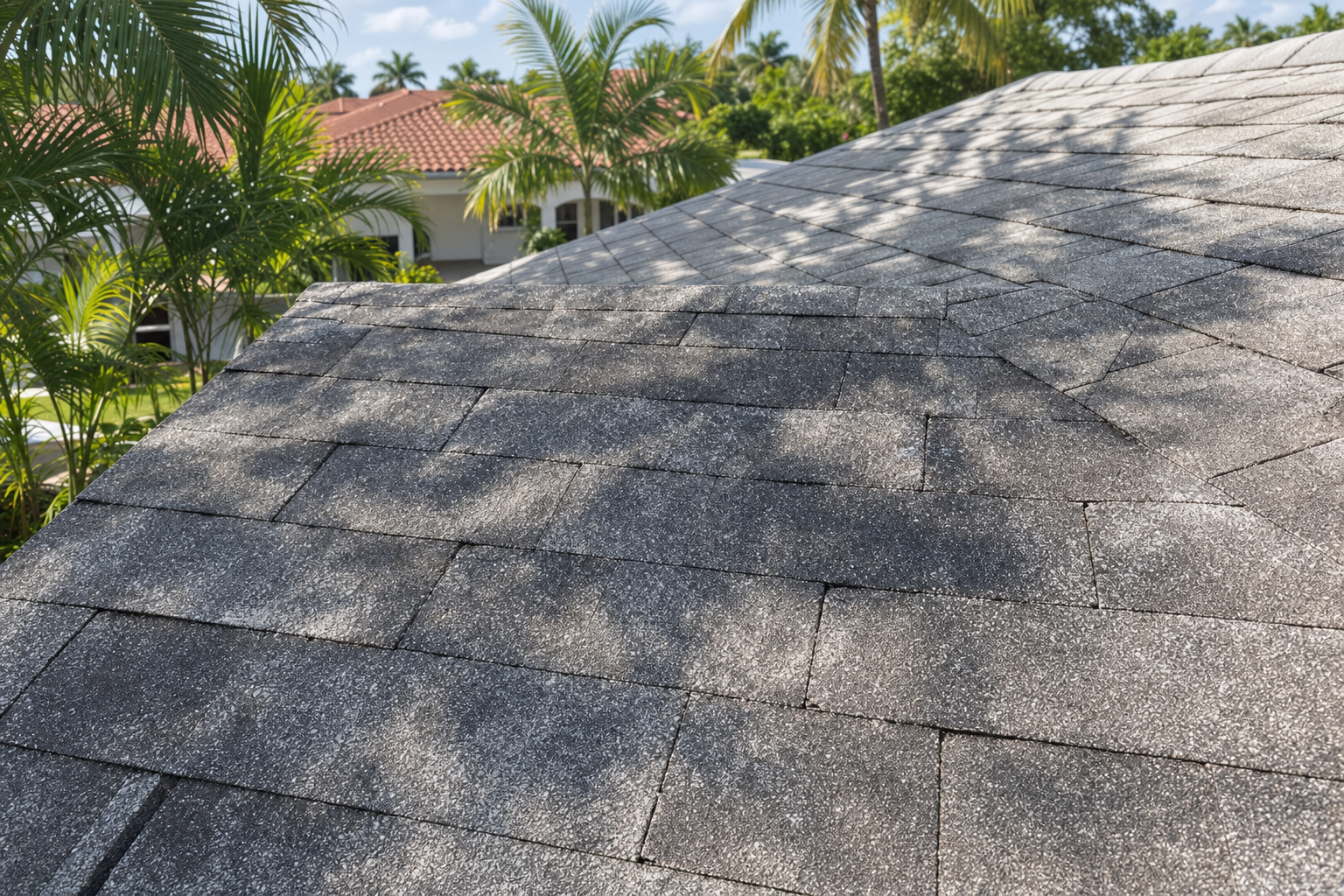
What Florida Law Says About Roof Age
Florida roof age insurance requirements are shaped by Florida Statute 627.7011, which sets a 15-year roof-age review threshold for homeowners policies. Under Florida law, an insurer may not refuse to issue or renew a homeowners policy solely because the roof is less than 15 years old. [1]
For a roof that is at least 15 years old, the insurer must allow the homeowner to have the roof inspected by an authorized inspector before requiring replacement as a condition of issuing or renewing a homeowners policy. [1]
An authorized inspector can include an insurer-approved licensed home inspector, building code inspector, general contractor, building contractor, residential contractor, roofing contractor, professional engineer, professional architect, or another qualified person or entity recognized by the insurer. [1]
The key phrase is “remaining useful life.” Remaining useful life means the inspector’s assessment of how much service life the roof appears to have left based on age, material, condition, installation details, visible damage, and deterioration. A Florida roof with five years or more of remaining useful life may not be rejected solely because of roof age. [1]
That does not mean every older roof qualifies. The statute does not stop an insurer from applying other lawful underwriting criteria, including roof condition, visible deterioration, active leaks, or other property concerns. [1]
Why South Florida Roofs Get Extra Scrutiny
A 15-year-old roof in South Florida has lived through a different environment than a 15-year-old roof in a milder climate. Miami-Dade, Broward, Palm Beach, and Monroe County roofs face high UV exposure, salt air near the coast, heavy summer rain, tropical systems, and strong wind events.
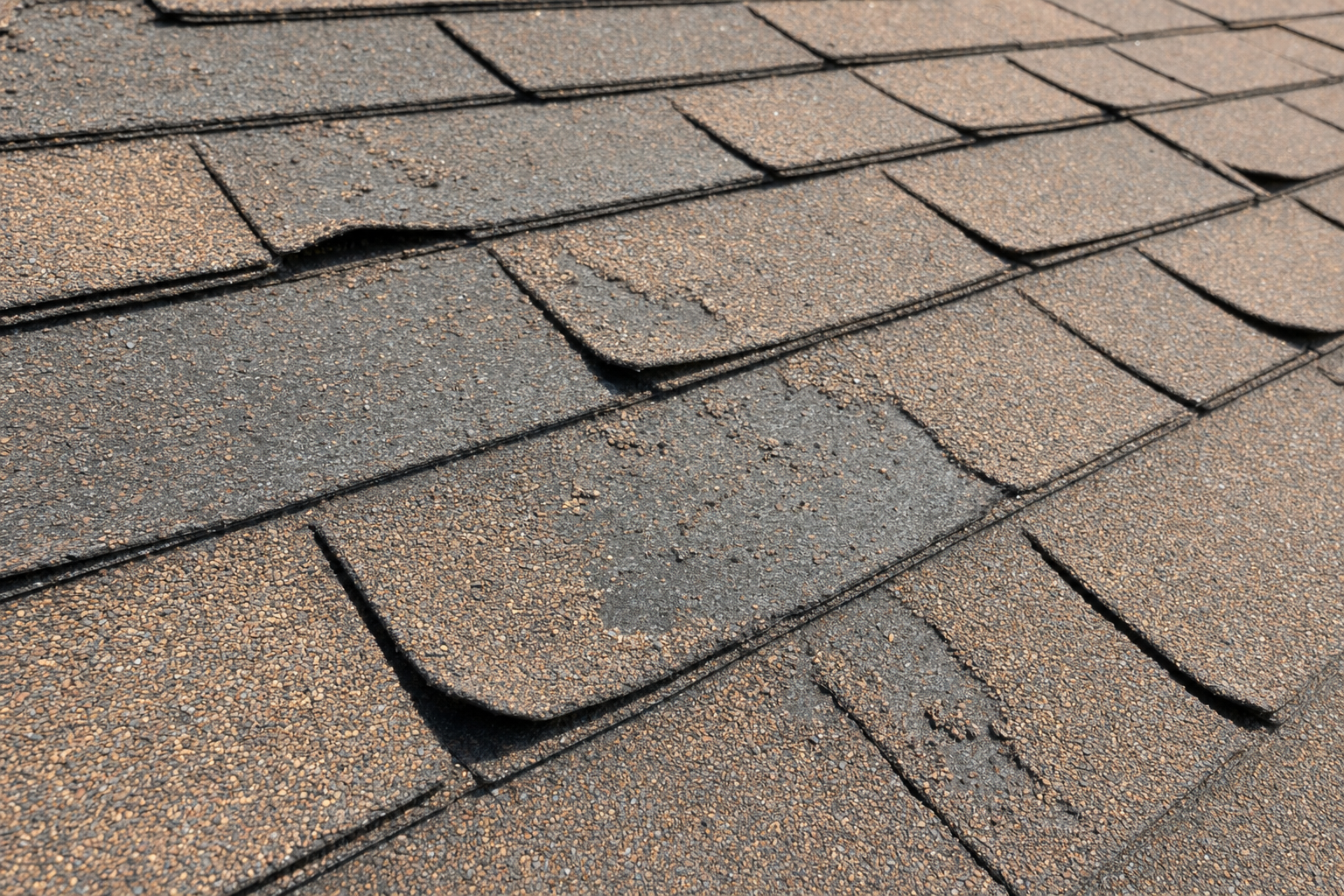
On shingle roofs, age can show up as granule loss, curled tabs, brittle edges, lifted shingles, or exposed fasteners. On tile roofs, the roof covering may last longer, but cracked tiles, underlayment wear, ridge issues, and flashing failures still matter. On metal roofs, corrosion, fastener wear, sealant breakdown, and panel movement become part of the inspection picture. On low-slope commercial and residential flat roofs, ponding water, UV degradation, membrane seams, and clogged drainage can shorten useful life.
In Miami-Dade and Broward County, High Velocity Hurricane Zone, or HVHZ, requirements add another documentation layer. HVHZ roof systems depend on approved materials, tested assemblies, permit records, and installation details that match the Florida Building Code and local product approval requirements. Miami-Dade County’s Product Control program includes roofing product approval categories such as asphalt shingles, modified bitumen, metal roof systems, roof tile systems, waterproofing systems, and roofing underlayments. [2]
When Replacement Becomes More Likely
A roof replacement becomes more likely when age and condition point in the same direction. A roof may be near an insurer’s review threshold, but the real issue is usually whether the roof still has enough service life and whether visible defects are repairable.
Florida roof age insurance requirements do not make replacement automatic, but they do make documentation more important when the roof is older, damaged, repeatedly patched, or missing clear permit history. Homeowners comparing roof repair in Miami and South Florida with roof replacement options in South Florida should start with the condition of the actual roof system, not the roof age alone.
Common replacement triggers include:
- Less than five years of remaining useful life on an inspection report
- Active leaks or evidence of repeated water intrusion
- Widespread brittle shingles, cracked tiles, or failing underlayment
- Large areas of previous patching
- Rusted or deteriorated metal panels, fasteners, or flashing
- Flat-roof membrane failure, open seams, recurring ponding, or saturated insulation
- Missing permits or unclear records for a past roof replacement
Florida law calculates roof age using the last date when 100 percent of the roof surface was built or replaced, or the initial date of a partial replacement sequence that eventually covered the full roof surface. [1] That is why permit history matters. If the roof was replaced in sections, the paperwork may not be as simple as the homeowner expects.
Citizens Roof Age Requirements for Older Florida Roofs
Florida roof age insurance requirements also show up in Citizens Property Insurance Corporation documentation rules, but Citizens eligibility thresholds are not the same thing as every private carrier’s underwriting review. A four-point inspection reviews the roof, electrical system, plumbing system, and HVAC system. Citizens requires a four-point inspection for property owner, dwelling, and mobile home applications on properties more than 20 years old, and that inspection includes the roof. [3]
Citizens uses older-roof documentation thresholds of more than 25 years for soft roofs and more than 50 years for hard roofs. A soft roof generally means shingle or similar roofing. A hard roof generally means tile, slate, clay, concrete, or metal. Citizens states that these older roofs require documentation showing at least five years of remaining useful life. [3]
If the roof has less than five years of remaining useful life, Citizens states that proof of full roof replacement must be provided before a policy is written on the property. [3]
These rules are not a promise of coverage. They are a reminder that older roof insurance requirements depend on specific, current documentation tied to the actual roof system. Duke Contractors documents visible roof condition and does not determine coverage, eligibility, or underwriting decisions.
Florida Roof Age Insurance Requirements by Roof Type
| Roof type | Common insurance review concerns | Documentation that helps | | — | — | — | | Asphalt shingle | Granule loss, brittle tabs, lifted shingles, exposed fasteners, prior patching | Permit history, roof-condition photos, repair records, remaining useful life roof inspection | | Tile | Cracked or displaced tiles, underlayment age, ridge issues, flashing failures | Tile and underlayment records, photos of roof planes and transitions, leak history | | Metal | Corrosion, fastener wear, sealant breakdown, panel movement, flashing condition | Product information, fastener and flashing photos, permit records, repair invoices | | Flat or low-slope | Ponding water, membrane seams, UV wear, clogged drains, saturated insulation | Drainage photos, membrane-condition photos, prior coating or repair records, storm damage roof documentation |
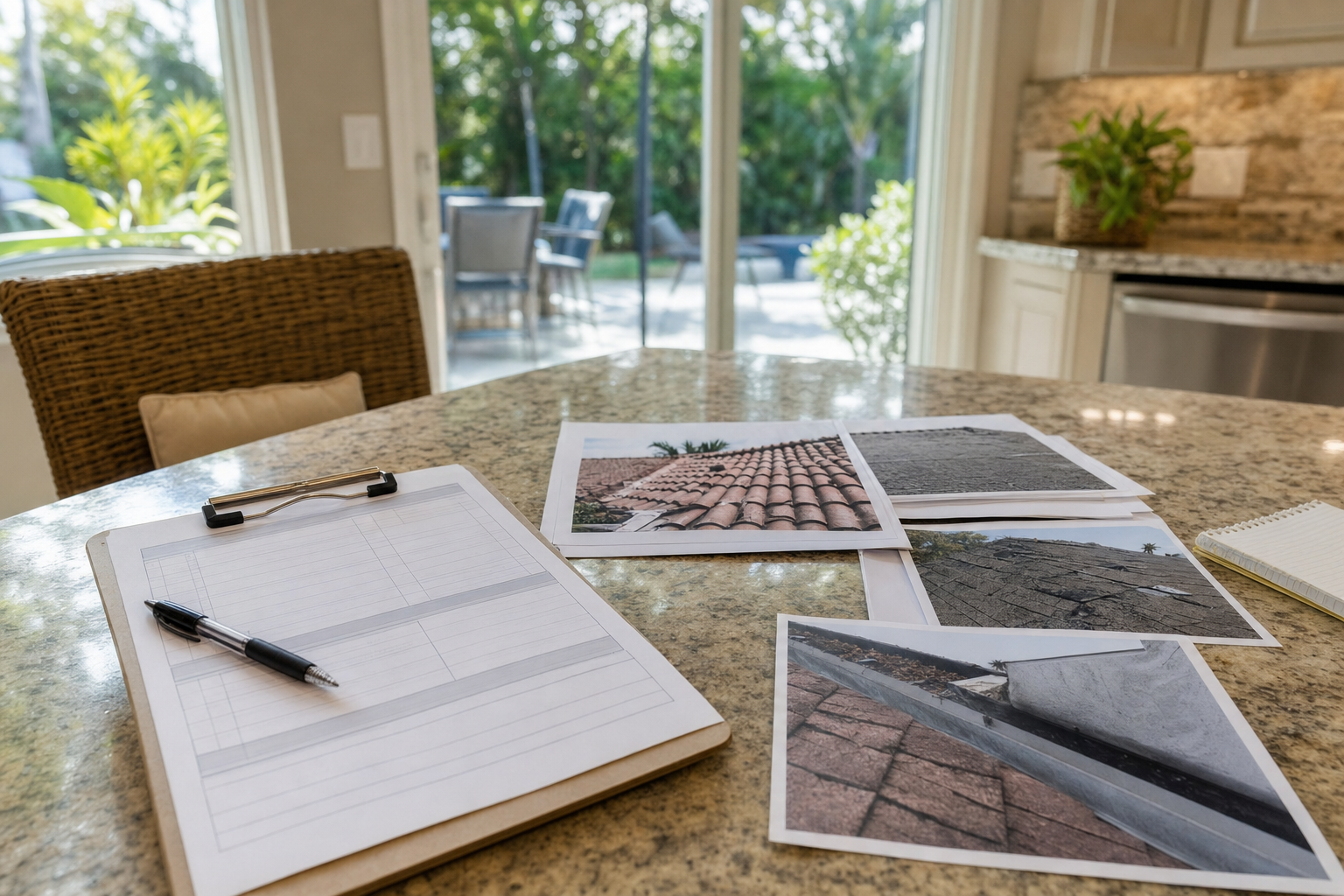
For South Florida roof age reviews, homeowners should gather permit records, prior roof invoices, photos, leak history, repair records, material information, and any notice from the insurer before scheduling a Florida roof inspection for insurance.
What a Florida Roof Inspection for Insurance Should Document
A roof-age inspection should do more than say “old” or “acceptable.” It should identify the roof type, visible condition, approximate age, roof planes inspected, drainage issues, flashing details, signs of leaks, and repair or replacement recommendations where appropriate.
For South Florida homes, documentation should include clear photos of:
- Field shingles, tiles, panels, or membrane surfaces
- Valleys, ridges, penetrations, vents, and flashing
- Gutters, drip edges, fascia, and drainage paths
- Interior ceiling stains or attic evidence when accessible
- Prior patches, sealant work, or replaced sections
- Permit or installation records when available
Duke Contractors is a licensed roofing contractor, not a public adjuster. The role of the roofing inspection is to document roof condition and provide repair or replacement options based on what is visible and verifiable. For homeowners who need a residential roofing contractor in Miami, that inspection should create a clean starting point for repair planning, replacement planning, and any documentation requested by the homeowner’s insurer or agent.
FAQ: Florida Roof Age and Insurance Requirements
What are Florida roof age insurance requirements?
Florida roof age insurance requirements limit when a homeowners insurer can require roof replacement based only on age and give older roofs an inspection path based on remaining useful life.
What is the 15-year roof rule in Florida?
For roofs at least 15 years old, Florida law requires the insurer to allow an authorized inspection before requiring replacement as a condition of issuing or renewing a homeowners policy. [1]
Does a 15-year-old Florida roof have to be replaced?
Not automatically. If an authorized inspection shows five years or more of remaining useful life, roof age alone cannot be the only reason for refusal or nonrenewal. [1]
What documents help with older roof insurance review?
Useful documents include roof permits, replacement invoices, inspection reports, clear roof-condition photos, leak history, repair records, and material information.
Are Citizens roof age requirements different?
Yes. Citizens roof age requirements include older-roof documentation thresholds for soft roofs over 25 years and hard roofs over 50 years, with documentation showing at least five years of remaining useful life. [3]
Closing CTA
If your South Florida roof is aging, flagged for review, leaking, or missing clear permit documentation, schedule a no-cost roofing inspection with Duke Contractors. We inspect shingle, tile, metal, and flat roofing systems across Miami-Dade, Broward, Palm Beach, Monroe County, and the surrounding South Florida area, then provide straightforward repair or replacement options based on the roof’s actual condition.
Florida roof age insurance requirements are easier to handle when the roof record is organized and the inspection is specific. Duke Contractors can help document visible roof condition for homes in Doral, Miami, Homestead, Fort Lauderdale, and nearby South Florida communities without promising insurance approval or underwriting outcomes.
References
