For many South Florida homeowners, a tile roof is not just about curb appeal. It is about heat, salt air, wind-driven rain, hurricane-season preparation, and how the roof system will age over decades. If you are comparing Eagle Roofing concrete tile in Florida, the big questions are practical: Which style fits your home? How does tile perform in Miami-Dade, Broward, Palm Beach, or Monroe County wind conditions? And what kind of lifespan can you realistically expect with proper installation and maintenance? Eagle Roofing Products concrete tile can be a strong choice, but the tile itself is only one part of the roofing system.
Why Eagle Roofing Concrete Tile Works for Florida Homes
Eagle Roofing Products manufactures concrete roof tile in profiles designed to mimic classic clay barrel tile, slate, shake, and low-profile modern tile looks. For South Florida homes, that matters because roof style is often tied directly to the architecture: Mediterranean homes, coastal stucco properties, ranch homes, and newer modern builds all call for different tile shapes.
Concrete roof tile is made from sand, cement, water, and pigment. Once cured, it becomes a dense roofing material that resists UV exposure and does not corrode like some metal components can in salty coastal air. Eagle lists concrete roof tile as a durable roofing material available in multiple profiles, colors, and blends for regional home styles. [1]
A tile roof also helps create a distinct South Florida look. The most common choices include:
- S-profile or barrel-style tile: the classic curved look often seen in Miami, Coral Gables, Fort Lauderdale, and coastal neighborhoods.
- Flat tile: a cleaner, more modern profile for contemporary homes in areas like Boca Raton, West Palm Beach, and waterfront communities.
- Shake-look tile: concrete tile shaped to resemble wood shake without using wood.
- Slate-look tile: a flatter, refined profile for homes that need a more formal finish.
The best option depends on roof pitch, neighborhood style, HOA rules, budget, and product approval requirements. If you are planning a tile roof replacement in South Florida, the style conversation should happen alongside code, underlayment, and attachment planning.
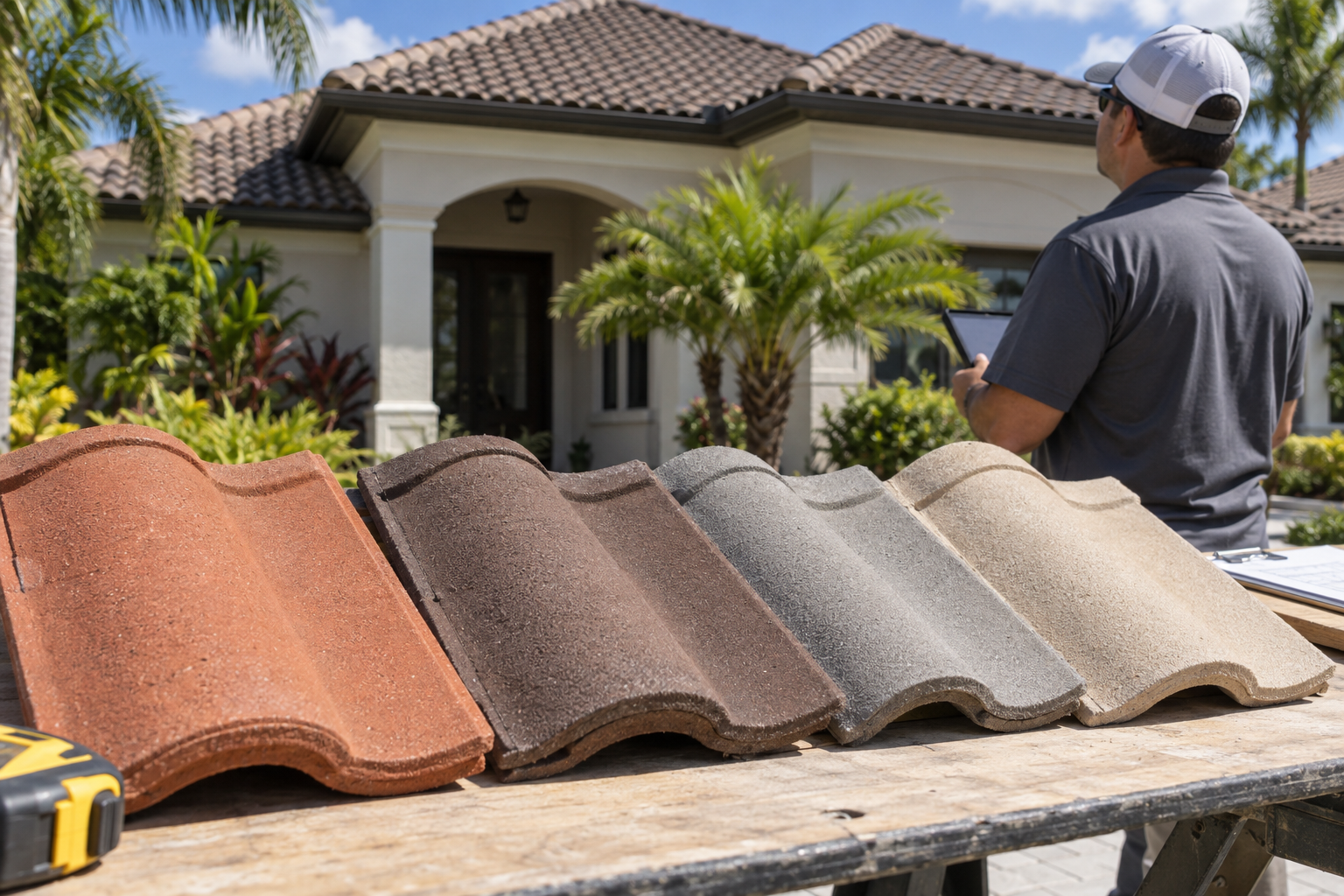
Eagle Concrete Tile Styles: Barrel, Flat, Shake, and Slate Looks
Eagle concrete tile is popular because homeowners can get the visual character of premium materials without choosing actual clay, slate, or wood. For homeowners comparing Eagle Roofing concrete tile Florida options, profile choice affects both appearance and installation planning.
Barrel and S-tile profiles create deeper shadow lines and a traditional Florida appearance. They are often chosen for Mediterranean and Spanish-style homes. These tiles make a strong visual statement, but they also require careful layout at ridges, hips, valleys, and penetrations.
Flat concrete tile gives a lower-profile appearance. It works well on modern stucco homes, waterfront properties, and homes where the owner wants the roof to feel clean and architectural rather than traditional.
Shake-look and slate-look concrete tile can create texture without introducing organic roofing materials. In South Florida, that can be appealing because homeowners want a roof that holds up under sun, humidity, and seasonal storms.
Color also matters. Lighter roof colors may help reduce heat absorption compared with darker roof colors, though total attic temperature depends on ventilation, underlayment, insulation, and the full roof assembly. The Tile Roofing Industry Alliance notes that tile roofs are installed as a system, including underlayment, flashing, fasteners, battens where used, and ventilation considerations. [2]
| Eagle tile style | Best home fit | Visual look | Planning considerations | |—|—|—|—| | Barrel or S-tile | Mediterranean, Spanish-style, coastal stucco homes | Curved, traditional, high-shadow profile | Ridge, hip, valley, and penetration details need careful planning | | Flat tile | Modern, contemporary, waterfront homes | Clean, low-profile, architectural | Works best when roof planes and details support the streamlined look | | Shake-look tile | Homes needing texture without wood roofing | Wood-inspired texture | Good option for homeowners who want texture with a concrete material | | Slate-look tile | Formal or transitional homes | Refined, flatter appearance | Color selection and roof pitch can strongly affect the finished look |
Wind Performance for Concrete Tile Roofs in South Florida
In South Florida, wind performance is not just about picking a strong tile. It is about whether the entire assembly is approved, designed, and installed correctly. South Florida faces tropical storm and hurricane exposure, and NOAA’s National Hurricane Center tracks hurricane risk and storm activity throughout the Atlantic basin each season. [3]
Miami-Dade and Broward County are part of Florida’s High-Velocity Hurricane Zone. HVHZ means High-Velocity Hurricane Zone, a Florida designation for areas with stricter wind-related building requirements. [4]
Miami-Dade County also maintains a Product Control system for approved building products and roofing assemblies used in high-wind regions. A Miami-Dade Notice of Acceptance, or NOA, documents that a product or assembly has been reviewed for specific approved uses. [5]
Any Eagle Roofing concrete tile Florida installation should be reviewed as a complete roof assembly, not just as an individual tile product. A roof assembly is the complete installed system, including decking, underlayment, flashing, fasteners, tile, ridges, hips, valleys, and ventilation details.
That means a concrete tile roof should be evaluated as a complete system:
- approved tile profile and manufacturer documentation
- underlayment type and attachment
- fastener type, spacing, and embedment
- mechanical fastening, foam adhesive systems, battens where used, and other approved attachment methods
- ridge, hip, rake, and eave detailing
- roof deck condition
- flashing around walls, vents, skylights, and chimneys
- local code and permit requirements
A common homeowner mistake is asking, “What wind rating does the tile have?” A better question is, “What approved roof assembly is being installed on my home?” A wind-rated tile roof refers to an approved roof assembly designed and installed to meet specific wind-uplift requirements. The attachment method and the roof deck condition can matter as much as the tile profile.
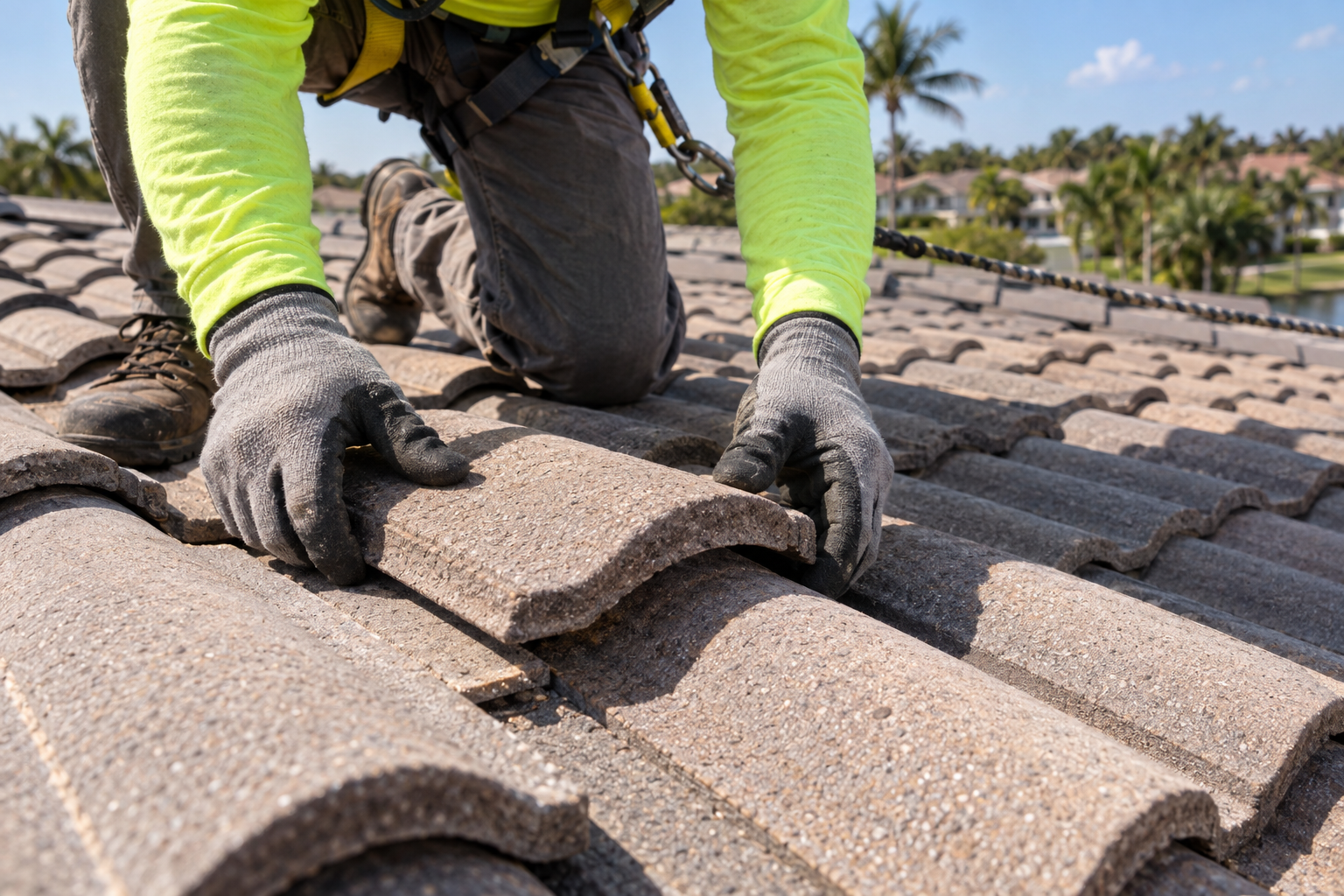
Lifespan: What to Expect From a Concrete Tile Roof in Florida
Concrete tile is known for long service life, but Florida conditions are tough. Sun exposure, salt air, heavy rain, tropical systems, and older underlayment can all affect how long the roof performs.
Many concrete tile roofs can last for decades when properly installed and maintained, and tile manufacturers often position concrete tile as a long-life roofing material. [1] The lifespan of Eagle Roofing concrete tile in Florida depends heavily on underlayment, flashing, ventilation, installation quality, storm exposure, and maintenance.
In Florida, the underlayment beneath the tile is often the limiting factor. Underlayment is the waterproofing layer installed beneath roof tile to help shed water before it reaches the roof deck. The tile may still look solid while the waterproofing layer below has aged, especially on older roofs.
Homeowners should watch for:
- cracked, slipped, or missing tiles
- loose ridge caps
- exposed fasteners
- stained ceilings or attic moisture
- worn flashing at walls and valleys
- debris collecting in valleys
- repeated leaks after heavy rain
- uneven areas that suggest deck or batten problems
A cracked tile can allow water to reach the underlayment even when the surrounding roof looks intact. A tile roof inspection is especially important before major work such as buying a home, renewing coverage, planning a roof replacement, or preparing for hurricane season.
Maintenance Tips for Eagle Concrete Tile Roofs in Florida
Concrete tile does not mean “set it and forget it.” Regular maintenance helps protect the roof system underneath.
Good maintenance includes keeping valleys clear, checking sealants and flashings, replacing broken tiles promptly, and avoiding foot traffic from people who do not know how to walk on tile. Pressure washing should be handled carefully because aggressive washing can damage tile surfaces, displace components, or force water where it does not belong.
If your roof is older, the inspection should focus on both the visible tile and the hidden water-shedding layers below it. Duke Contractors can document visible roof conditions with photos and explain repair or replacement options based on what is actually found. If you are noticing leaks, cracked tiles, or storm damage, ask about concrete tile roof repair before assuming the entire roof needs replacement.
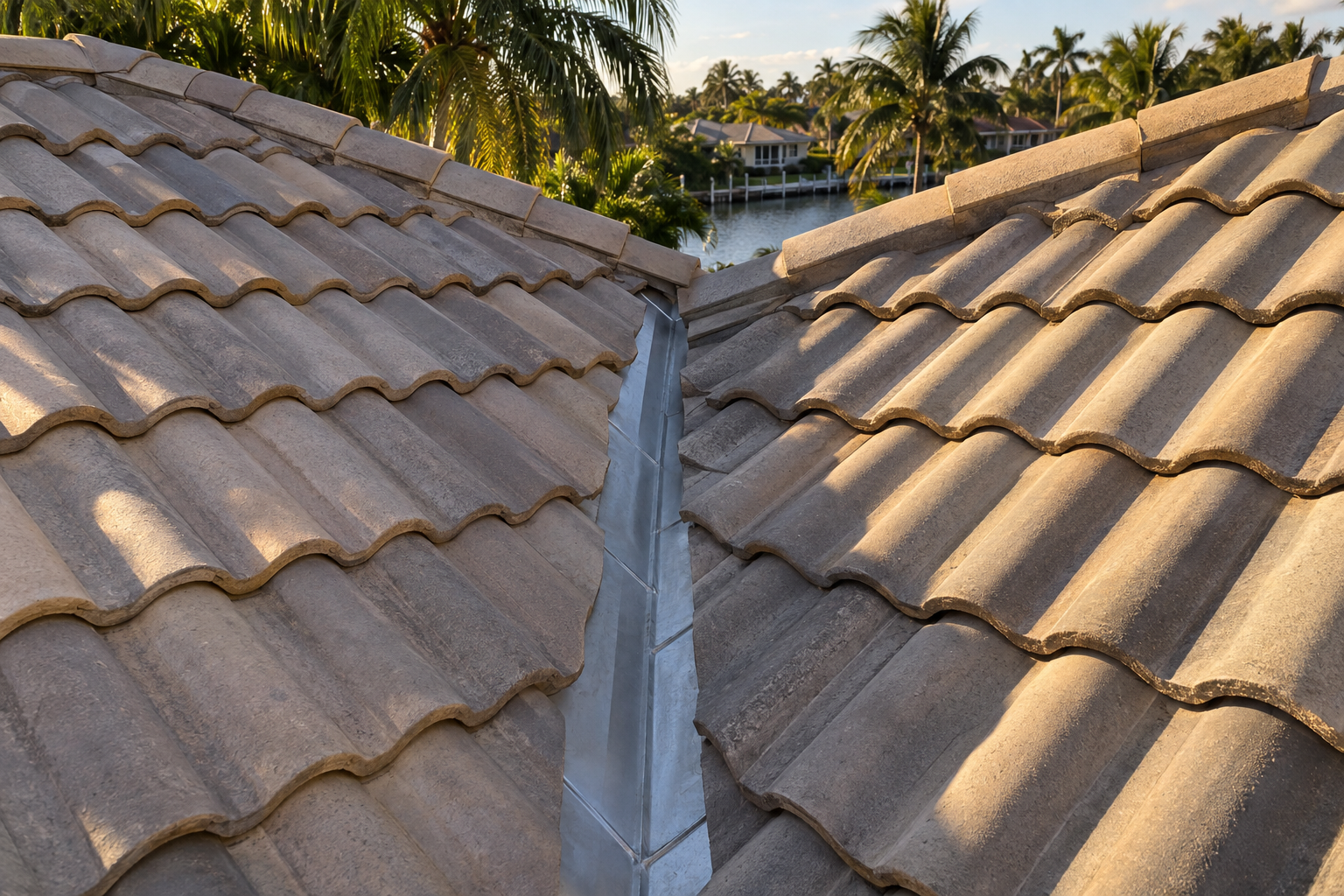
Repair or Replacement: How to Think About the Decision
Not every broken tile means you need a full roof replacement. If the damage is isolated, matching tile is available, and the underlayment and flashing are still in good condition, a repair may be enough.
Replacement becomes more likely when the roof has repeated leaks, widespread tile movement, brittle or aged underlayment, deck concerns, or multiple repairs that are no longer solving the underlying problem. This is especially important for older Florida tile roofs where the visible tile may outlast the waterproofing layer below it.
Insurance and real estate timing can also make documentation important. Roof age, visible condition, repair history, permit records, and inspection photos may all matter during a home sale, policy review, or storm-season planning. Duke Contractors can provide a professional roof inspection before hurricane season and help homeowners understand whether repair or replacement is the more practical path.
When to Call a Florida Roofing Contractor
Call a licensed Florida roofing contractor if you are comparing Eagle Roofing tile South Florida options, planning a concrete roof tile Miami project, seeing signs of underlayment age, or trying to confirm whether a specific tile and assembly meet local requirements.
A qualified contractor can help connect style, structure, code compliance, storm readiness, and budget. That matters in Miami-Dade County, Broward County, Palm Beach County, Monroe County, and the Florida Keys, where roof assemblies may need to satisfy stricter high-wind requirements depending on location.
Duke Contractors provides residential roofing services and roofing services across Miami-Dade, Broward, Palm Beach, and Monroe County.
FAQ: Eagle Roofing Concrete Tile in Florida
Is Eagle Roofing concrete tile good for Florida homes?
Yes. Eagle Roofing concrete tile can be a good option for Florida homes when the selected tile profile, underlayment, attachment method, and full roof assembly meet applicable code and local approval requirements. Installation quality is especially important in South Florida wind zones.
Does Eagle Roofing concrete tile need Miami-Dade approval?
In Miami-Dade and other high-wind areas, homeowners should confirm that the specific tile and roof assembly meet applicable Florida Building Code and local Product Control requirements. Miami-Dade Product Control lists approved roofing products and assemblies for high-wind regions. [5]
How long does concrete tile last in Florida?
Concrete tile can last for decades, but Florida roof performance often depends on the underlayment, flashing, ventilation, storm exposure, installation quality, and maintenance history. The underlayment is often the limiting factor in an older Florida tile roof.
Can Eagle concrete roof tiles be replaced individually?
Individual broken tiles can often be replaced if matching tile is available and the underlayment, flashing, and surrounding tiles are still in good condition. A licensed roofer should check for underlayment or flashing damage below the tile.
What is the best concrete tile style for South Florida homes?
There is no single best style. Barrel and S-tile profiles fit Mediterranean and Spanish-style homes, flat tile profiles are often better for modern coastal and stucco homes, and slate or shake looks work for homeowners who want texture with a concrete tile material.
Closing CTA
Thinking about Eagle Roofing concrete tile in Florida for your South Florida home? Duke Contractors provides roofing inspections, estimates, and tile roof replacement guidance across Miami-Dade, Broward, Palm Beach, Monroe County, and surrounding South Florida communities. Schedule a roof inspection or request a tile roof estimate to review your roof condition, style options, and next steps with a licensed local roofing contractor.
References
