Choosing the best roofing material Florida homeowners can rely on is not just about curb appeal. In Miami-Dade, Broward, Palm Beach, Monroe County, and the rest of South Florida, your roof has to deal with hurricane-season wind, wind-driven rain, salt air, strong UV exposure, and year-round heat. Tile, metal, and architectural shingles can all make sense, but the right choice depends on your home structure, budget, neighborhood style, maintenance tolerance, and how the full roof system is installed. A roof system includes the covering, underlayment, flashing, ventilation, fastening, and deck condition.
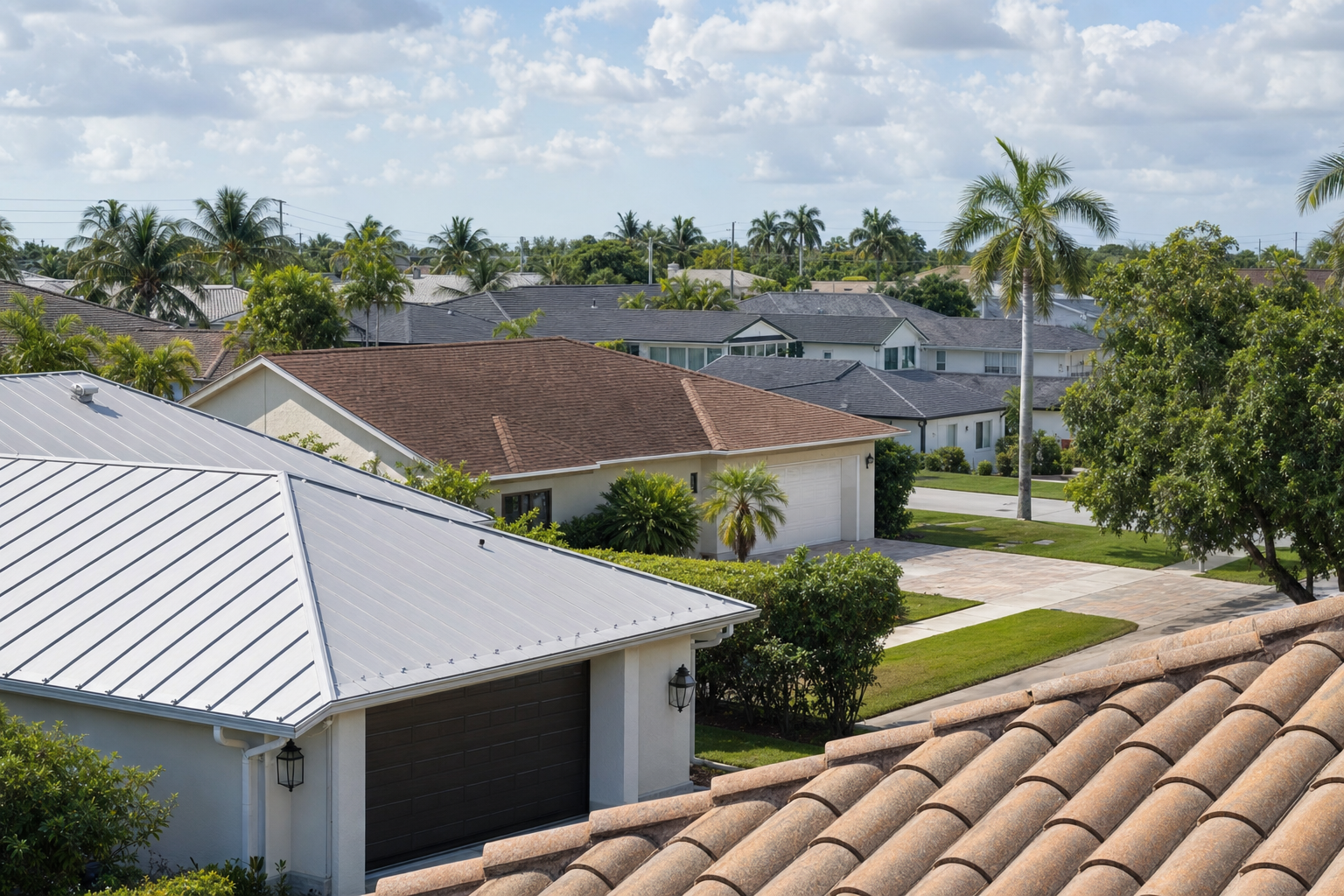
The Short Answer: There Is No One Best Roof for Every Florida Home
For many South Florida homeowners, the best roofing material Florida homes need is the material that fits the structure, code zone, budget, and installation plan.
Tile is often chosen for long-term curb appeal and strong heat performance. Metal is popular for wind resistance, clean lines, and lower maintenance when the finish and fasteners are right for coastal exposure. Architectural asphalt shingles are laminated asphalt shingles designed to be thicker and more dimensional than basic three-tab shingles. They are usually the most budget-friendly option and can perform well when the roof deck, underlayment, starter strips, flashing, and ventilation are handled correctly. Homeowners comparing types of roofs for Miami homes can start with the main material options here.
Florida roof decisions also have to respect local code requirements. The Florida Building Code, 8th Edition (2023), took effect on December 31, 2023, and roofing products must be selected and installed under applicable state and local requirements. [1]
Miami-Dade and Broward counties are part of Florida’s High Velocity Hurricane Zone, or HVHZ, a stricter wind-code area that affects product approval and installation requirements. [2]
Tile Roofing: Classic South Florida Look, Heavy-Duty Planning
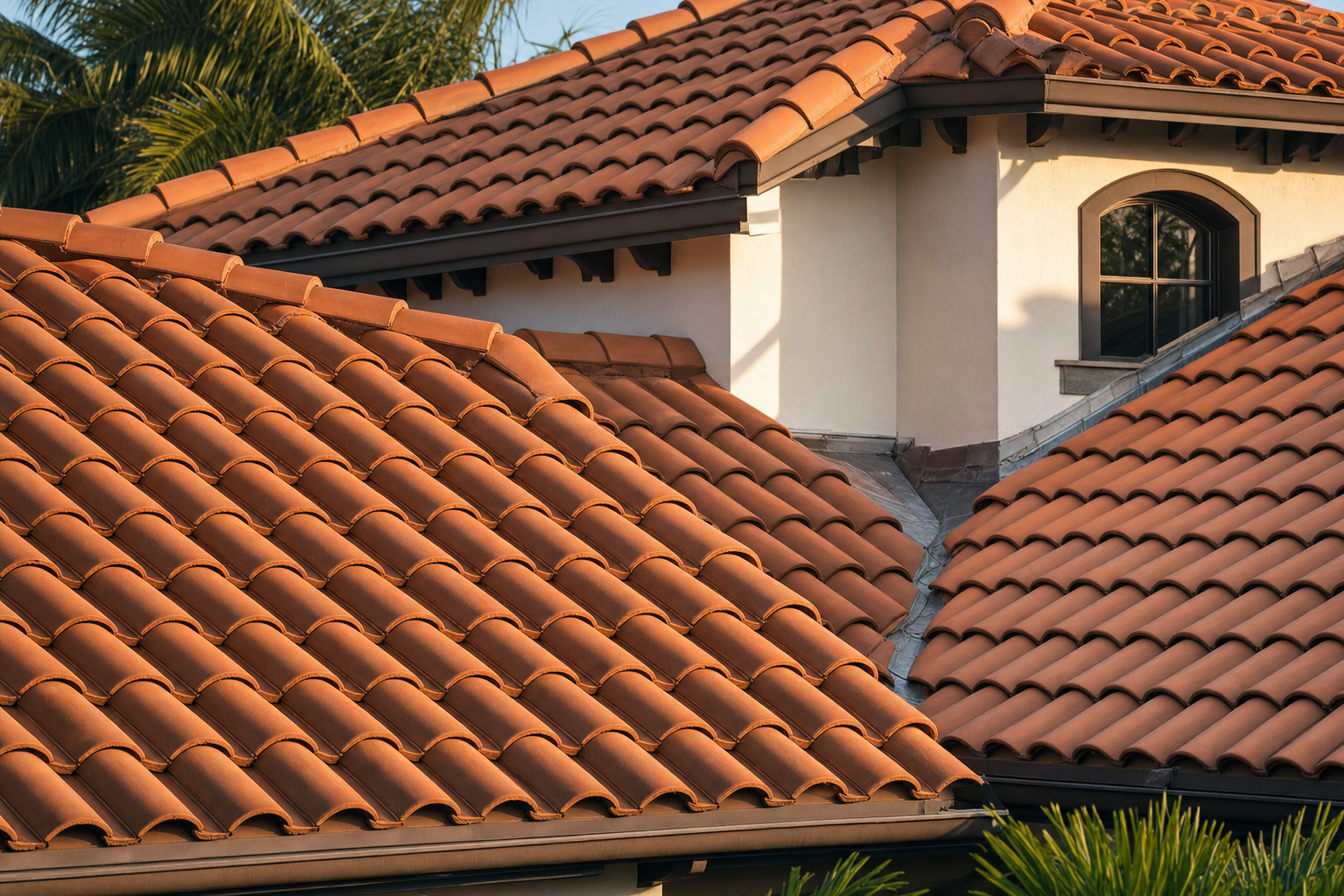
Tile roofs are common across Miami, Coral Gables, Kendall, Homestead, Weston, Boca Raton, and coastal South Florida neighborhoods because they match the regional architecture and handle sun exposure well. Concrete and clay tile are both durable roof-covering options, but tile is not a simple “set it and forget it” choice.
The biggest tile roof factor is weight. Not every structure is a candidate without confirming the home can support the system. The second factor is underlayment. Underlayment is the protective layer between the roof deck and the visible roof covering. Tile sheds water, but the underlayment is the layer that helps protect the roof deck when wind-driven rain gets under the tile field. Learn more about tile roofing in South Florida here.
Tile can be a strong choice if you want:
- A traditional South Florida appearance
- Strong heat and sun performance
- A premium look for Mediterranean, Spanish-style, or coastal homes
- A roof system designed for long-term service with proper maintenance
The tradeoff is repair complexity. Broken tiles, slipped tiles, cracked mortar, and worn underlayment should be addressed by a licensed roofing contractor, especially after storms or long periods of intense heat.
Metal Roofing: Strong Performance When Coastal Details Are Right
Metal roofing can be an excellent Florida option, especially for homeowners who want a modern profile and a roof covering that sheds water efficiently. Standing seam metal roofing uses raised seams and concealed fasteners on many residential systems, which can reduce exposed penetration points compared with some screw-down systems.
In South Florida, metal selection needs coastal thinking. Salt air can accelerate corrosion on exposed metal edges, fasteners, and incompatible metals. That does not rule metal out. It means the product, coating, clips, sealants, and installation details have to match the home’s location. Homeowners comparing metal roofing in Miami should look beyond the panel style and ask about coastal specifications.
Metal roofing may be a good fit if you want:
- A clean, modern roofline
- Strong water-shedding performance
- Fewer individual pieces than tile or shingles
- A system that can work well on certain low-slope or complex roof designs when properly specified
Homeowners sometimes worry about noise. In a properly built residential assembly, the roof deck, underlayment, attic space, and insulation all affect sound. The roof is not just the visible panel.
Category 1 hurricanes begin at 74 mph sustained wind speed, and the National Hurricane Center notes that the Saffir-Simpson scale measures wind only, not storm surge, rainfall flooding, or tornado hazards. [3]
Shingle Roofing: Practical, Flexible, and Budget-Conscious
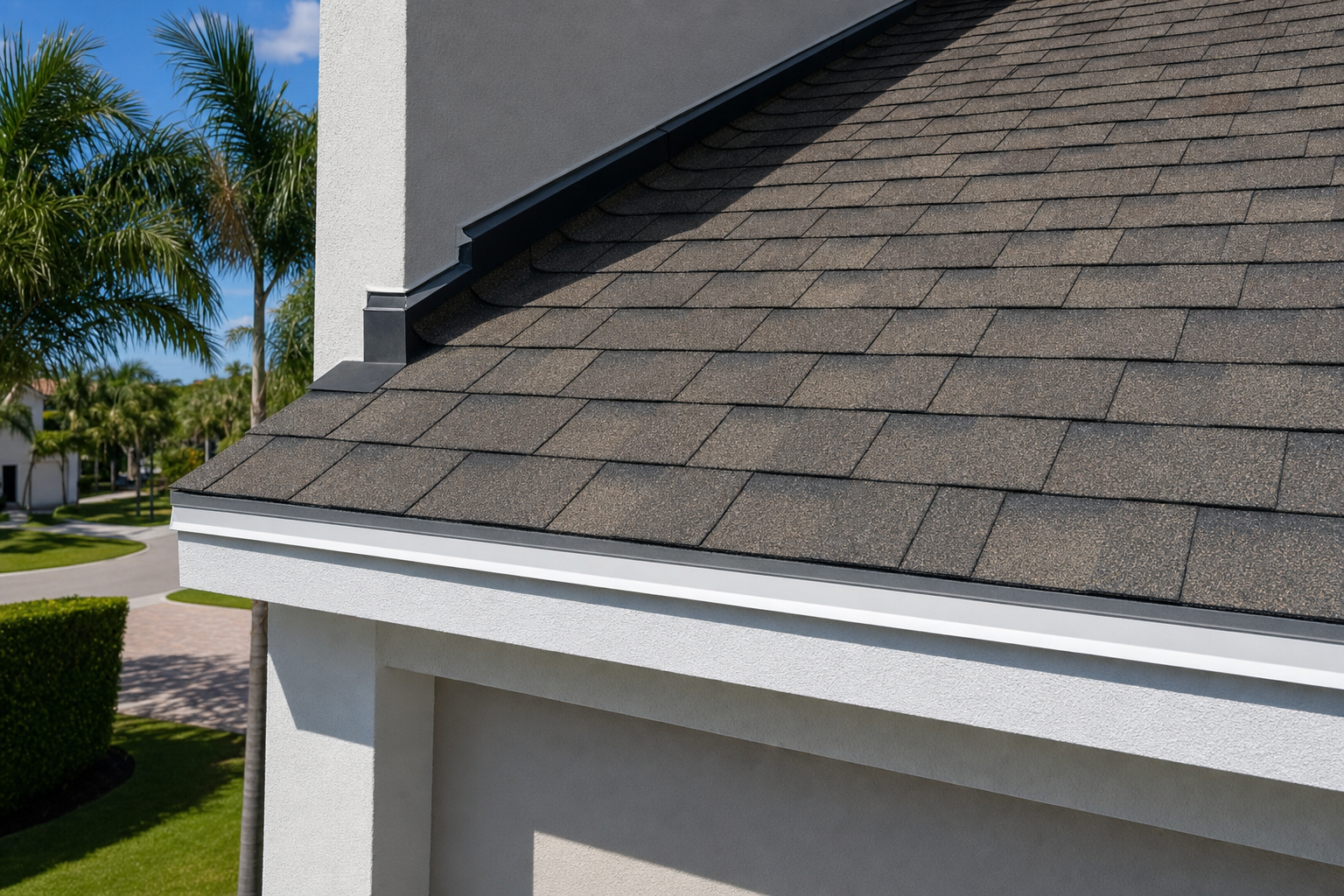
Architectural asphalt shingles remain a practical choice for many Florida homes. They are usually less expensive than tile or standing seam metal, easier to repair, and available in many colors and profiles. For homeowners comparing roof replacement costs in Miami-Dade, Broward, or Palm Beach County, shingles often keep the project more manageable.
The key is not to treat shingles as a shortcut. A good shingle roof South Florida homeowners can depend on requires the full system: deck condition, underlayment, drip edge, starter course, ridge ventilation, flashing, and manufacturer-approved fastening patterns. Heat and UV exposure can age shingles faster in Florida than in cooler climates, so attic ventilation and installation quality matter. Compare shingle roofing options before choosing based on price alone.
Shingles may be the right choice if you want:
- Lower upfront cost than tile or many metal systems
- Easier matching for repairs
- A broad range of color and style options
- A roof replacement that can be completed efficiently by an experienced crew
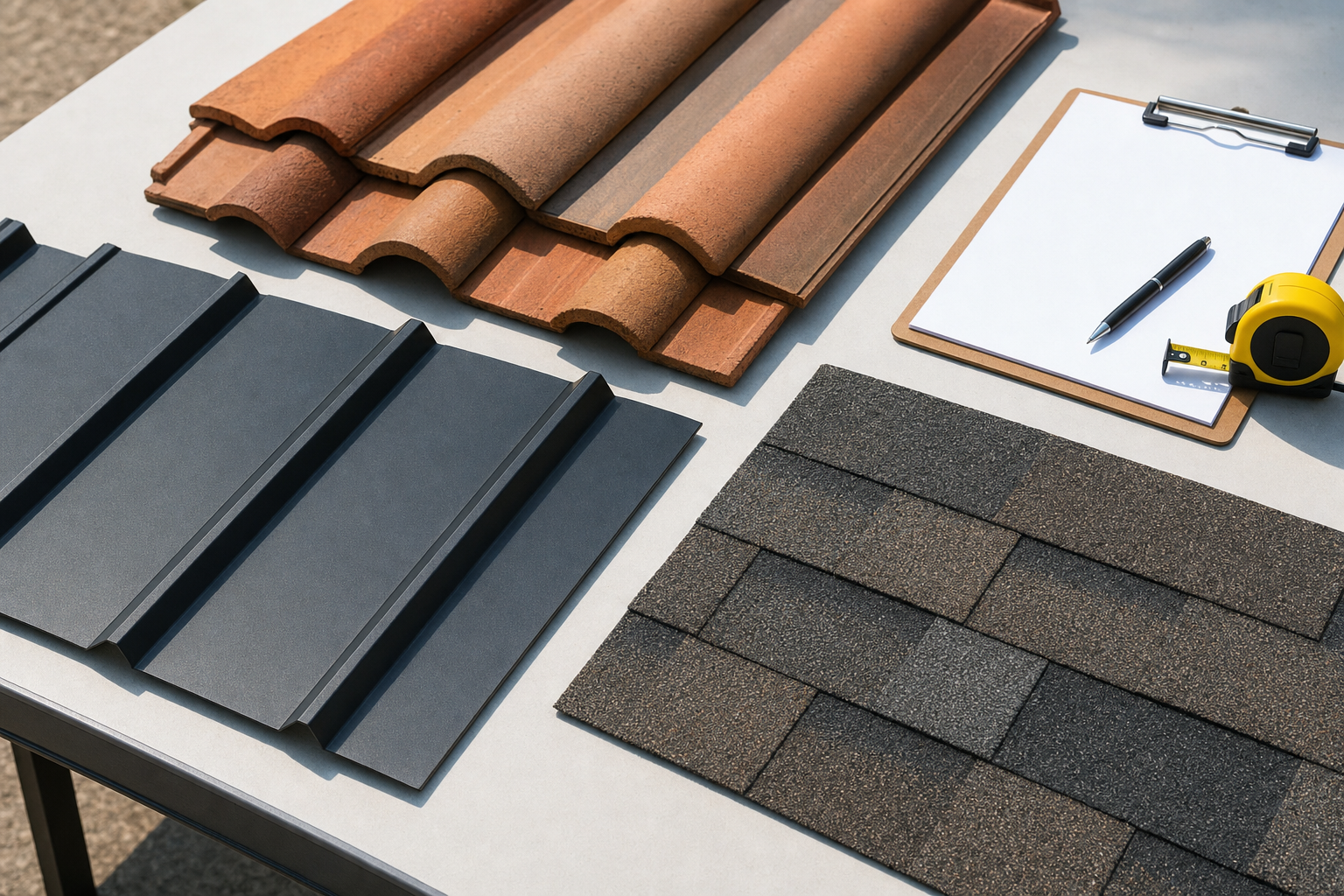
Tile vs Metal vs Shingle Roofs in Florida: Quick Comparison
A Florida roof material comparison should look at more than the surface material. Relative cost, maintenance, coastal exposure, structure, and code fit all matter before a homeowner chooses roof replacement materials Miami contractors can install correctly.
| Material | Relative upfront cost | Strengths | Watch-outs | | — | — | — | — | | Tile | Usually higher | Classic South Florida look, strong heat performance, long-term curb appeal | Heavy system, underlayment importance, more complex repairs | | Metal | Usually medium to higher | Clean profile, strong water shedding, fewer pieces than tile or shingles | Coastal corrosion details, finish quality, fastener and clip specifications | | Architectural shingles | Usually lower | Flexible style options, practical repairs, efficient replacement timing | Heat and UV aging, ventilation dependency, fastening quality |
Best for budget
Architectural shingles are often the most budget-conscious option for Miami roof replacement projects. That does not mean they should be installed as a basic covering only. The roof deck, underlayment, flashing, ventilation, and fastening pattern still decide how the system performs.
Best for coastal exposure
Metal and tile can both work near salt air when the details are correct. For coastal roofing materials Florida homeowners should ask about coatings, fasteners, product approvals, exposed edges, and compatibility between metals.
Best for appearance
Tile often fits Mediterranean, Spanish-style, and coastal South Florida homes best. Metal can give a cleaner modern look. Shingles offer broad color flexibility for neighborhoods where a lower-profile roof is preferred.
Best for maintenance
Metal often has fewer individual pieces than tile or shingles, but coastal exposure still requires the right finish and fastener details. Tile may need broken-tile and underlayment attention. Shingles are generally easier to match and repair, but Florida heat makes ventilation and routine inspection important.
How to Choose Between Tile, Metal, and Shingle
Start with the home, not the brochure. A licensed roofing contractor should look at the roof slope, roof deck, age of the existing system, signs of leaks, ventilation, attachment details, and surrounding exposure. The best roofing material Florida homeowners choose should follow that inspection, not come before it.
Here is a simple way to think about it:
- Choose tile if your home supports the weight and you want a premium South Florida look.
- Choose metal if you want a durable, water-shedding system and the coastal finish details are specified correctly.
- Choose shingles if budget, repair flexibility, and clean installation timing are top priorities.
- For any material, prioritize underlayment, flashing, ventilation, fastening, deck condition, and code-compliant installation.
The Institute for Business & Home Safety’s FORTIFIED Roof program emphasizes stronger roof edges, sealed roof decks, and better roof-deck attachment because the roof system works as more than just the outer covering. [4]
Florida Roofing Material FAQ
What is the best roofing material Florida homeowners should choose?
The best roofing material Florida homeowners should choose depends on the home structure, code zone, budget, coastal exposure, and maintenance expectations. Tile, metal, and shingles can all work when installed as a complete roof system.
Is metal better than tile in South Florida?
Not always. Metal can be a strong option, but tile may better match certain homes and neighborhoods. The better choice depends on structure, roof design, budget, salt-air exposure, and installation quality.
Is tile or metal better for hurricane areas in Florida?
Neither material is automatically better for every home. Hurricane-area performance depends on product approval, roof design, deck attachment, underlayment, flashing, fastening, and code-compliant installation.
Are shingles a bad choice for Miami homes?
No. Architectural shingles can be a reasonable choice when installed as a complete roof system. The weak point is usually not the shingle alone; it is poor fastening, weak ventilation, worn decking, or bad flashing.
What roof material is best near salt air?
Near salt air, the best roof material depends on corrosion-resistant specifications, coatings, fasteners, exposed edges, and maintenance access, especially for metal systems.
Should I choose roof material before getting an inspection?
No. A roof inspection should come first because slope, deck condition, structure, ventilation, leaks, and code requirements can affect which material makes sense.
What should I check before choosing a roof material?
Check roof age, deck condition, slope, ventilation, underlayment options, local code requirements, warranty terms, and whether the contractor is licensed and experienced with South Florida roofs.
Closing CTA
If you are comparing tile, metal, and shingle roofing for a South Florida home, Duke Contractors LLC can inspect your current roof, explain practical material options, and help you verify structure, deck condition, and code fit before choosing a material. Schedule a free consultation for your home in Miami-Dade, Broward, Palm Beach, Monroe County, or the surrounding South Florida area, or request a roofing estimate here.
References
- Florida Building Commission, Florida Building Code effective date, https://floridabuilding.org/c/default.aspx ↩
- Florida Building Code / Florida Building Commission, High Velocity Hurricane Zone product and installation compliance context, https://floridabuilding.org/c/default.aspx ↩
- NOAA National Hurricane Center, Saffir-Simpson Hurricane Wind Scale, https://www.nhc.noaa.gov/aboutsshws.php ↩
- IBHS FORTIFIED Roof, https://fortifiedhome.org/roof/ ↩
