For many South Florida commercial buildings, the roof is not something owners think about until ponding water, interior leaks, blistering, or hurricane-season concerns force the issue. Hot asphalt built-up roofing, often called BUR, is one of the oldest low-slope commercial roofing systems still in use because it relies on multiple layers instead of a single membrane. For property managers, condo associations, retail centers, warehouses, office buildings, and industrial properties in Miami-Dade County, Broward County, Palm Beach County, and Monroe County, understanding how a built-up roofing BUR commercial system works can help you ask better questions before repair, recovery, or replacement decisions are made. This built-up roofing BUR commercial guide explains the system, where it fits, and what South Florida building owners should inspect before choosing repairs or replacement.
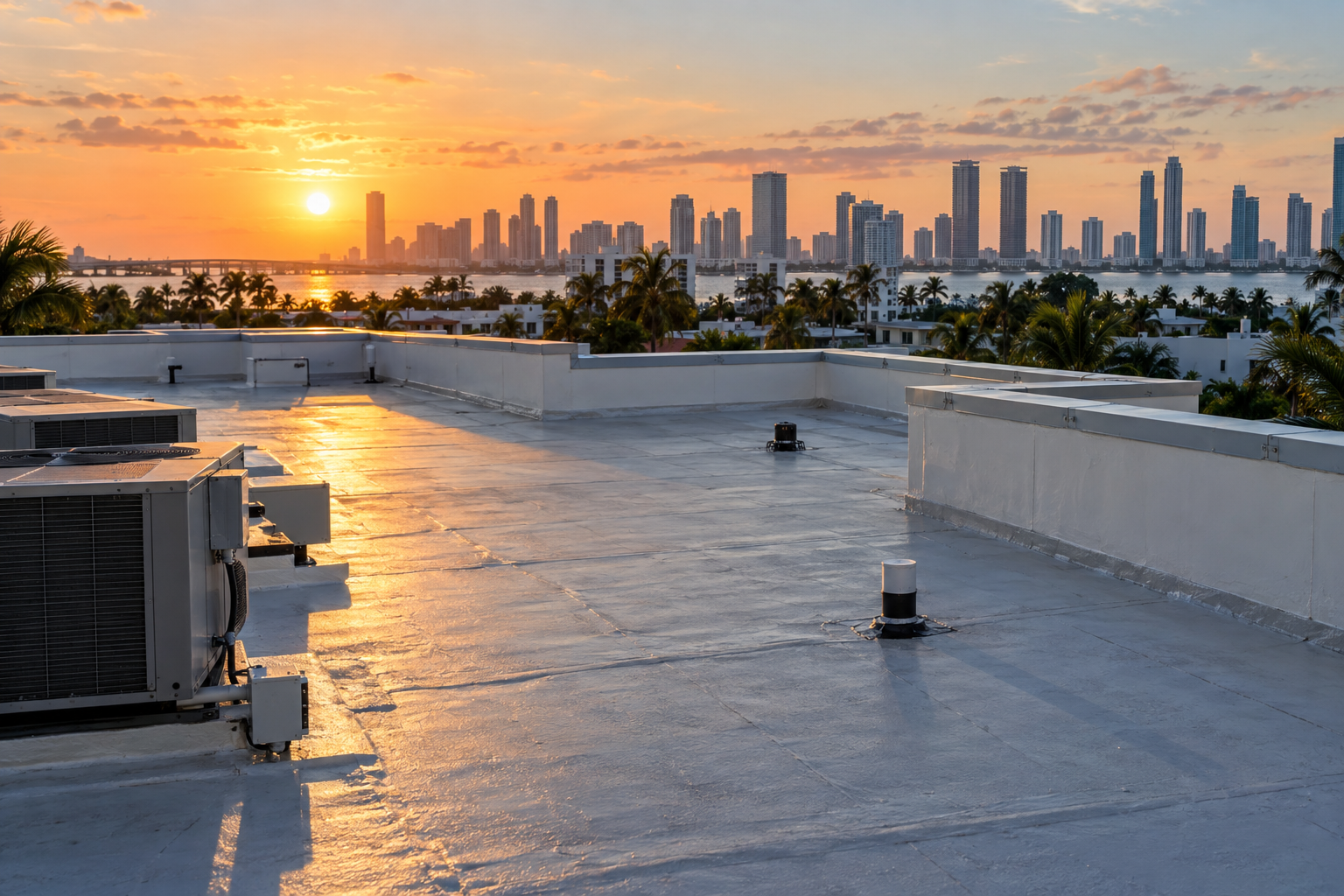
What Is Hot Asphalt Built-Up Roofing?
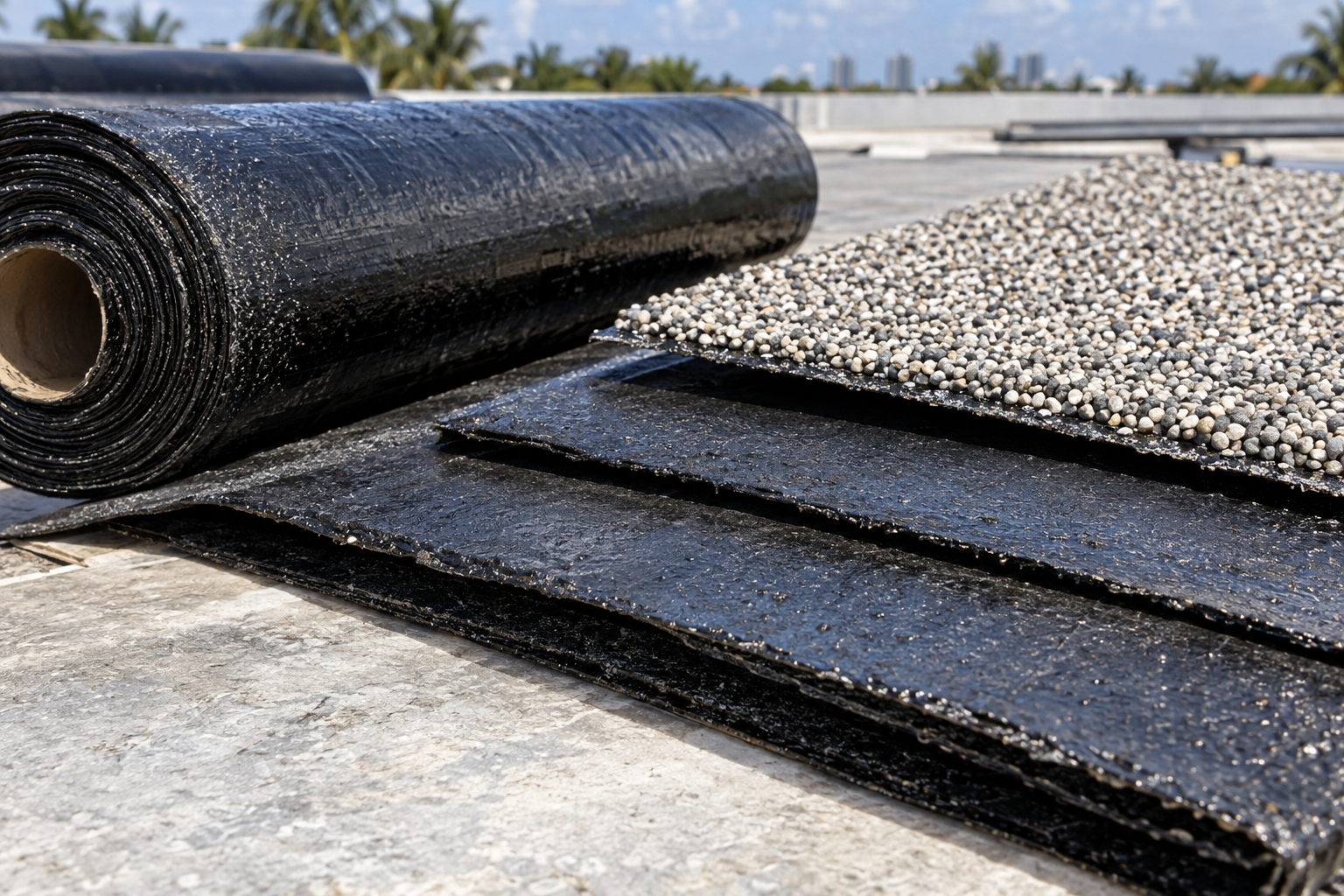
Built-up roofing is a low-slope roofing system made by alternating layers of bitumen and reinforcing felt or fabric, then finishing the roof with a protective surfacing such as gravel, mineral cap sheet, or coating. BUR stands for built-up roofing, a multi-ply low-slope roof system made with bitumen and reinforcing layers. Bitumen is the asphalt-based waterproofing material used between BUR plies, and a ply is one reinforcing layer within a built-up roofing membrane.
Built-up roofing uses alternating layers of bitumen and reinforcing fabric to create a multi-ply roof membrane. The National Roofing Contractors Association describes BUR as a roof membrane composed of alternating layers of bitumen and reinforcing fabrics with surfacing applied over the top. [1]
In commercial roofing, a built-up roofing BUR commercial assembly is valued because waterproofing is created through multiple reinforced layers. A BUR roof is assembled on the roof surface rather than installed as one single membrane sheet.
In a hot asphalt BUR installation, heated roofing asphalt is applied between the layers. The asphalt acts as the waterproofing adhesive and saturating material, while the reinforcing felts add strength and dimensional stability.
A typical BUR assembly may include:
- Roof deck or approved substrate
- Insulation or cover board, depending on the design
- Base sheet or first ply
- Multiple layers of hot asphalt and reinforcing felt
- Flood coat of asphalt
- Gravel, mineral surface, or reflective coating
A flood coat is a final layer of asphalt used to embed gravel or protect the membrane surface. The final design depends on the building, slope, drainage, code requirements, budget, and whether the roof is being repaired, recovered, or fully replaced.
Why Multi-Ply Roofing Matters in South Florida
South Florida commercial roofs face a tough mix: heat, UV exposure, wind-driven rain, tropical storms, salt air near the coast, and heavy afternoon downpours. Low-slope roofs also have more exposure to standing water than steep residential roofs, especially if drains, scuppers, gutters, crickets, or tapered insulation are not moving water properly.
The advantage of BUR is redundancy. If one layer is stressed, there are additional plies below it. That does not make the roof maintenance-free, but it can provide durable waterproofing when installed correctly and maintained over time. Commercial BUR roof performance depends on drainage, attachment, surfacing, workmanship, and ongoing maintenance.
For South Florida property managers, built-up roofing BUR commercial systems can offer redundancy when drainage, wind uplift, and maintenance are handled correctly. For commercial buildings in Miami-Dade and Broward, wind design is also a serious consideration. Miami-Dade and Broward County are located within Florida’s High-Velocity Hurricane Zone. HVHZ stands for High-Velocity Hurricane Zone, a Florida code designation that applies to Miami-Dade and Broward County. [2]
In HVHZ areas, roofing assemblies must meet specific code and product approval requirements, including Florida Building Commission and Miami-Dade County Product Control considerations where applicable. [3]
The Insurance Institute for Business & Home Safety also emphasizes roof system attachment, edge securement, drainage, maintenance, and severe-weather preparation as important parts of commercial roof wind resistance and hurricane readiness. [4]
Hot asphalt BUR may make sense for certain commercial buildings when:
- The roof has a large, low-slope surface area
- The building owner wants a proven multi-ply system
- The roof has heavy service access needs
- Proper drainage can be confirmed or improved
- The structure can support the system design
- The project allows for hot-work safety procedures
Duke Contractors provides commercial roofing services in South Florida for building owners who need a practical recommendation, not just a product pitch.
The Main Layers in a BUR System
A BUR roof is best understood as a layered system, not a single product.
1. The Substrate and Insulation
The roof deck must be evaluated before any system is installed. Wet insulation, deteriorated decking, trapped moisture, or poor attachment can shorten the life of the new roof. On many South Florida commercial buildings, insulation and cover board choices also affect energy performance, impact resistance, and wind-uplift performance.
2. Reinforcing Plies
The plies are the “built-up” part of BUR. These felt or fabric layers are embedded in asphalt to create a continuous membrane. More plies can mean more redundancy, but the system must still be designed correctly for the roof’s use, slope, drainage, and code requirements.
3. Hot Asphalt
Hot asphalt is applied in liquid form and cools into a waterproofing layer. The quality of the asphalt application matters. Too little asphalt, poor adhesion, wrinkles, fishmouths, or trapped moisture can create weak points.
4. Surfacing
BUR systems need protection from sun and wear. Surfacing may include gravel embedded in a flood coat, a mineral cap sheet, or a roof coating. In South Florida, reflective surfacing may be considered to help reduce heat absorption, depending on the roof design and building goals.
Benefits and Limits of Hot Asphalt BUR
A properly designed and installed BUR roof can be a strong option, but it is not right for every building.
The biggest advantage of a built-up roofing BUR commercial roof is not that it eliminates maintenance, but that it gives the building several waterproofing plies instead of one membrane. That layered design can be useful on a commercial flat roof South Florida property where service traffic, UV exposure, and seasonal storms all matter.
Key benefits include:
- Multi-ply waterproofing redundancy
- Proven history on commercial low-slope roofs
- Good resistance to normal roof traffic when protected
- Compatibility with certain repair and maintenance approaches
- Durable surfacing options for UV protection
Important limits include:
- Installation involves hot asphalt and jobsite safety controls
- Odor and access coordination may matter for occupied buildings
- Drainage problems must be corrected, not hidden
- Added weight may need structural review
- Poor workmanship can create early failure points
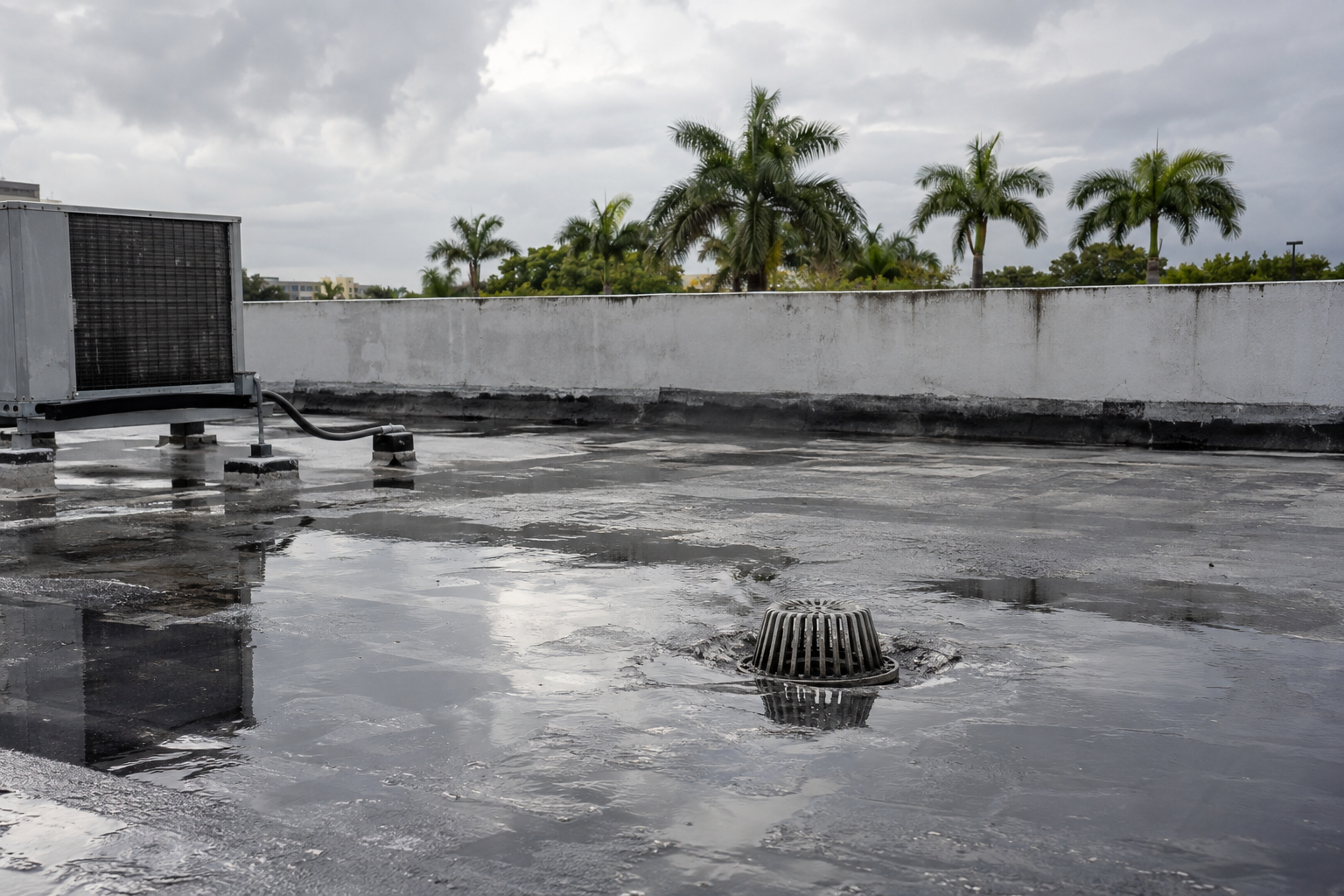
Ponding water should be taken seriously. Ponding water is water that remains on a low-slope roof after rainfall instead of draining away. Ponding water is commonly defined as water that remains on a roof for more than 48 hours after rainfall under conditions conducive to drying. [5]
When Should a Commercial Building Consider BUR Roof Repair or Replacement?
A BUR roofing system may be a candidate for targeted repair, recovery, coating, or full replacement depending on the roof’s age, moisture condition, drainage, attachment, surfacing, and leak history. Service life for commercial built-up roofing can vary widely; installation quality, roof traffic, drainage, maintenance, surfacing, and storm exposure often matter more than a simple age estimate.
Repair may be enough when the issue is isolated, the insulation is dry, flashings are serviceable, and the roof still has reliable surface protection. A larger scope may be needed when leaks are repeated, the membrane is brittle, wet insulation is widespread, drainage is poor, or previous repairs have become layered over deeper problems.
If you manage a retail plaza, condo association, warehouse, office building, medical building, or industrial property, it is worth scheduling commercial roof repair for leaks and ponding water before a small moisture problem spreads across the system.
Signs Your BUR Commercial Roof Needs Inspection
A commercial roof inspection Florida property managers can use should look beyond the visible leak. On BUR systems, the surface may show warning signs before water reaches the interior.
Watch for:
- Ponding water near drains, scuppers, gutters, or low areas
- Blisters, ridges, wrinkles, or fishmouths in the membrane
- Exposed felts where gravel or surfacing has worn away
- Loose gravel collecting at drains or roof edges
- Cracked, open, or deteriorated flashing
- Soft areas that may indicate wet insulation below
- Repeated patching in the same roof area
- Interior ceiling stains, musty odors, or active leaks
- Damaged edge metal, coping, or roof penetrations after storms
In hurricane-prone areas, commercial roof maintenance should generally be proactive: inspect before storm season, after major wind or rain events, and whenever interior leak patterns change. Building owners can schedule a commercial roof inspection to confirm whether the problem is isolated or part of a larger system issue.
BUR vs. TPO and Modified Bitumen
Many South Florida commercial roof conversations compare BUR with TPO and modified bitumen. Each system has a place.
TPO is a single-ply membrane often selected for reflective performance and heat-welded seams. Modified bitumen is an asphalt-based membrane that may be installed in rolls using different application methods. BUR is different because it is assembled from multiple layers on the roof.
A built-up roofing BUR commercial roof is typically compared against TPO and modified bitumen when owners are evaluating low-slope replacement options. Duke Contractors can review flat roofing systems for commercial buildings and explain which option fits the roof condition, occupancy, drainage, and budget.
| Roofing system | Basic design | Common strengths | Key considerations | |—|—|—|—| | BUR | Multi-ply asphalt-based membrane assembled with bitumen and reinforcing plies | Redundancy, durable surfacing options, long commercial history | Hot-work coordination, drainage, added weight, workmanship quality | | TPO | Single-ply reflective membrane with heat-welded seams | Reflectivity, lighter weight, efficient installation on many buildings | Seam quality, puncture risk, attachment, detailing | | Modified bitumen | Asphalt-based rolled membrane, often installed in one or more layers | Familiar asphalt-based system, repair compatibility, multiple application methods | Lap quality, surfacing, drainage, application method |
The best choice depends on:
- Existing roof condition
- Drainage and slope
- Wind-uplift requirements
- Foot traffic
- Budget and lifecycle expectations
- Building occupancy during installation
- Maintenance access needs
A licensed commercial roofing contractor should inspect the roof, document the existing system, identify wet areas if present, and explain which options fit the building.
Inspection Checklist for South Florida Building Owners
Before choosing repair, coating, recovery, or replacement, property managers should ask for a roof evaluation that documents the actual system conditions.
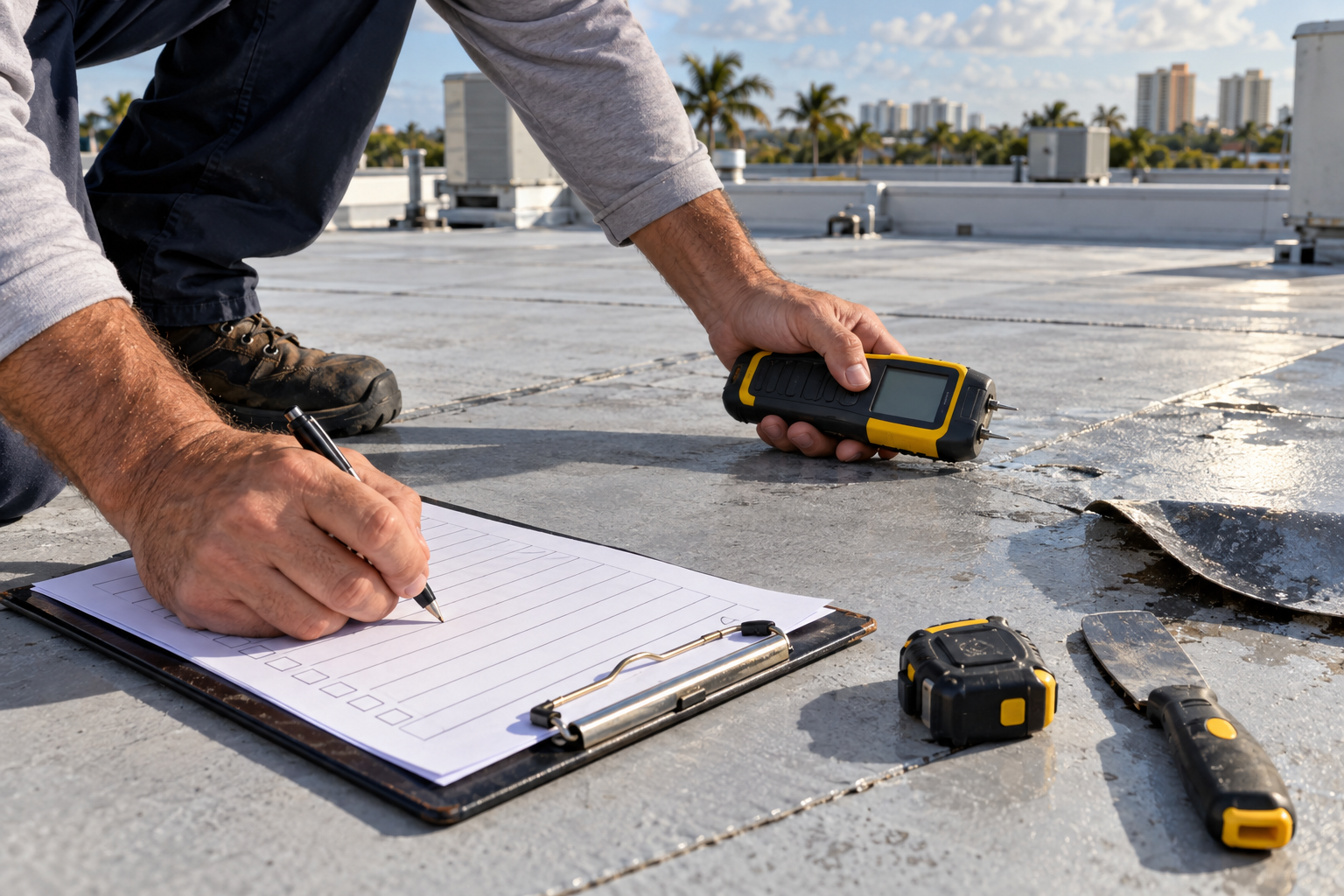
A practical inspection should review:
- Existing roof type and number of roof layers
- Drainage layout, including drains, scuppers, gutters, crickets, and low spots
- Flashings at walls, curbs, skylights, pipes, HVAC units, and penetrations
- Edge metal, coping, parapet conditions, and roof-to-wall transitions
- Signs of trapped moisture or wet insulation
- Prior repair areas and recurring leak locations
- Roof traffic patterns and service access paths
- Surfacing condition, including gravel displacement or exposed felts
- Wind-uplift, attachment, and code/product approval requirements
- Whether the building is in Miami, Fort Lauderdale, West Palm Beach, the Florida Keys, or another South Florida service area with specific exposure concerns
For multi-building portfolios or associations, documenting these conditions helps prioritize budgets and reduce surprise emergency calls. Duke Contractors serves Miami-Dade, Broward, Palm Beach, and Monroe County roofing service areas.
FAQ: Hot Asphalt Built-Up Roofing for Florida Commercial Buildings
What is built-up roofing BUR for commercial buildings? Built-up roofing BUR is a low-slope commercial roofing system made from alternating layers of bitumen and reinforcing plies, finished with gravel, cap sheet, or coating. It is a multi-ply roofing system rather than a single membrane sheet.
Is BUR still used on commercial roofs? Yes. BUR is still used on low-slope commercial buildings, especially where a multi-ply asphalt-based system is preferred and the building can support the design, installation method, and maintenance needs.
Is BUR roofing good for South Florida commercial buildings? BUR can work well for South Florida commercial buildings when the roof is designed for heat, heavy rain, wind uplift, drainage, local code requirements, and ongoing maintenance. It should be evaluated building by building, especially in Miami-Dade and Broward HVHZ conditions.
How do I know if a BUR roof needs repair or replacement? A BUR roof may need inspection if you see ponding water, blisters, exposed felts, loose gravel, cracked flashing, interior leaks, soft roof areas, or repeated roof repairs. Isolated issues may be repairable, while widespread moisture or chronic leaks may require a larger scope.
How is BUR different from TPO? BUR is a multi-ply asphalt-based roof assembled in layers, while TPO is a single-ply membrane with heat-welded seams. The right choice depends on drainage, wind-uplift design, roof traffic, budget, and building occupancy during installation.
Can a commercial BUR roof be coated? Some BUR roofs can be coated if the roof is dry, sound, properly prepared, and compatible with the coating system. Wet insulation, major defects, poor adhesion, and unresolved drainage problems should be addressed before coating is considered.
Schedule a South Florida Commercial Roof Inspection
If your South Florida commercial building has an aging flat roof, recurring leaks, ponding water, or questions about whether BUR, TPO, or modified bitumen is the right fit, Duke Contractors can help. If you need a built-up roofing BUR commercial inspection in Miami-Dade, Broward, Palm Beach, or Monroe County, Duke Contractors can evaluate the roof and explain practical next steps. Schedule a free commercial roof inspection or roofing estimate with a licensed Florida roofing contractor serving Miami-Dade, Broward, Palm Beach, Monroe County, and the surrounding South Florida area.
References
- National Roofing Contractors Association, “Built-Up Roofing” ↩
- Florida Building Code, High-Velocity Hurricane Zone roofing provisions ↩
- Florida Building Commission, Florida Product Approval and Miami-Dade County Product Control roofing requirements ↩
- IBHS, Commercial Roofs and Severe Weather Guidance ↩
- National Roofing Contractors Association, NRCA Roofing Manual guidance on ponding water ↩
