For many South Florida building owners, a flat roof problem does not start with a dramatic leak. It starts with ponding water after a storm, blistered surfacing, cracked flashing, tenant disruption, interior damage, or emergency repair costs that could have been reduced with earlier attention. Hot asphalt built-up roofing, often called BUR, is one of the older and more durable low-slope roof systems used on commercial buildings. A built-up roofing BUR commercial system is designed for low-slope buildings that need layered waterproofing. But because it is installed in layers, it can be confusing to compare against TPO, modified bitumen, or coating options. Here is how a built-up roofing BUR commercial system works, where it makes sense in Miami-Dade County, Broward County, Palm Beach County, and Monroe County, and what to evaluate before repairing or replacing one.
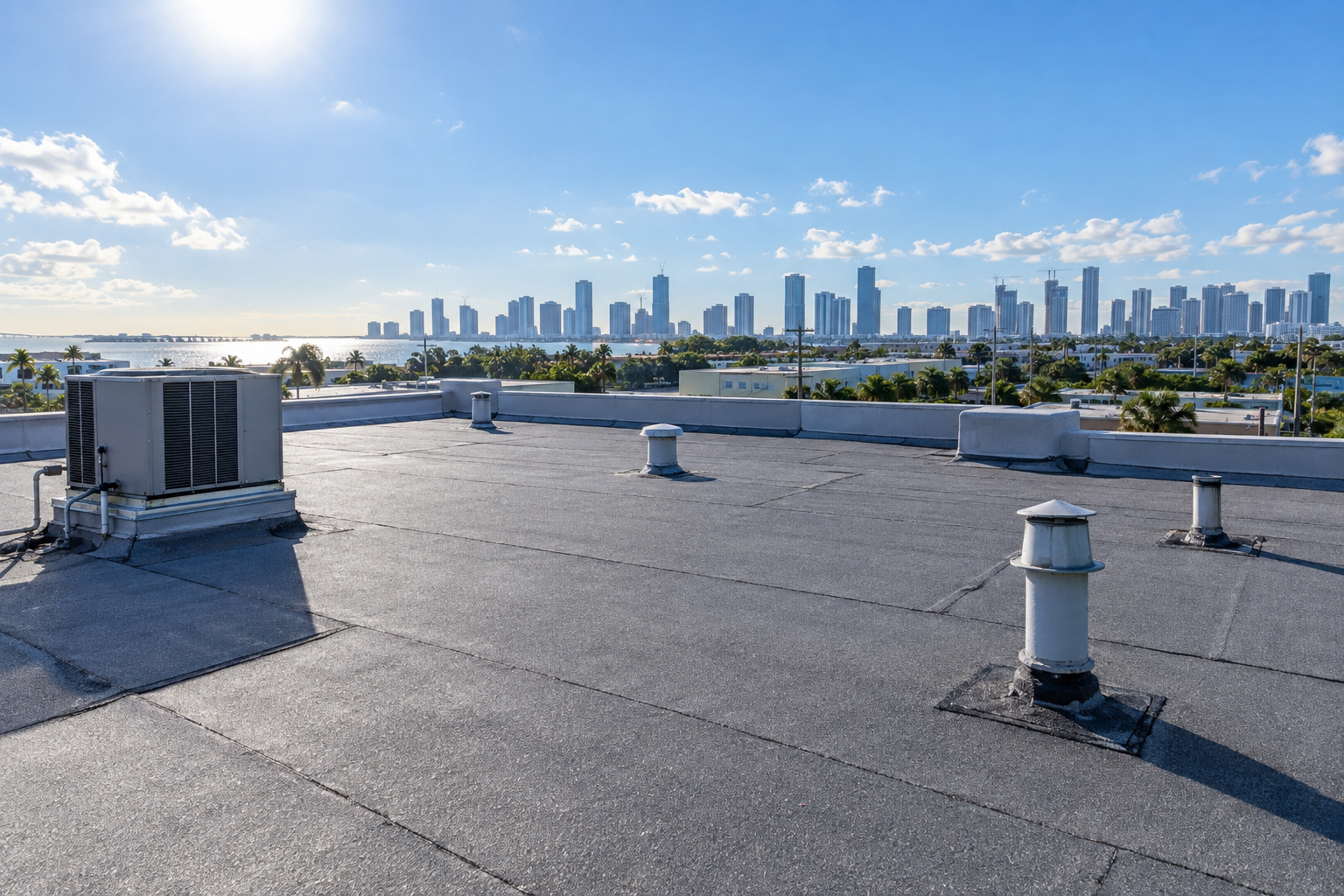
What Is a Built-Up Roofing BUR Commercial System?
Built-up roofing is a low-slope roof system made from multiple alternating layers of bitumen and reinforcing ply sheets, then finished with a protective surface such as gravel, mineral cap sheet, or coating. A low-slope roof is a roof designed with limited pitch that relies heavily on drainage, membrane integrity, and flashing details. The National Roofing Contractors Association describes BUR as a roof system that is “built up” with bitumen and reinforcing fabrics to create a continuous membrane over the roof deck. [1]
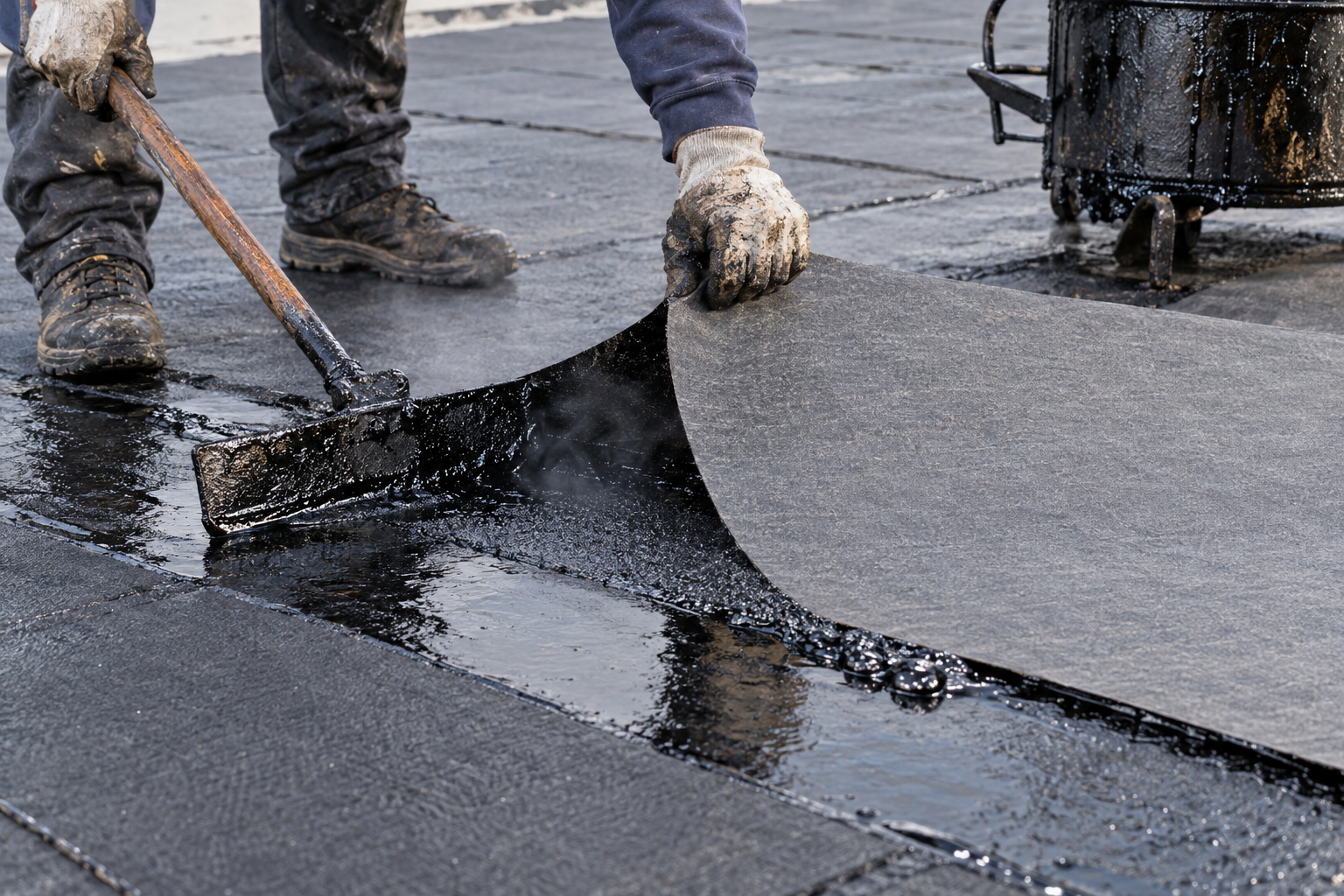
In a hot asphalt BUR system, asphalt is heated in a kettle or tanker and applied hot between the reinforcing layers. As it cools, the asphalt bonds the plies together into one multi-layer waterproofing assembly. A built-up roofing BUR commercial system uses multiple plies of reinforcement embedded in asphalt.
Common BUR terms:
- Bitumen: The waterproofing material, usually asphalt in hot asphalt BUR.
- Ply sheet: A reinforcing fabric sheet embedded between asphalt layers.
- Base sheet: The first layer over insulation or substrate.
- Flood coat: A heavier asphalt layer used near the top of the system.
- Surfacing: Gravel, cap sheet, or coating that protects the roof from sun and weather.
Surfacing protects asphalt-based roof membranes from UV exposure, heat, and weathering.
How the Multi-Ply BUR System Works
The strength of BUR comes from redundancy. A single-ply membrane depends on one main waterproofing layer. BUR uses several plies, so water has to get through multiple reinforced layers before it reaches the building. The advantage of a built-up roofing BUR commercial assembly is redundancy across multiple plies.
A typical hot asphalt BUR installation may include:
1. Roof deck review The contractor checks the deck, drainage, penetrations, and existing roof condition.
2. Insulation or cover board Commercial roofs often include insulation or a cover board to support the roof membrane and improve performance.
3. Base sheet installation A base sheet is attached or adhered to create the first layer of the roof assembly.
4. Hot asphalt and ply layers Hot asphalt is applied, then reinforcing sheets are embedded. This process repeats to create the built-up membrane.
5. Flashing details Parapet walls, curbs, drains, vents, scuppers, penetrations, and HVAC rooftop units are tied into the system.
6. Protective surfacing Gravel, mineral cap sheet, or a roof coating helps protect the asphalt from UV exposure, heat, and foot traffic.
In South Florida, the details matter. A BUR roof can perform well only when drains, scuppers, flashings, edges, and rooftop equipment curbs are properly integrated into the system.
Why BUR Is Still Used on Florida Commercial Roofs
Hot asphalt BUR is not new, but it remains relevant for certain commercial buildings because it is tough, layered, and familiar to many roofing professionals. BUR has been used in the United States for more than a century, which is one reason it remains a recognized low-slope roofing category. [1]
For Florida commercial properties, BUR may be considered when the building needs:
- A durable multi-ply roof membrane
- Resistance to regular maintenance foot traffic
- Strong waterproofing around rooftop equipment
- A roof system with a long field history
- Compatibility with certain recover or restoration approaches, when appropriate
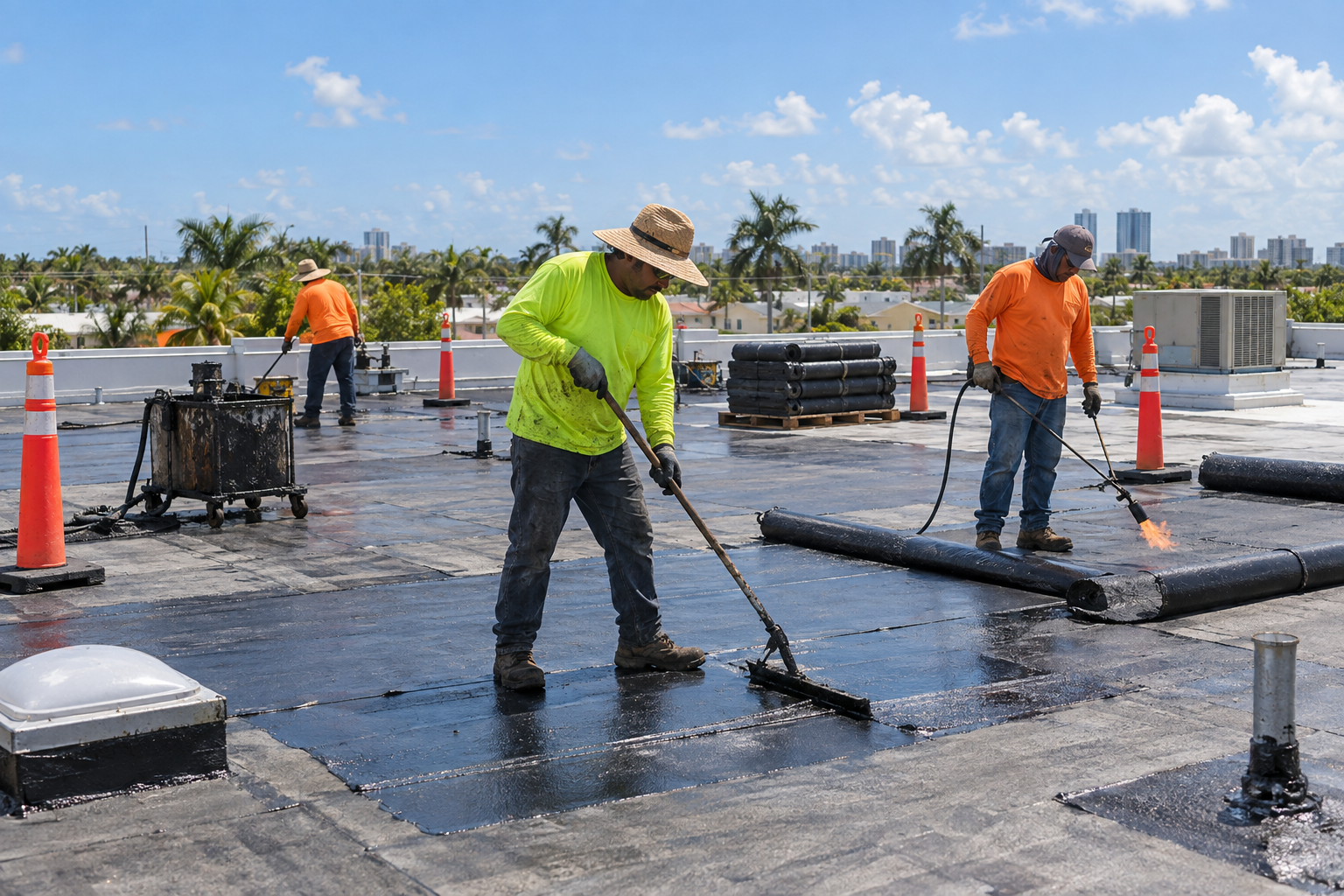
For the right property, built-up roofing BUR commercial systems remain useful because they are durable, familiar, and repairable. The tradeoff is that hot asphalt BUR installation is labor-intensive. It also requires proper staging, odor control planning, heat safety, and experienced crews. Not every building is a good fit, especially where tenant operations, ventilation intakes, or access limits make hot asphalt work difficult.
South Florida Conditions That Stress BUR Roofs
Commercial flat roofs in Miami, Fort Lauderdale, West Palm Beach, and the Florida Keys face a specific mix of stressors: intense UV, heavy rainfall, tropical weather, salt air, and rooftop mechanical equipment.
Atlantic hurricane season runs from June 1 through November 30. [2] Even when a building does not take direct wind damage, repeated wind-driven rain can expose weak seams, clogged drains, loose flashing, and aging roof surfaces. FEMA also encourages building owners and managers to evaluate roof condition, drainage, edge securement, and rooftop equipment as part of wind- and storm-resilience planning. [3]
BUR roofs should be watched for:
- Ponding water: Standing water can accelerate surface deterioration and expose low areas. Ponding water can accelerate deterioration on low-slope commercial roofs.
- Blisters or ridges: These may indicate trapped moisture, poor adhesion, or aging materials.
- Open flashing laps: Flashing failure is a common source of commercial roof leaks.
- Bare asphalt exposure: Surfacing protects asphalt from UV; exposed areas can age faster.
- Drain and scupper blockage: South Florida storms can move leaves, debris, and roofing granules quickly.
- Cracks around rooftop units: HVAC curbs and penetrations need close inspection.
For buildings in High Velocity Hurricane Zone areas, roofing products and assemblies must meet applicable Florida Building Code and Miami-Dade product approval requirements where required. HVHZ means High Velocity Hurricane Zone, which applies to Miami-Dade and Broward under Florida Building Code wind provisions. Miami-Dade Notice of Acceptance documents show whether certain roofing products meet applicable approval requirements. [4]
BUR Compared With TPO, Modified Bitumen, and Roof Coatings
A Florida BUR roof system is only one option in the broader low-slope commercial roofing category. The best choice depends on the building, drainage, use, budget, existing roof condition, code requirements, and how much disruption the property can tolerate during installation.
| System | Common strengths | Practical considerations | |—|—|—| | Hot asphalt built-up roofing | Multi-ply redundancy, long track record, durable surfacing options, familiar repair methods | Hot asphalt odor, staging needs, crew experience, tenant sensitivity, and access constraints | | TPO | Reflective single-ply surface, lighter installation process, common for many commercial flat roofs | Depends heavily on seam quality, attachment method, detailing, and puncture management | | Modified bitumen | Asphalt-based rolls, good fit for many low-slope details, familiar repair options | Installation method, flashing quality, surfacing, and heat exposure all matter | | Roof coatings | May extend service life when the existing roof is dry and sound, can improve reflectivity | Not a substitute for correcting wet insulation, widespread blistering, poor adhesion, or serious drainage problems |
This comparison is not about declaring one system the winner. A commercial flat roof South Florida property may need BUR roof repair Florida work, a recover, a coating restoration, or full commercial roof replacement depending on what is happening below the surface.
When Hot Asphalt BUR May Not Be the Best Fit
Hot asphalt built-up roofing can be a strong system, but it is not right for every commercial property. Building use and installation logistics matter just as much as the roof membrane itself.
BUR may not be the best fit when:
- The property is odor-sensitive, such as certain medical, hospitality, food service, or occupied office environments.
- Air intakes are close to work areas and cannot be managed properly during installation.
- Roof access is too limited for safe kettle, tanker, material, or debris staging.
- Tenant operations cannot tolerate installation noise, smell, or scheduling disruption.
- Existing moisture is widespread and the roof needs more than surface-level restoration.
- The building owner wants a different reflectivity profile, installation method, or maintenance plan.
In those cases, Duke Contractors may evaluate other low-slope commercial roofing options, including TPO, modified bitumen, or roof coatings, depending on the building and code requirements.
Built-Up Roofing BUR Commercial Repair, Recover, or Replacement
A commercial BUR roof does not always need full replacement at the first leak. The right next step depends on roof age, moisture content, deck condition, drainage, and how widespread the deterioration is. A recover means installing a new roofing system over an existing roof when code, moisture, and structural conditions allow.
A built-up roofing BUR commercial roof should be evaluated for moisture, drainage, flashing condition, and code compliance before repair or replacement. A licensed roofing contractor will typically review:
- Whether leaks are isolated or recurring
- If moisture is trapped below the membrane
- Condition of flashings, drains, and penetrations
- Whether the roof has already been recovered
- Local code requirements for reroofing
- Wind-uplift requirements for the building
- Business access, tenant impact, and scheduling needs
Small defects may be repairable. Larger moisture problems, widespread blistering, or repeated leaks may point toward replacement or a different commercial system such as modified bitumen or TPO. The goal is not to sell one system to every building. The goal is to match the roof assembly to the structure, budget, exposure, and maintenance plan.
Maintenance Schedule for South Florida BUR Roofs
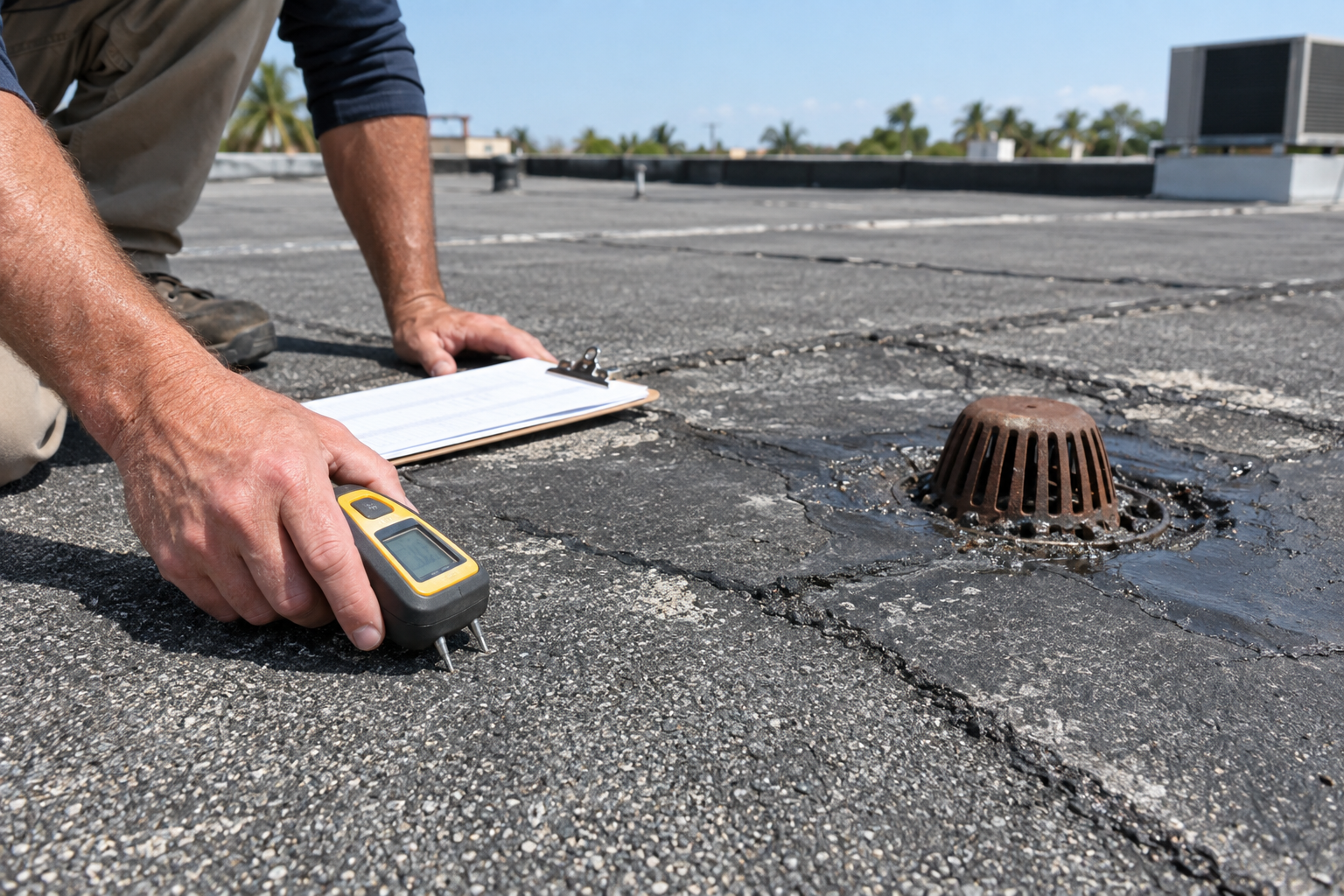
A practical maintenance plan can help building owners find issues before they become interior leaks or business interruptions. For commercial roof inspection South Florida planning, Duke Contractors typically recommends looking at the roof before hurricane season, after major weather events, and during routine maintenance windows.
A useful BUR maintenance rhythm may include:
- Pre-hurricane-season inspection: Check drains, scuppers, flashing, loose surfacing, exposed asphalt, and rooftop equipment details before June 1.
- Post-storm inspection: Look for debris impact, blocked drainage, lifted flashing, punctures, and new ponding areas after severe weather.
- Routine visual checks: Review roof traffic paths, HVAC service areas, penetrations, and interior leak reports throughout the year.
- Drainage review: Pay attention to areas where water remains after storms, especially if low spots are expanding or recurring.
- Documentation: Keep photos, inspection notes, repair invoices, and warranty information organized for future service decisions.
FAQ: Hot Asphalt BUR for Commercial Buildings
Is built-up roofing the same as modified bitumen?
No. Both are asphalt-based low-slope roofing systems, but they are not the same. BUR is built from multiple layers of asphalt and reinforcing ply sheets. Modified bitumen is typically installed in rolls with asphalt modified by polymers for added performance characteristics.
Is hot asphalt BUR good for Florida?
It can be a good fit for some commercial buildings, especially where a durable multi-ply system is desired. The best choice depends on drainage, roof traffic, building use, wind requirements, and whether hot asphalt installation is practical for the property.
How often should a BUR commercial roof be inspected?
Commercial flat roofs should be inspected routinely and after major weather events. In South Florida, pre-hurricane-season and post-storm inspections are especially useful for identifying drain, flashing, and surface issues early.
What causes most BUR roof leaks?
Common leak sources include deteriorated flashing, clogged drains, ponding water, open seams, damaged surfacing, and penetrations around HVAC units, vents, or curbs.
How long does a built-up roofing BUR commercial roof last?
A built-up roofing BUR commercial roof can last for many years when it is properly installed, drained, surfaced, and maintained, but lifespan depends on roof traffic, storm exposure, moisture, installation quality, and maintenance history.
Can a BUR roof be coated instead of replaced?
Sometimes. A coating may be an option if the roof is dry, structurally sound, properly adhered, and not too deteriorated. Wet insulation, widespread blistering, poor adhesion, or recurring leaks may require repair or replacement instead.
What is the biggest problem with BUR roofs in South Florida?
Common problems include ponding water, UV-damaged surfacing, flashing deterioration, clogged drains, and storm-related damage around rooftop equipment and penetrations.
Is BUR better than TPO for commercial roofs?
Neither system is automatically better. BUR may be preferred for layered durability and certain repair situations, while TPO may be preferred for reflective single-ply performance, lighter installation, or specific building needs.
Does a South Florida BUR roof need hurricane-season inspections?
Yes. Pre-season and post-storm inspections help identify clogged drains, loose flashing, exposed asphalt, punctures, and early leak risks before they become larger commercial roofing problems.
Closing CTA
If your commercial flat roof in Miami-Dade, Broward, Palm Beach, Monroe County, or anywhere in South Florida is showing ponding, blistering, cracked flashing, or recurring leaks, Duke Contractors can help you understand your options. If you are comparing built-up roofing BUR commercial repair or replacement options, schedule a free commercial roof inspection or roofing estimate, and our team will document the roof condition, explain practical repair or replacement paths, and help you choose the right system for your building.
References
