A roof is not just the shingles you see from the street. For South Florida homeowners in Miami-Dade, Broward, Palm Beach, and Monroe County, the full roof assembly matters because heat, wind-driven rain, salt air, and hurricane-season weather all test different parts of the installation. GAF roofing system components are designed to work as layers: shingles shed water, underlayment backs them up, ventilation manages attic heat and moisture, and accessories protect the weak points. When those parts are chosen and installed as a coordinated roofing package, the roof has a better chance of performing cleanly over time.
The Atlantic hurricane season runs from June 1 through November 30, and Category 1 hurricane winds begin at 74 miles per hour. [1] [2] That is why a South Florida shingle roof should be evaluated as a full installed roof, not just a surface color or product name.
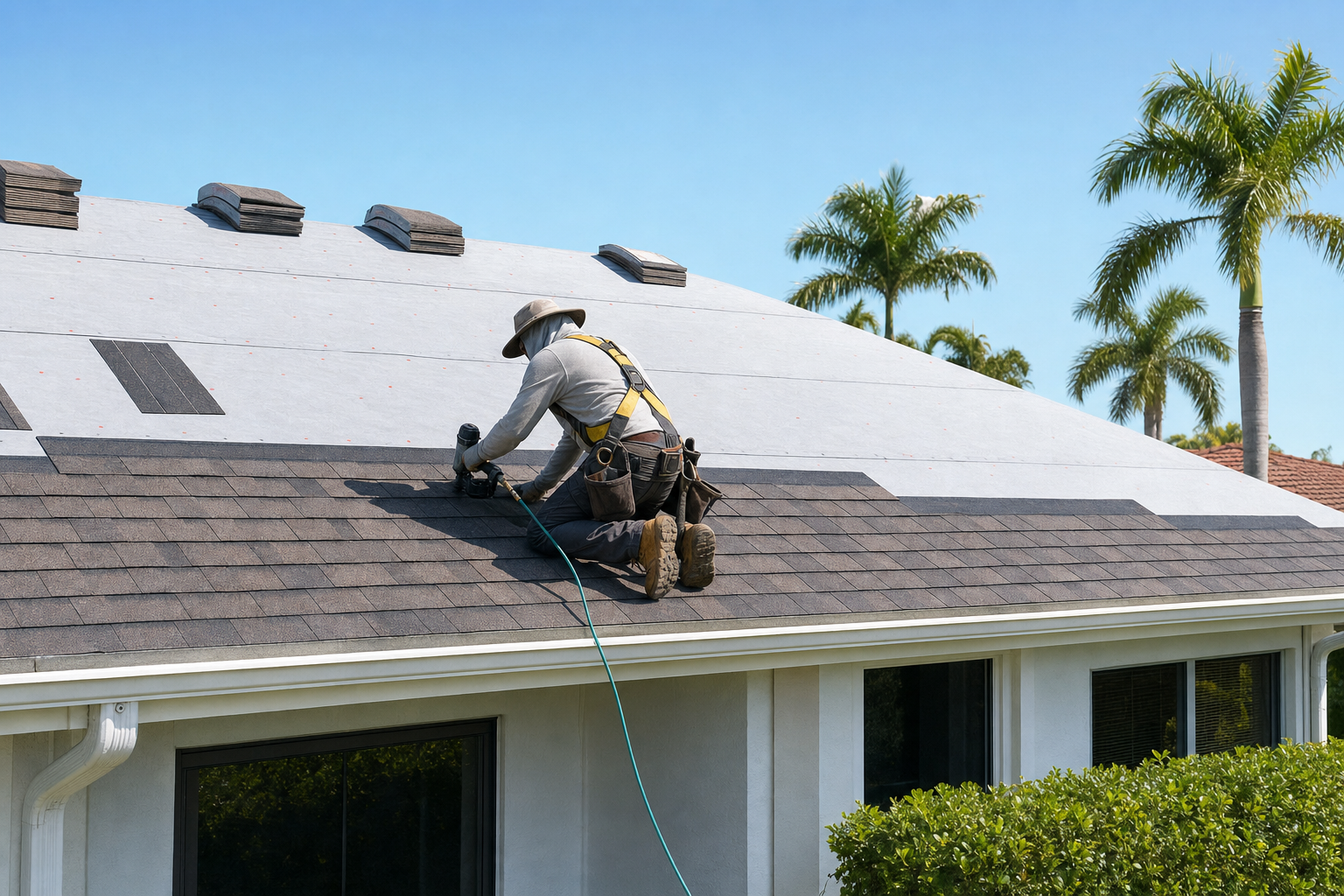
GAF Roofing System Components: What Makes a Roof a System?
A GAF roof system uses multiple components together instead of treating shingles as a standalone product. A GAF residential roof system includes 7 core component categories: leak barrier, roof deck protection, starter strip shingles, shingles, attic ventilation, rooftop accessories, and ridge cap shingles. [3]
That matters because water rarely enters a roof through the middle of a perfect shingle field. Problems often start at edges, valleys, penetrations, ridge lines, transitions, or areas where attic heat has been building for years. A full system approach gives each vulnerable area a specific layer of protection. IBHS also emphasizes that roof performance depends on the roof covering, roof deck, edges, openings, and attachment details working together. [4]
For a Miami or Fort Lauderdale homeowner, that means the roofing estimate should cover more than color and shingle style. It should explain what goes under the shingles, how roof edges are started, how ridges are finished, and how the attic will breathe. For homeowners comparing residential roofing in Miami, that kind of roof system inspection South Florida approach helps separate a simple product quote from a complete roof replacement scope.
The Visible Layer: Shingles
Shingles are the top layer of the system. They create the finished look of the roof and shed rain in overlapping courses. GAF describes asphalt shingles as commonly built with a fiberglass base, asphalt coating, and mineral granules. [5]
In South Florida, shingle selection should account for more than curb appeal. UV exposure, heat, wind, and algae staining can all affect how a roof looks and performs. GAF Timberline HDZ shingles use LayerLock technology, and GAF states that when installed with the required qualifying accessories, they may qualify for the WindProven Limited Wind Warranty with no maximum wind speed limitation, subject to warranty terms and restrictions. [6]
That does not mean every roof is automatically covered the same way. Installation details, eligible products, contractor certification, warranty registration, and warranty terms all matter. Manufacturer product claims, warranty eligibility, and real-world installed roof performance are related, but they are not the same thing.
For homeowners searching for GAF shingles South Florida options, the practical question is not only which shingle looks right. It is whether the selected shingle, accessories, ventilation, underlayment, fastening pattern, and local approval requirements fit the home.
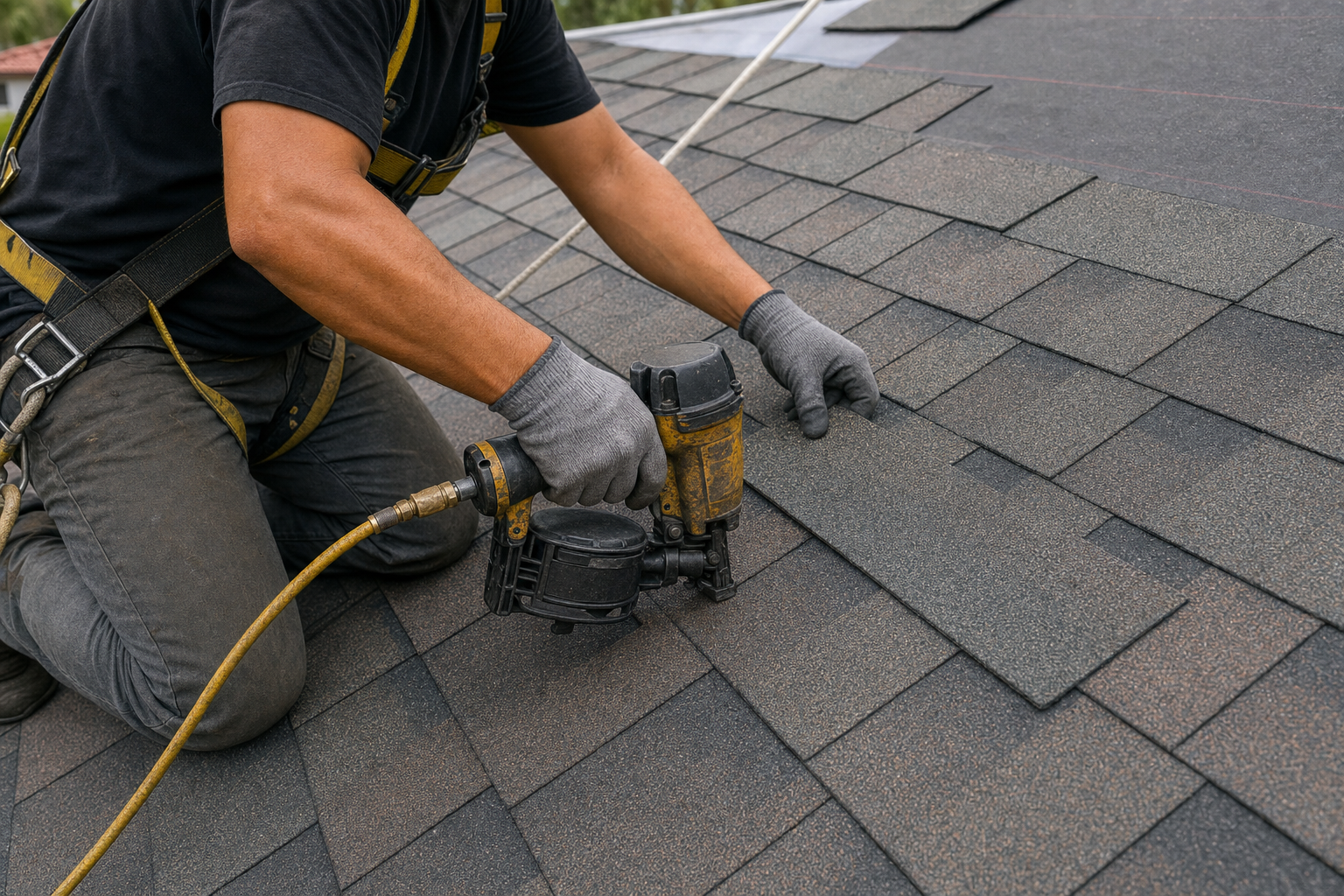
The Backup Layers: Leak Barrier and Roof Deck Protection
Underlayment is the layer homeowners rarely see, but it is one of the most important parts of the roof. Among the GAF roofing system components, leak barrier and roof deck protection are the layers South Florida homeowners rarely see but often rely on during wind-driven rain.
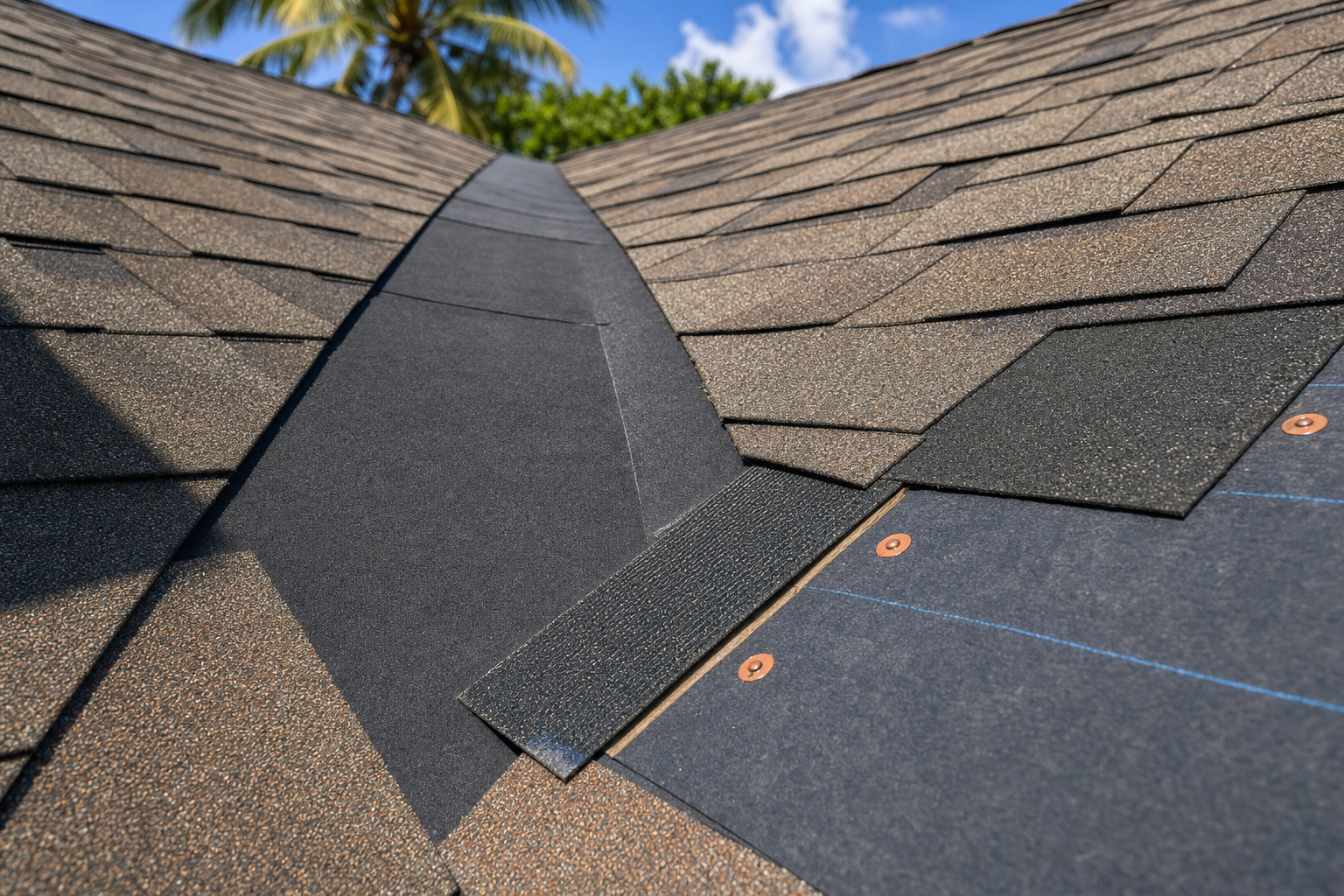
A leak barrier is a self-adhering waterproofing membrane used at vulnerable roof areas such as eaves, rakes, valleys, chimneys, and skylights; GAF says it helps protect against leaks caused by wind-driven rain. [5]
Roof deck protection is underlayment installed between the shingles and the roof deck. It acts as a secondary water-shedding layer if wind-driven rain gets past the shingles. In South Florida, that backup layer matters because storms often push rain sideways, especially along roof edges and transitions. For homeowners comparing roof underlayment Miami options, the right material and installation pattern should be tied to the roof shape, exposure, and replacement plan.
A good inspection or roofing estimate should identify where these materials belong on your specific roof shape. A simple gable roof, a cut-up roof with valleys, and a home with skylights or multiple penetrations do not have the same risk points.
Starter Strips, Ridge Caps, and Accessories
Starter strip shingles are edge shingles installed at eaves and rakes. Their job is not cosmetic. They help secure the first course of shingles and reduce the risk of shingle blow-off at roof edges. GAF notes that starter strips include factory-applied sealant and are installed at eaves and rakes to help reduce blow-off risk. [5]
Ridge cap shingles are shaped shingles used where roof planes meet. They finish the hips and ridges, where two roof planes come together. These areas are exposed to wind and rain from multiple directions, so they need products made for that shape rather than improvised field shingles.
Accessories include items like pipe boots and other penetration details. These are small parts, but they protect common leak points. On an older South Florida roof, cracked pipe boots, loose flashing, or worn sealant can cause interior stains even when most of the shingles still look acceptable from the ground. Those symptoms may call for roof repair in Miami, or they may point to broader replacement planning after an inspection.
Ventilation: The Part Homeowners Often Miss
Ventilation helps move heat and moisture out of the attic. GAF describes attic ventilation as ridge and off-ridge venting solutions that help reduce attic heat and moisture. [3]
This is especially important in South Florida. A roof can face intense sun for much of the year. If attic heat and moisture are trapped, the roof assembly and interior comfort can both suffer. Balanced ventilation typically includes intake and exhaust working together. In plain terms, intake lets outside air enter the attic, usually near the soffits, while exhaust lets hot, humid air leave near the ridge or upper roof area. GAF cautions that exhaust ventilation should not exceed intake ventilation. [5]
Ventilation should be evaluated during replacement, not added as an afterthought. The right answer depends on roof shape, attic layout, soffit conditions, and existing vents. GAF ventilation accessories should be reviewed as part of the full roof replacement in South Florida, especially when the attic has heat buildup, moisture staining, or uneven airflow.
South Florida Code and Warranty Details to Confirm
Miami-Dade and Broward are part of Florida’s High Velocity Hurricane Zone, or HVHZ, which affects roofing requirements in those counties. [7] Palm Beach County, Monroe County, and nearby communities such as Boca Raton, Key Largo, Homestead, Coral Gables, Doral, Kendall, Hollywood, Fort Lauderdale, and Miami may also have permitting, product approval, wind exposure, and inspection details that need to be confirmed before work starts.
That is where GAF roofing system components need to be matched to the home, not treated as a generic checklist. Ask whether the products are appropriate for the property, whether the planned installation fits local code requirements, and which warranty terms apply to the actual installed roof.
Why Installation Quality Still Decides the Outcome
Strong materials do not replace correct installation. A GAF system depends on proper fastening, product compatibility, safe jobsite practices, ventilation balance, and clean detailing at edges and penetrations.
For homeowners in Miami, Kendall, Doral, Hollywood, Fort Lauderdale, Coral Gables, Homestead, Boca Raton, Key Largo, and nearby South Florida communities, the best next step is a roof evaluation that looks at the entire system. That includes visible shingles, underlayment condition where accessible, edge details, ventilation, flashing, penetrations, and signs of age or water movement.
A roof system inspection checks shingles, underlayment, flashing, penetrations, ventilation, edges, ridges, and interior moisture signs. That inspection-first process is especially useful after severe weather, when a storm damage roof inspection in Miami can document what is visible without making insurance outcome promises.
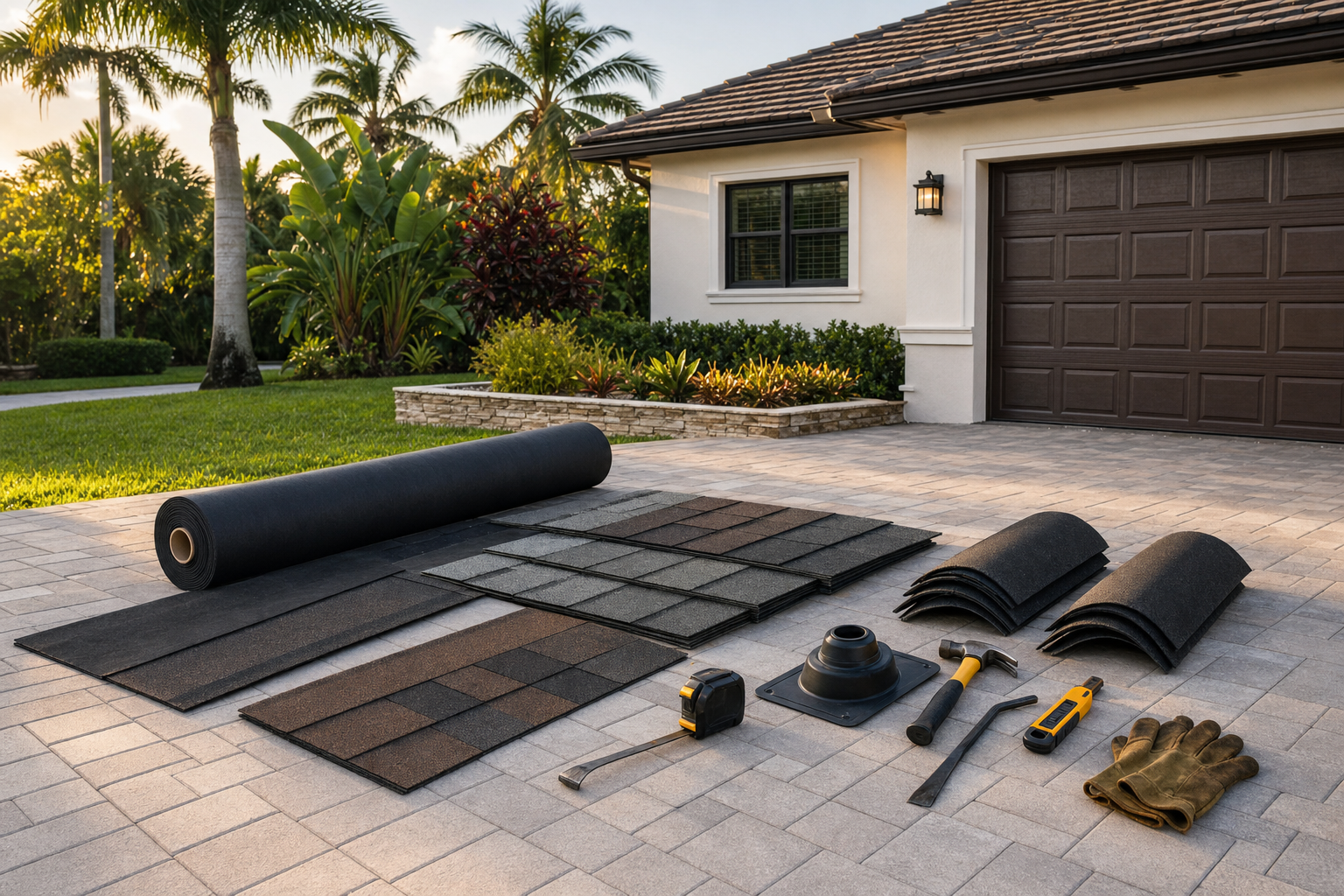
How to Review a GAF Roof System Before Replacement
Before approving a Miami roof replacement scope, review the full roofing package in writing. The estimate should identify the shingle line, leak barrier locations, roof deck protection, starter strips, ridge caps, ventilation plan, flashing approach, pipe boots, and other accessories.
It should also explain what is being inspected before installation begins. Deck condition, old moisture damage, damaged fascia, poor attic intake, and worn penetrations can all change the right recommendation. A clean estimate makes those decisions visible before the crew starts removing the old roof.
If the issue is limited, a repair may be enough. If the roof has widespread age, repeated leaks, storm damage, poor ventilation, or failing underlayment, replacement planning may be the more practical conversation. Duke Contractors LLC can review those conditions with photos and explain the roof replacement scope clearly before work begins.
Quick FAQ
What are the main GAF roofing system components?
The main GAF roofing system components are leak barrier, roof deck protection, starter strip shingles, shingles, attic ventilation, rooftop accessories, and ridge cap shingles.
Why does underlayment matter on a South Florida shingle roof?
Underlayment gives the roof a backup water-shedding layer if wind-driven rain gets past the shingles, especially near valleys, edges, penetrations, and transitions.
Does a GAF roof system qualify for the same warranty on every home?
No. Warranty eligibility depends on the specific products installed, installation details, qualifying accessories, contractor requirements, registration, and the warranty terms.
Should ventilation be checked before installing GAF shingles?
Yes. Intake and exhaust ventilation should be evaluated before replacement so attic heat and moisture can be managed as part of the full roof system.
Is a GAF roof system a good fit for Miami-Dade and Broward homes?
It can be a strong option when the selected products, installation details, ventilation, and local code requirements fit the home’s roof shape and exposure.
Closing CTA
If you are comparing shingle options or planning a roof replacement in Miami-Dade, Broward, Palm Beach, Monroe County, or elsewhere in South Florida, Duke Contractors LLC can inspect your roof system and explain the components that fit your home. Schedule a free consultation or free roofing estimate to get clear, photo-documented guidance before work begins.
References
- NOAA AOML, Hurricane Season Overview, https://www.aoml.noaa.gov/hrd/tcfaq/G1.html ↩
- NOAA/National Hurricane Center, Saffir-Simpson Hurricane Wind Scale, https://www.nhc.noaa.gov/aboutsshws.php ↩
- GAF, “The GAF Roofing System,” https://www.gaf.com/en-us/resources/warranties/gaf-roofing-system ↩
- IBHS, FORTIFIED Roof Guidance, https://ibhs.org/strategy/roof/ ↩
- GAF, “Parts of a Roof: Roofing Components,” https://www.gaf.com/en-us/plan-design/homeowner-education/roof-parts ↩
- GAF, “Timberline HDZ Shingles,” https://www.gaf.com/en-us/roofing-materials/residential-roofing-materials/shingles/timberline-hdz ↩
- Florida Building Code, High Velocity Hurricane Zone provisions ↩
