If you are comparing roofing materials for a Miami-Dade, Broward, Palm Beach, or Monroe County home, GAF Timberline HDZ shingles usually come up fast. They are popular architectural asphalt shingles, but South Florida is not an easy roofing market. Heat, UV exposure, salt air, wind-driven rain, and hurricane-season uplift all test the full roof system, not just the shingle brand. The real question is not “Is this a good shingle?” It is whether GAF Timberline HDZ shingles in South Florida make sense for your roof slope, ventilation, installation details, warranty expectations, and long-term maintenance plan.
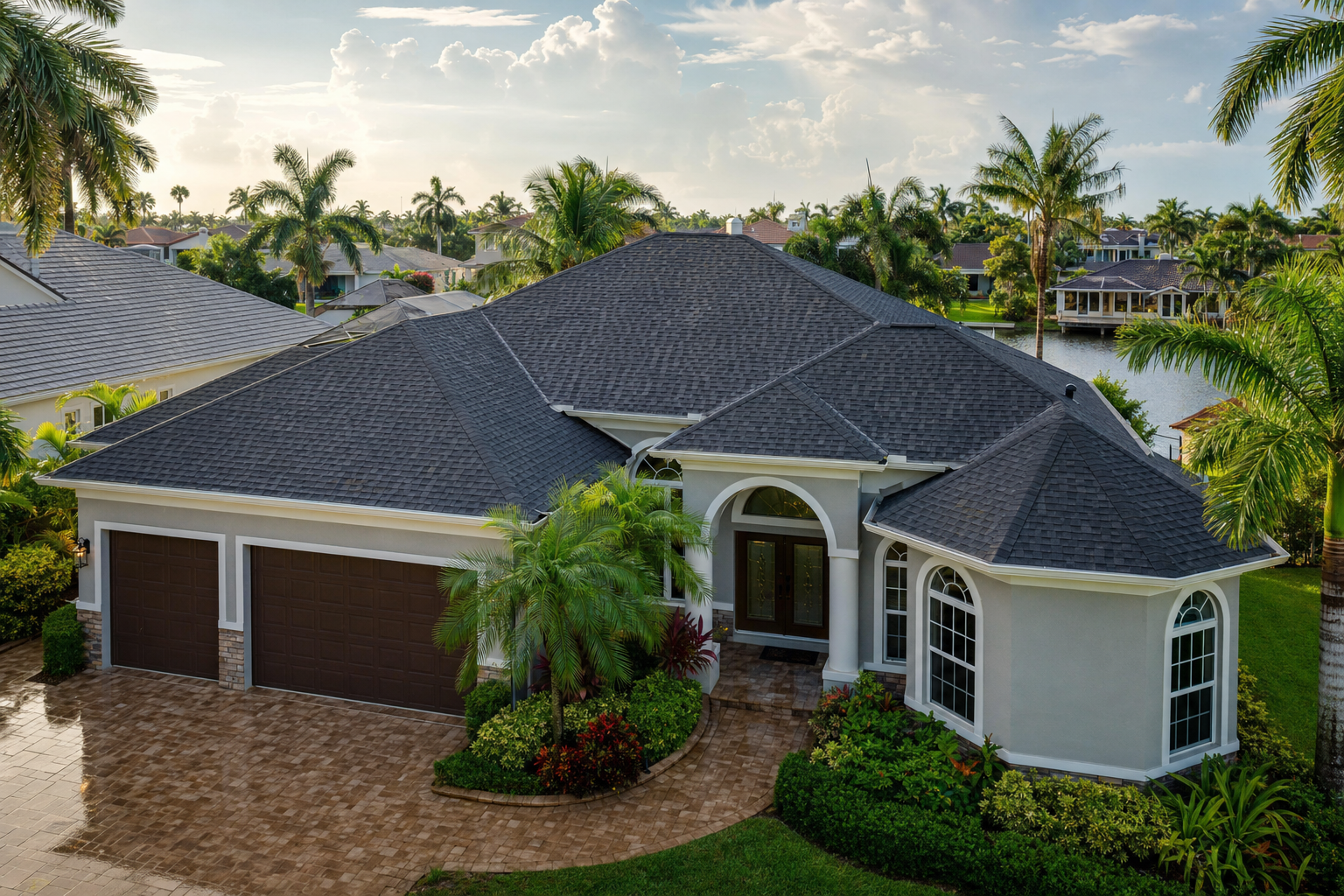
What GAF Timberline HDZ Shingles Are in South Florida
GAF Timberline HDZ is an architectural asphalt shingle, meaning it is a dimensional asphalt shingle built thicker than a basic three-tab shingle. The “HDZ” line uses GAF’s LayerLock technology and StrikeZone nailing area, which are designed to help installers place fasteners accurately and create a stronger mechanical bond between shingle layers. [1]
For South Florida homeowners, that matters because shingle performance depends heavily on installation. A roof that looks new from the street can still have weak points if nails are overdriven, underdriven, misplaced, or installed into damaged decking. Timberline HDZ performance depends on the full roofing assembly, not the shingle alone. A roof assembly includes shingles, underlayment, starter strips, ridge caps, flashing, ventilation, decking, and edge metal.
The shingle is one part of the system. Underlayment, drip edge, starter strips, ridge caps, flashing, ventilation, and deck condition all affect how the roof performs in heavy rain and high wind. That is why asphalt shingle roofing South Florida homeowners can rely on starts with the installation details, not only the product name.
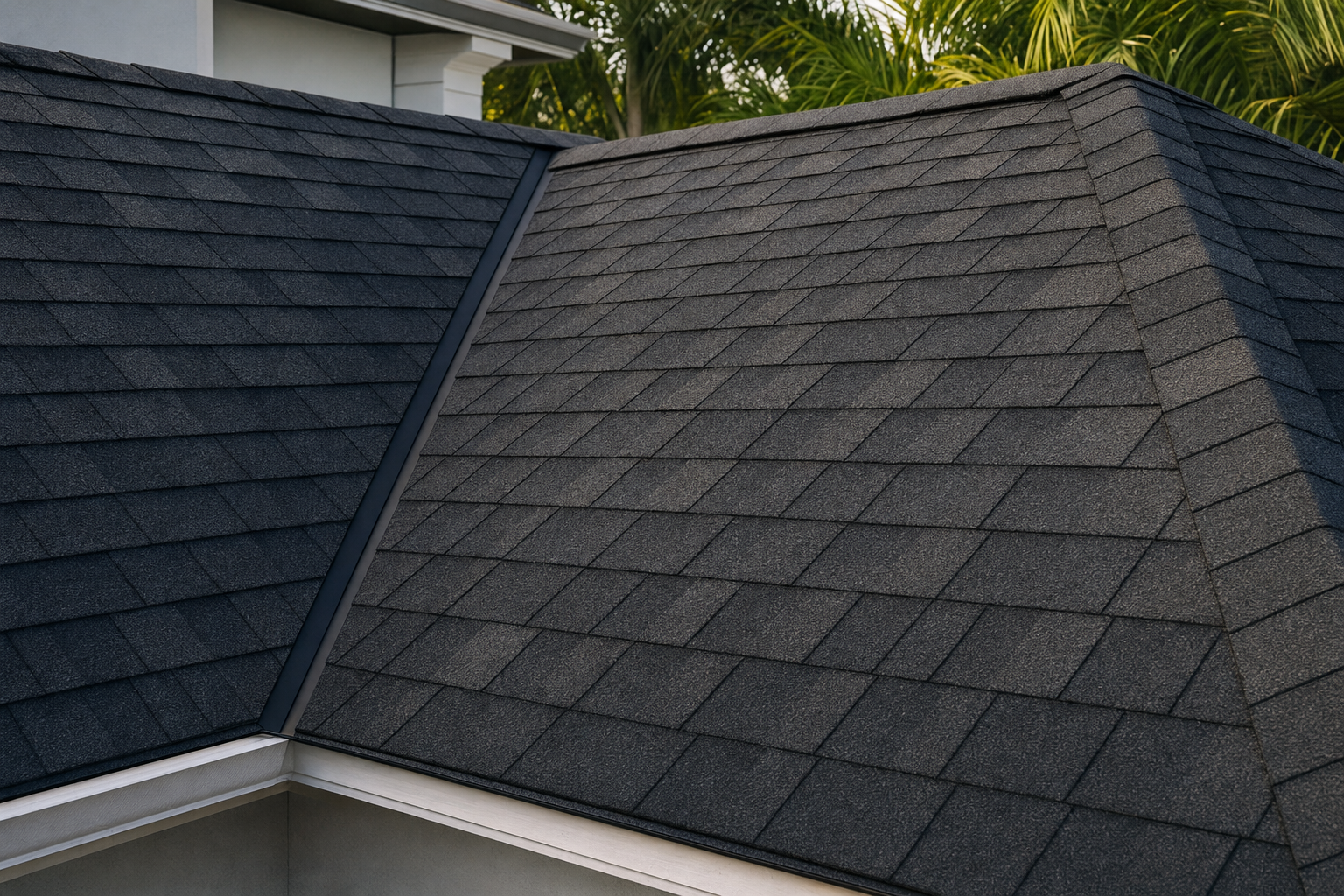
Wind Rating and What It Really Means
GAF’s Timberline HDZ shingles may qualify for the WindProven Limited Wind Warranty with no maximum wind speed limitation when installed with the required combination of qualifying GAF accessories. For homeowners researching the GAF Timberline HDZ wind rating, that warranty language is important, but it has to be read together with the installation requirements and roof system conditions. [1]
That sounds strong, but homeowners should understand the difference between a wind warranty and a storm-proof roof. A wind warranty is manufacturer coverage with eligibility conditions, not storm-proofing. A shingle warranty is not the same as a hurricane-damage guarantee. It is a manufacturer coverage document with conditions, exclusions, installation requirements, and registration rules. It is not a promise that every roof will survive every hurricane without damage.
NOAA’s Saffir-Simpson Hurricane Wind Scale starts Category 1 hurricanes at 74 mph and Category 4 hurricanes at 130 mph, and the scale measures wind only, not storm surge, rainfall flooding, or tornadoes. The Saffir-Simpson Hurricane Wind Scale measures wind speed only. [2] South Florida roofs also face wind-driven rain, uplift at edges and corners, flying debris, and repeated thermal cycling.
South Florida Code and Product Approval Checks
In Miami-Dade and Broward, roof systems must also be considered in the context of Florida’s High-Velocity Hurricane Zone requirements, where approved materials and approved installation assemblies matter. HVHZ means Florida’s High-Velocity Hurricane Zone, and Miami-Dade and Broward are part of Florida’s High-Velocity Hurricane Zone. [3]
Before installation, homeowners should ask whether the proposed shingle, underlayment, starter strip, fastening pattern, and full assembly match current approval documents for the property. Florida Product Approval and Miami-Dade Notice of Acceptance documentation can change by product, assembly, slope, deck type, and installation method, so the approval check should happen before materials are ordered. [4]
This is where Miami-Dade HVHZ roofing requirements become practical, not just technical. A product name by itself is not enough. The estimate should identify the roofing system being proposed, the accessories included, and the installation method that will be used for the home.
Warranty: Product, System, and Installer Details
The biggest warranty mistake homeowners make is looking only at the shingle wrapper. GAF warranty coverage can change based on whether the roof is installed as a qualifying GAF roofing system, which accessories are used, who installs it, and whether the installation follows GAF’s written requirements. That is the core issue behind any GAF shingle warranty Florida homeowners compare: the coverage depends on the documented system, not just the bundle label.
Ask these questions before choosing Timberline HDZ:
- Will the roof include qualifying GAF starter strip shingles, ridge cap shingles, leak barrier, and roof deck protection?
- Is the roof being installed over sound decking?
- Are ventilation and attic airflow being checked?
- Will the contractor document the materials used?
- Will you receive warranty paperwork after installation?
- What workmanship warranty is provided by the contractor, separate from manufacturer coverage?
- How are storm damage, debris impact, and post-hurricane repairs handled if they are outside manufacturer warranty terms?
For South Florida, documentation is practical. Photos of decking, underlayment, flashing, edge metal, valleys, and completed roof planes help show what was installed and how the system was built. That documentation gives the homeowner a clearer record for maintenance, resale, and future roof evaluations.
Lifespan in South Florida Conditions
Roof lifespan in South Florida depends on installation, ventilation, exposure, and maintenance. GAF Timberline HDZ shingles in South Florida may perform well when the assembly is built correctly, but manufacturer warranty length and real-world roof lifespan are not the same thing. In South Florida, asphalt shingle lifespan depends on roof slope, attic ventilation, shade, salt exposure, installation quality, storm history, and how quickly small issues are repaired.
Architectural shingles often last longer than basic three-tab shingles, but Miami sun and humidity are hard on asphalt. Attic heat and poor ventilation can accelerate aging from underneath, while UV exposure, coastal air, and repeated wet-dry cycles affect the surface. Granule loss, lifted tabs, cracked sealant, exposed fasteners, algae staining, and brittle shingles are signs that a roof should be inspected.
A roof near the coast or under heavy tree cover may age differently than the same shingle on a well-ventilated inland home. For South Florida shingle roof lifespan, the practical approach is simple: do not judge the roof by age alone. Judge it by condition, installation quality, ventilation, and documented performance after heavy weather.
Timberline HDZ vs Tile or Metal Roofs in South Florida
Timberline HDZ can be a good option for many South Florida homes where architectural shingles are appropriate, the slope is compatible, and the roof assembly is installed correctly. It may not be the best fit for every property. Some homes are better suited for tile, metal, or a different roof system based on structure, budget, HOA rules, exposure, and long-term goals.
Tile roofs are common across South Florida and can fit certain home styles, but they also require proper underlayment, flashing, fastening, and structural consideration. Metal roofing may be a strong option for some properties, especially where long-term durability and wind performance are priorities, but it comes with its own design, budget, and installation questions. Homeowners comparing architectural shingles Miami options against tile or metal should compare the full system, not just the visible material.
A good roofing estimate should compare the whole system, not just the shingle name. For Duke Contractors LLC, that means looking at roof age, decking condition, flashing, ventilation, valleys, penetrations, and edge details before recommending a repair or replacement path.
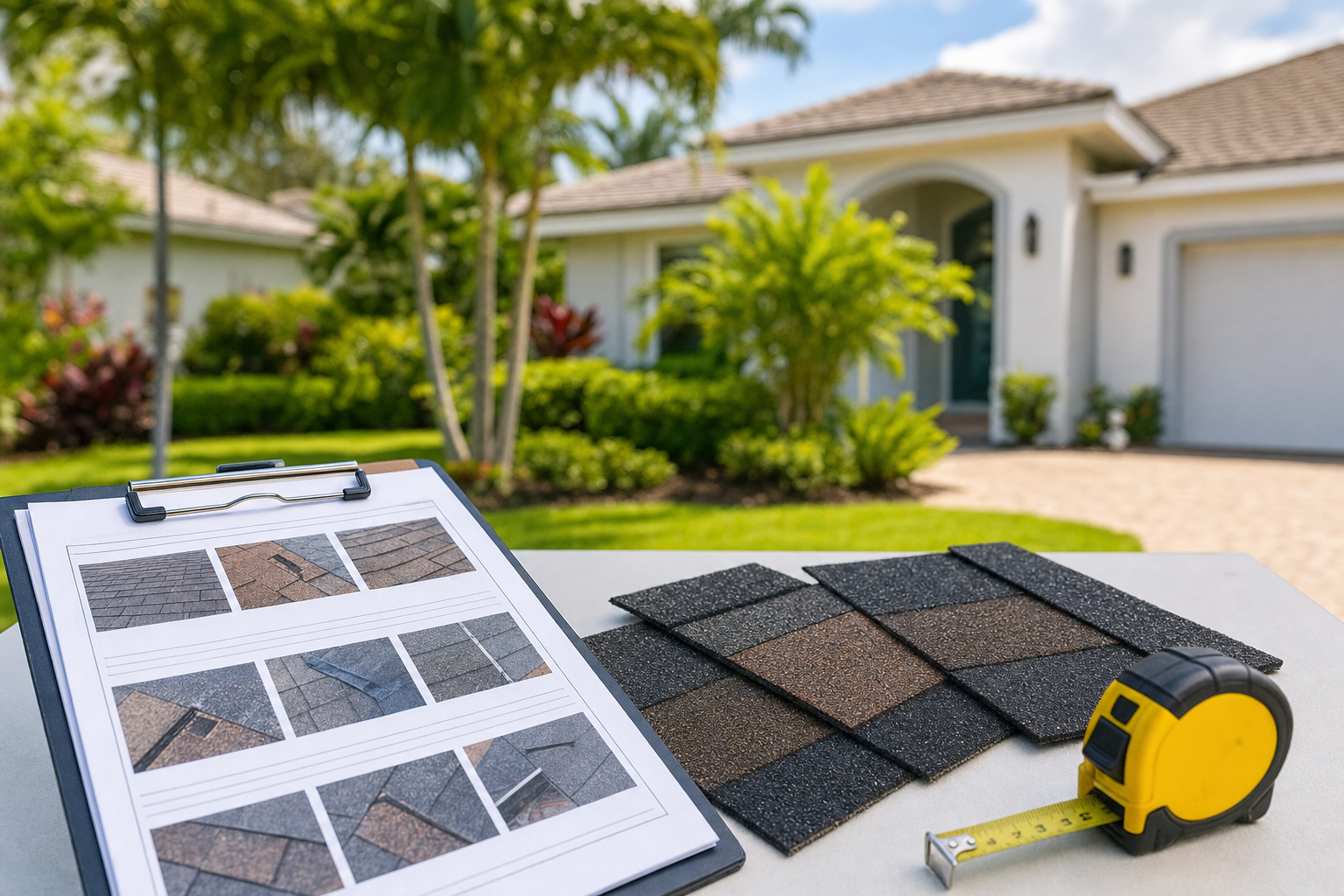
When to Schedule a Roof Inspection
Schedule a hurricane roof inspection Miami homeowners can use as a real decision point when you see lifted shingles, missing shingles, exposed fasteners, ceiling stains, cracked sealant, loose flashing, granules in gutters, or repeated leaks. You should also schedule an inspection after a major storm, before selling or buying a home, or before choosing between repair and replacement.
Post-storm inspections are especially important because roof damage is not always visible from the driveway. Wind-driven rain can enter through flashing, valleys, vents, or edge details before the main roof field looks worn out. A careful inspection can separate small roof repair options from larger replacement concerns and help the homeowner avoid guessing.
FAQ
Are GAF Timberline HDZ shingles hurricane-proof?
No roofing shingle should be described as hurricane-proof. GAF Timberline HDZ shingles in South Florida may have strong wind warranty options when installed as required, but hurricanes can include wind-driven rain, debris, tornadoes, and roof-edge uplift that affect the full roof system.
Are GAF Timberline HDZ shingles approved for Miami-Dade homes?
Approval depends on the specific roofing assembly, current product approval documents, and installation requirements. Homeowners should confirm Florida Product Approval or Miami-Dade documentation before installation. [4]
How long do GAF Timberline HDZ shingles last in South Florida?
The answer depends on installation, ventilation, storm exposure, maintenance, and roof design. South Florida heat, UV, salt air, and heavy rain can shorten the useful life of asphalt shingles compared with milder climates.
What affects Timberline HDZ lifespan in South Florida?
Heat, UV exposure, attic ventilation, salt air, storm history, roof slope, and installation quality all affect useful roof life. A roof with poor attic airflow or repeated storm exposure may age differently than the same shingle on a better-ventilated inland home.
Does the WindProven warranty apply automatically?
No. Warranty eligibility depends on GAF’s requirements, including the use of qualifying accessories and proper installation. Homeowners should ask for written warranty details before work begins.
Does a wind warranty mean the roof is hurricane-proof?
No. A wind warranty has conditions and does not guarantee protection from all hurricane damage, debris, wind-driven rain, or roof-edge uplift. It should be reviewed as manufacturer coverage, separate from workmanship coverage and storm-damage questions.
Should South Florida homeowners choose shingles, tile, or metal?
The right material depends on roof structure, budget, HOA rules, exposure, slope, and long-term maintenance goals. A roofing estimate should compare the full roof assembly, not only the visible surface material.
Should I repair or replace an older Timberline HDZ roof?
That depends on the roof’s condition. Isolated lifted shingles or flashing issues may be repairable, while widespread granule loss, brittle shingles, repeated leaks, or decking problems may point toward replacement.
When should a Timberline HDZ roof be inspected?
Schedule an inspection after major storms, visible shingle lifting, leaks, granule loss, flashing damage, or before planning a roof replacement. Inspection notes and photos can also help with maintenance records and future roofing decisions.
Closing CTA
If you are considering GAF Timberline HDZ shingles for a South Florida home, schedule a free roof inspection or roofing estimate with Duke Contractors. We will review the roof condition, document visible findings, explain material options clearly, and help you choose a practical roofing system for Miami-Dade, Broward, Palm Beach, Monroe County, and surrounding South Florida communities.
References
