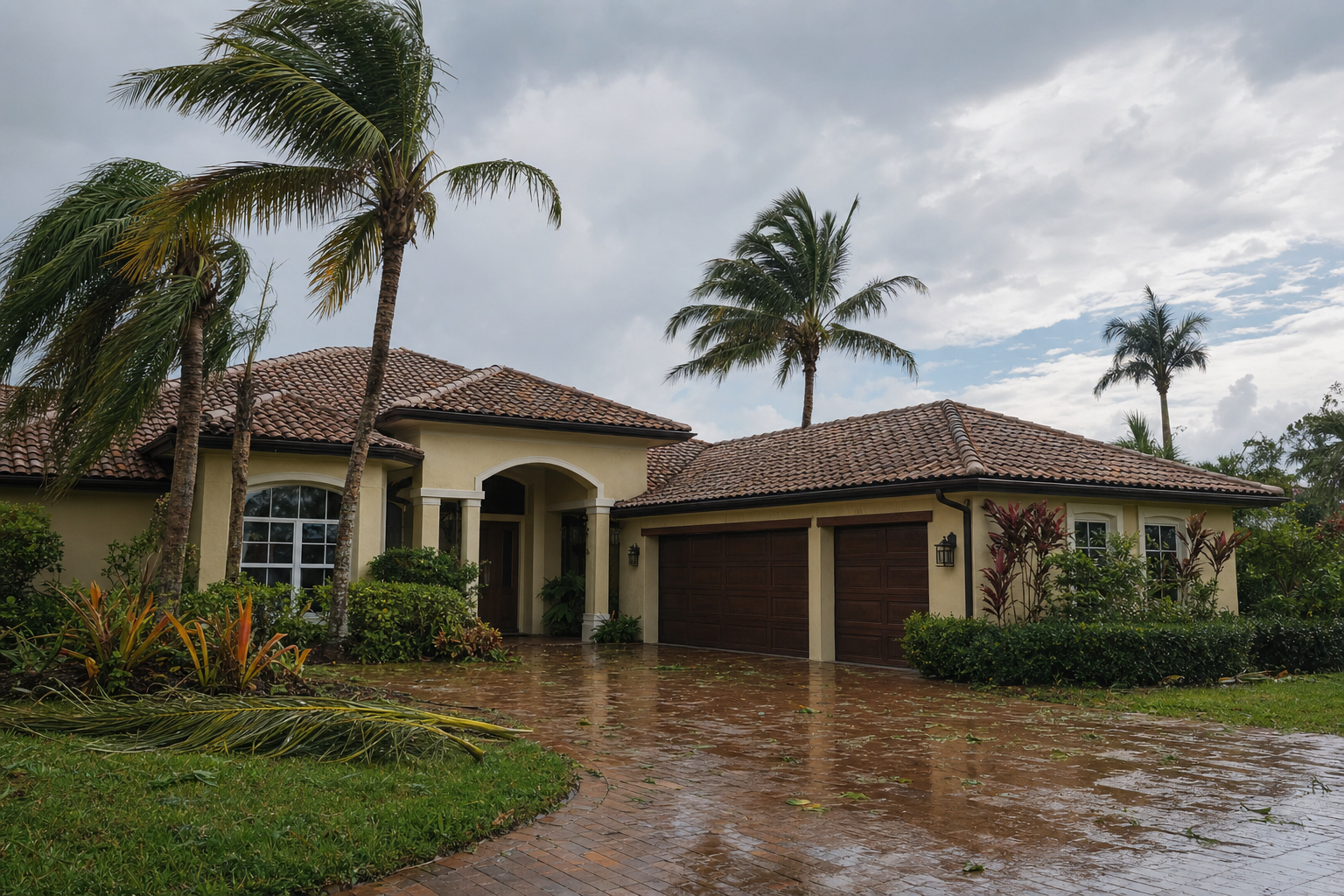
South Florida hurricane roof damage is not always obvious from the street. A roof can look intact after the wind dies down while cracked tile, lifted shingles, loosened flashing, or wind-driven rain entry points are already creating problems. That matters for homeowners in Miami-Dade County, Broward County, Palm Beach County, and Monroe County, where roof systems take year-round punishment from sun, salt air, humidity, and hurricane-season wind. The Atlantic hurricane season officially runs from June 1 through November 30, but the best time to understand your roof’s condition is before or immediately after heavy weather, while details are still fresh. [1]
Why South Florida Hurricane Roof Damage Looks Different
South Florida roofs are built for a tough environment, but hurricane conditions stress every weak point. A tropical storm has sustained winds of 39 to 73 mph, while a hurricane begins at 74 mph on the Saffir-Simpson Hurricane Wind Scale. [2] Wind speed is only part of the story. The National Weather Service lists tropical cyclone hazards as storm surge, inland flooding from heavy rain, destructive winds, tornadoes, high surf, and rip currents. [3]
For roofing, that means damage often comes from combinations: wind pressure, flying debris, sudden rain bands, clogged drainage, and water pushed sideways into roof penetrations. Roof penetrations are vents, pipes, skylights, chimneys, and other openings through the roof system. South Florida hurricane roof damage often starts at roof edges, penetrations, flashing, valleys, ridge areas, and underlayment exposure.
A roof that is older, poorly repaired, missing fasteners, or already cracked from UV exposure is more likely to show storm damage first. South Florida hurricane roof damage is also material-specific. Tile roofs and asphalt shingle roofs fail in different ways, so a proper inspection should look beyond “missing pieces.” For homeowners comparing storm damage roofing South Florida options, the first step is a clear roof condition review, not a guess from the driveway.
Tile Roof Damage After a Hurricane or Tropical Storm
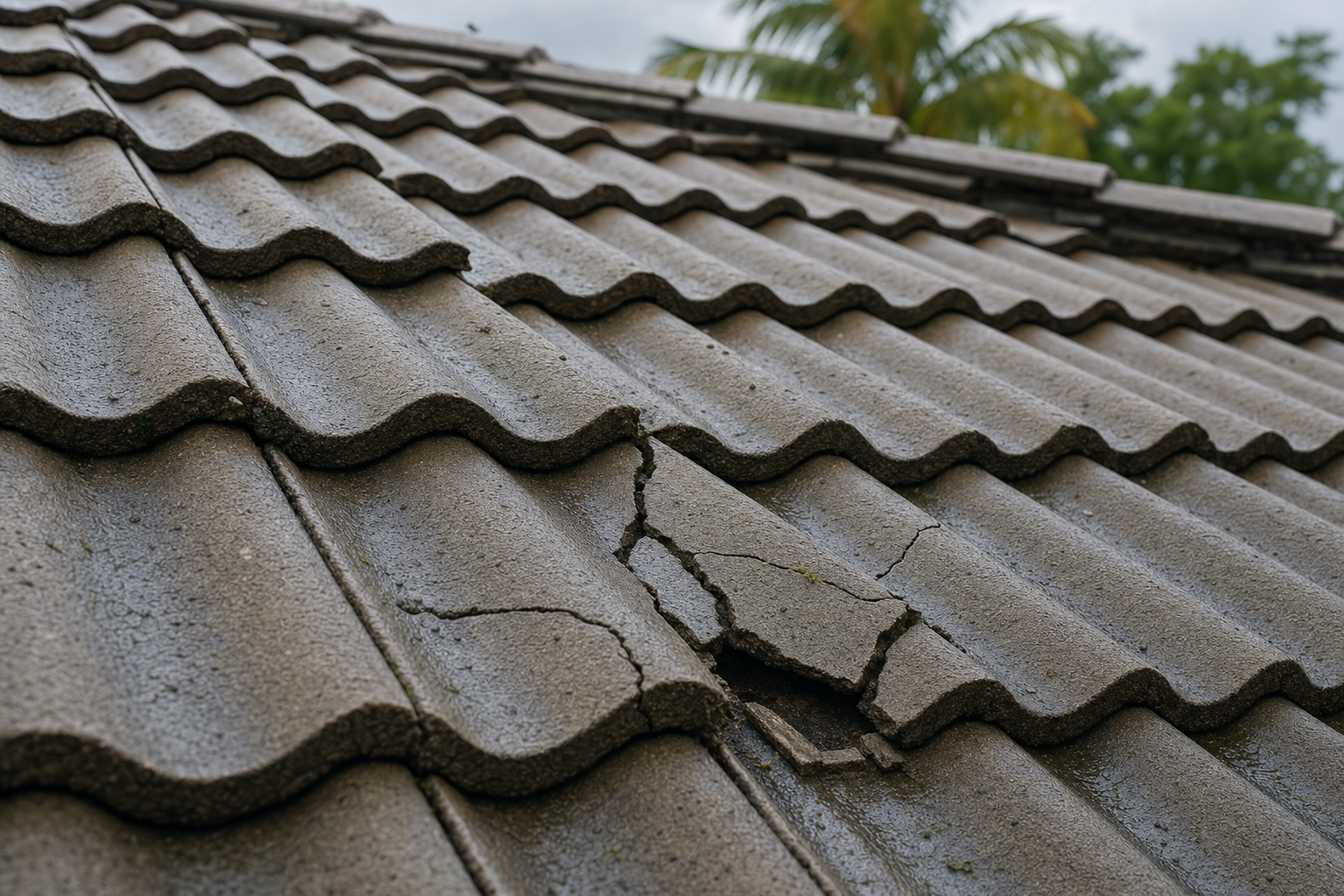
Concrete and clay tile roofs are common across Miami and the surrounding counties because they handle heat well and match the local architecture. After a storm, the visible tiles are only one layer of the system. South Florida hurricane roof damage on tile roofs can expose the underlayment even when most surface tiles remain in place. Underlayment is the water-shedding layer beneath roof tiles or shingles, and IBHS identifies underlayment as a key layer between the roof deck and roof covering. [4]
Common signs of tile roof storm damage include:
- Cracked, chipped, or displaced tiles
- Broken ridge caps
- Tiles that shifted but did not fully fall off
- Exposed underlayment
- Loose hip and ridge mortar
- Debris impact marks
- Water stains on ceilings or attic decking
A single broken tile may seem minor, but tile roofs depend on the underlayment beneath them to shed water. If wind lifts tiles or debris cracks them, rain can reach the layer that actually protects the home. On older South Florida tile roofs, the underlayment may already be aged from heat and moisture, even when the surface tiles still look serviceable. [5]
Shingle Roof Damage After High Wind and Wind-Driven Rain
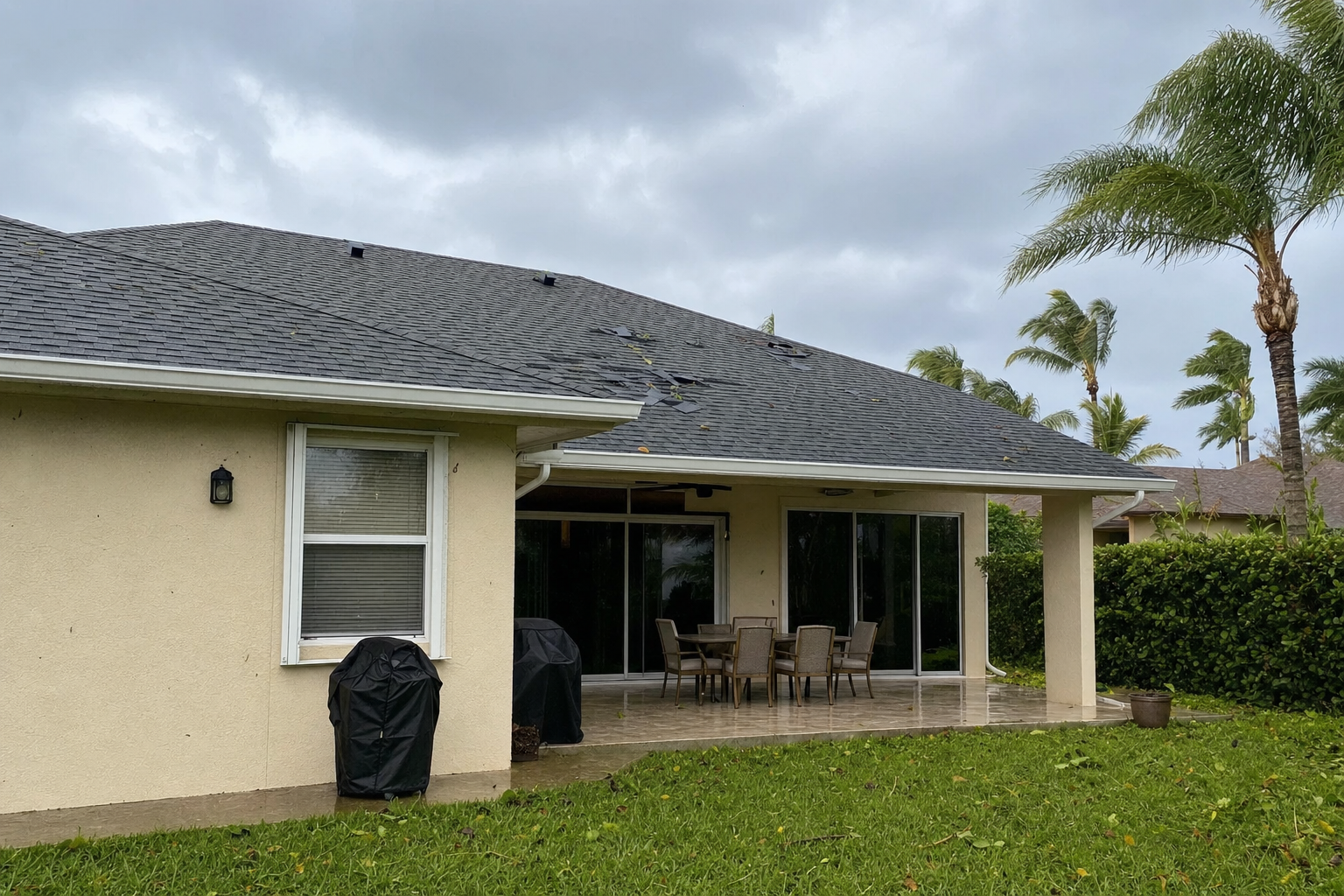
Architectural asphalt shingles can perform well when installed as a complete system, but shingle roof wind damage is not always dramatic. You may not see bare decking or large missing sections. Instead, look for subtle changes that suggest the seal strips, fasteners, or shingle edges were stressed.
Watch for:
- Lifted or curled shingle tabs
- Missing shingles near ridges, valleys, or roof edges
- Creased shingles from wind uplift
- Granule loss collecting in gutters or downspouts
- Exposed nail heads
- Damaged flashing around vents, walls, and chimneys
- Interior moisture spots after heavy rain
Wind-driven rain is rain pushed sideways by storm winds into openings ordinary rain may not reach. A wind-driven rain roof leak can start around small openings that ordinary vertical rain would not reach. That is why a roof may leak only during a tropical system, then appear dry during a normal afternoon storm. Wind-driven rain can enter small roof openings that may stay dry during ordinary vertical rainfall.
For South Florida homeowners, the age of the roof matters too. Florida law says that for a roof at least 15 years old, an insurer must allow an authorized roof inspection before requiring replacement as a condition of issuing or renewing a homeowner policy. [6] Duke Contractors LLC is a licensed roofing contractor based in Doral, FL, not a public adjuster, so the roofing role is to inspect the roof, document visible conditions, and provide clear repair or replacement options.
Tile vs. Shingle Storm Damage: What Changes?
Tile roof storm damage and shingle roof wind damage can both lead to leaks, but they usually leave different clues. Tile roofs often show cracked, shifted, or broken tiles, exposed underlayment, ridge-cap issues, or impact marks from debris. Shingle roofs often show lifted tabs, creasing, missing shingles, granule loss, and stressed edges near ridges, valleys, and roof perimeters.
The practical question is whether the damage is cosmetic or functional. Cosmetic wear affects appearance. Functional roof-system damage affects how the roof sheds water, resists wind, or protects the deck beneath the roof covering. South Florida hurricane roof damage should be evaluated with that distinction in mind, especially after repeated storms, past repairs, or visible movement in the roof surface.
What to Document Safely After the Storm
A safe post-storm roof check should begin from the ground, not from a wet or damaged roof surface. Do not climb onto a wet or damaged roof. Start from the ground and from inside the home. South Florida hurricane roof damage documentation is most useful when photos are clear, dated, and focused on visible conditions.
Take clear photos of:
- Missing, cracked, or shifted roofing materials
- Debris impact areas
- Ceiling stains or active drips
- Attic moisture, if safely accessible
- Fallen branches or objects near the home
- Damaged gutters, soffit, fascia, or roof vents
Also write down the storm date, neighborhood, and what you noticed first. Documentation helps create a clean record of roof conditions, whether you need a repair estimate, a maintenance plan, permit-ready scope, or information for your own policy file.
When a Roof Inspection Makes Sense
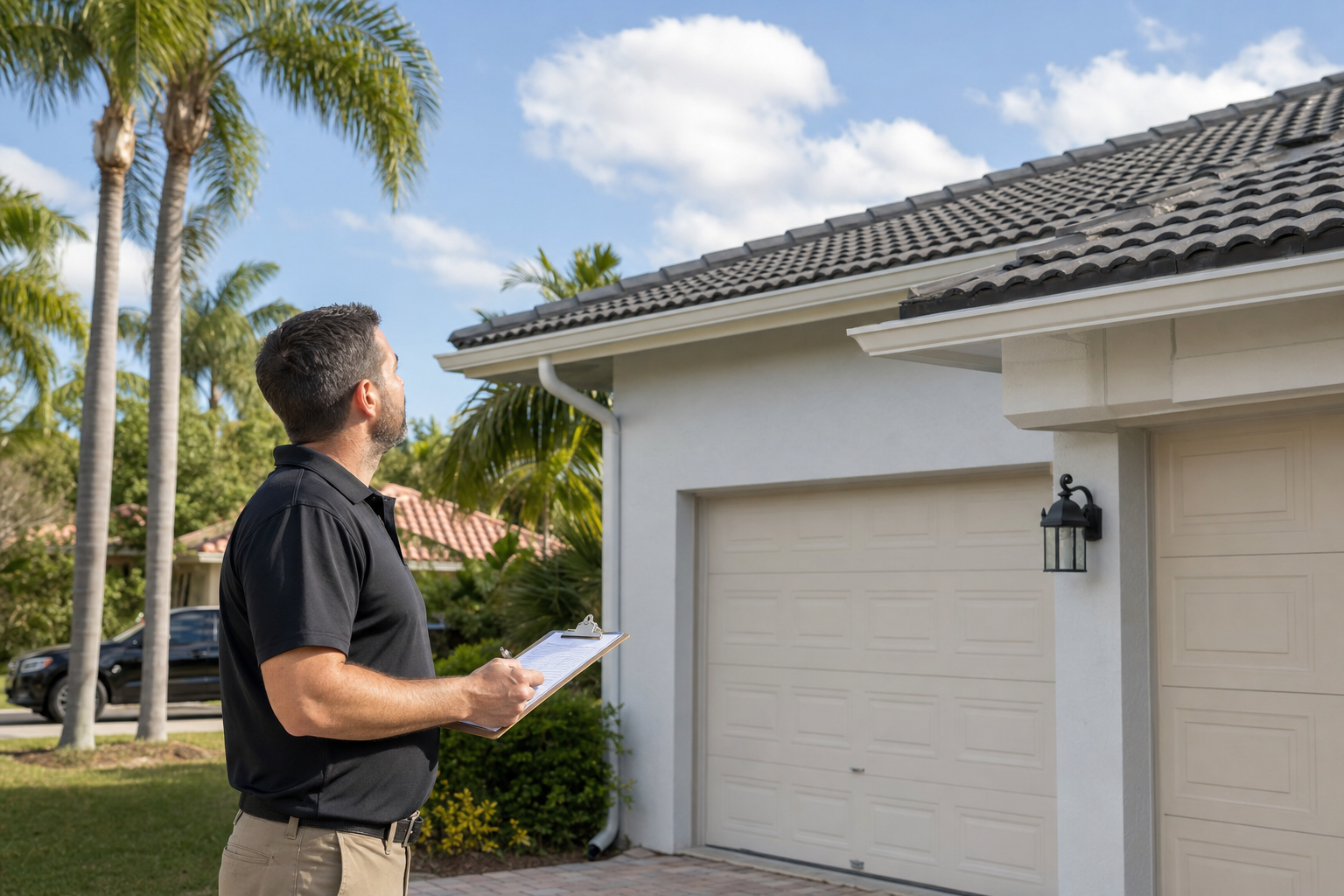
Book a professional roof inspection if you see missing materials, interior stains, loose flashing, displaced tiles, or granules in the gutters. It also makes sense after a strong nearby storm if your roof is older, has had past repairs, or has not been inspected before hurricane season. For homeowners searching for a Miami roof inspection or hurricane roof inspection Miami support, the goal is to confirm what is actually happening on the roof system before small signs become larger repairs.
A good inspection should separate cosmetic wear from functional damage. It should also identify whether the issue is isolated repair work or a larger roof-system concern. For tile roofs, that includes checking tile movement and underlayment exposure. For shingle roofs, it includes checking uplift, creasing, edge conditions, and penetrations.
FAQ
What are the first signs of South Florida hurricane roof damage?
Common signs of South Florida hurricane roof damage include cracked or shifted tiles, lifted shingles, damaged flashing, granules in gutters, ceiling stains, attic moisture, and debris impact marks.
Can a tropical storm damage a roof even if it is not a hurricane?
Yes. Tropical storms can produce sustained winds below hurricane strength, but wind-driven rain, debris, and repeated gusts can still damage shingles, tiles, flashing, and roof penetrations. South Florida hurricane roof damage can happen during a tropical storm when roof edges, flashing, or older materials are already vulnerable.
Can wind-driven rain cause a roof leak without missing shingles or tiles?
Yes. Wind-driven rain can push water into small openings around flashing, roof edges, vents, valleys, and lifted roofing materials, even when the roof does not have obvious missing shingles or broken tiles.
Should I climb on my roof after a hurricane?
No. Homeowners should document visible damage from the ground and inside the home, then schedule a professional inspection if warning signs appear.
Is tile roof storm damage different from shingle roof storm damage?
Yes. Tile roofs often show cracked, shifted, or broken tiles and underlayment exposure, while shingle roofs often show lifting, creasing, granule loss, or missing tabs.
What is wind uplift?
Wind uplift is upward pressure from moving air that can pull at shingles, tiles, fasteners, and roof edges. It often shows up as lifted shingle tabs, shifted tiles, loosened ridge areas, or damaged perimeter details.
When should I schedule a hurricane roof inspection in South Florida?
Schedule an inspection after heavy wind, debris impact, roof material movement, interior moisture, or if the roof is older or previously repaired. Duke Contractors can help homeowners evaluate roof repair options or roof replacement planning based on the actual condition of the roof.
Get a South Florida Hurricane Roof Damage Inspection
If your South Florida roof took heavy wind, debris, or wind-driven rain, document what you can see from a safe place and schedule a free roof inspection with Duke Contractors. Our team serves Miami-Dade County, Broward County, Palm Beach County, Monroe County, and the surrounding South Florida area with practical roofing estimates, clear documentation, and repair or replacement guidance based on the actual condition of your roof. South Florida hurricane roof damage is easier to address when the inspection starts with visible evidence, material-specific checks, and a clear explanation of what needs attention.
References
- NOAA Ocean Service, https://oceanservice.noaa.gov/facts/hurricane.html ↩
- NOAA National Hurricane Center, https://www.nhc.noaa.gov/aboutsshws.php ↩
- National Weather Service, https://www.weather.gov/wrn/hurricane-hazards ↩
- IBHS, https://ibhs.org/roofing-roadmaps/ ↩
- IBHS, https://ibhs.org/roof-roadmaps-copy/ ↩
- Florida Statutes Section 627.7011, https://www.flsenate.gov/Laws/Statutes/2024/627.7011 ↩
