By late May, many Miami-Dade, Broward, Palm Beach, and Monroe County homeowners start thinking about generators, shutters, and supplies. The roof often gets attention last, even though it is one of the first systems tested by wind-driven rain, uplift pressure, clogged drainage, and loose materials. A pre-season Miami roof inspection is not about panic. A Miami roof inspection gives homeowners a practical way to find weak points, document roof condition, and plan repairs before storm activity increases. It is about knowing the roof’s weak points before the first serious storm watch, taking clear photos, and deciding what needs repair now versus what can be monitored. Atlantic hurricane season runs from June 1 through November 30, but storms can form outside those dates, so the best time to inspect is before the season gets active. [1]
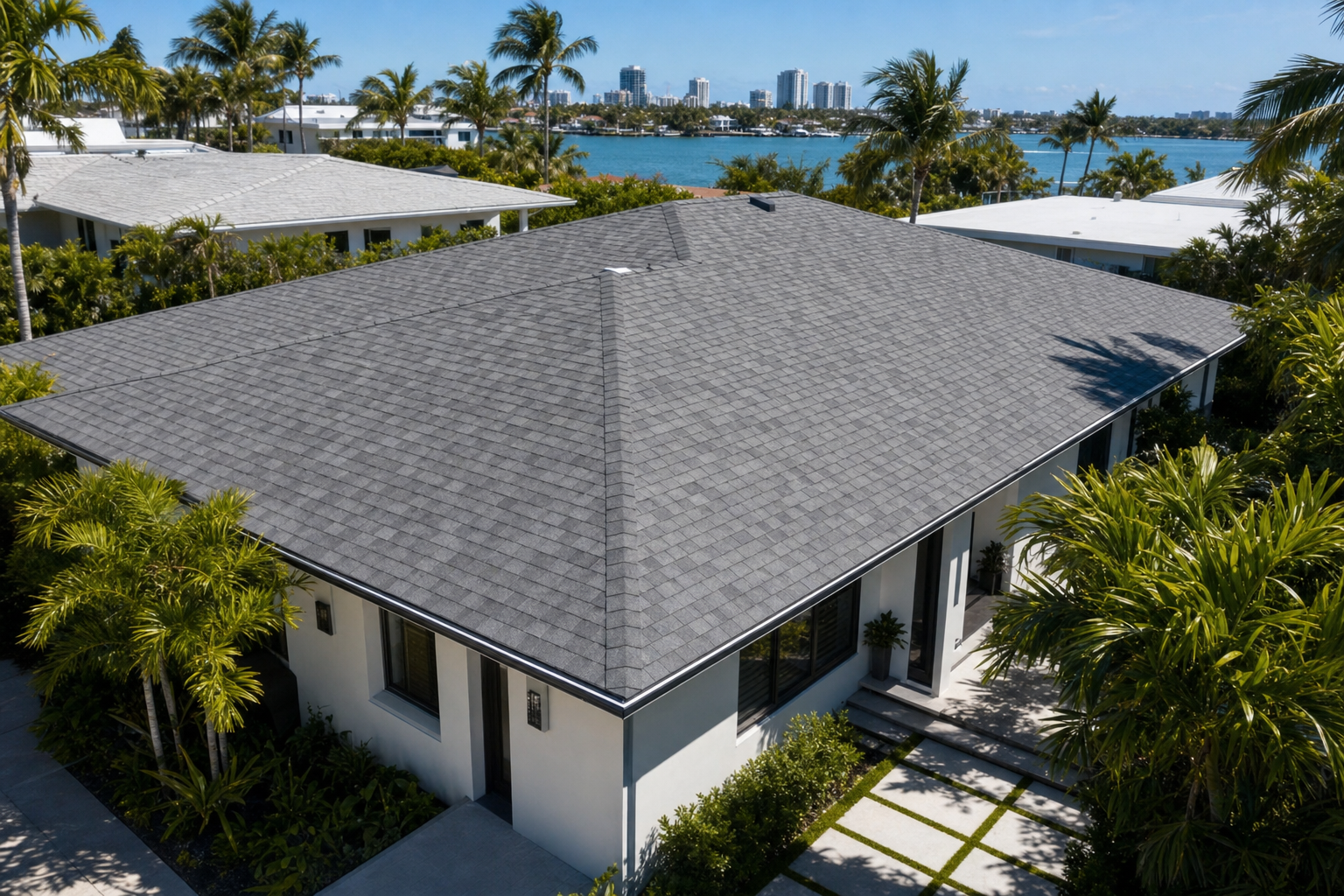
Start Your Miami Roof Inspection With the Areas Most Likely to Fail First
A good pre-season roof check should focus on the points where water and wind already have a way in. In South Florida, the roof may look fine from the driveway while small defects are forming around penetrations, flashing, valleys, tile overlaps, fasteners, or the roof edge.
Look for:
- Lifted, curled, cracked, or missing shingles
- Slipped, cracked, or broken tile pieces
- Rusted, backed-out, or exposed fasteners on metal roofing
- Loose ridge caps or hip caps
- Open seams around vents, skylights, chimneys, and roof-to-wall transitions
- Staining under soffits or fascia
- Soft spots, sagging areas, or uneven roof planes
- Gutters that overflow, pull away, or drain toward the home
Wind damage is not always dramatic. Wind uplift is pressure that can lift roof edges, tabs, panels, fasteners, or attachments during high winds. Uplift can loosen edges, tabs, fasteners, or underlayment before a homeowner sees active leaking. Underlayment is the waterproofing layer beneath shingles, tile, or metal roofing. That matters because a roof that is already compromised before a storm can allow wind-driven rain, which is rain pushed under roof materials by storm winds, into the attic, ceiling assembly, insulation, and interior walls.
If you can safely see the roof from the ground, take wide photos of each roof plane. Do not climb onto the roof to inspect it yourself. A licensed roofing contractor can evaluate the surface, edges, flashing, drainage, and attic signs without putting the homeowner at risk. For homeowners comparing repair needs with broader residential roofing services in Miami, Duke Contractors can help separate urgent issues from items that can be monitored.
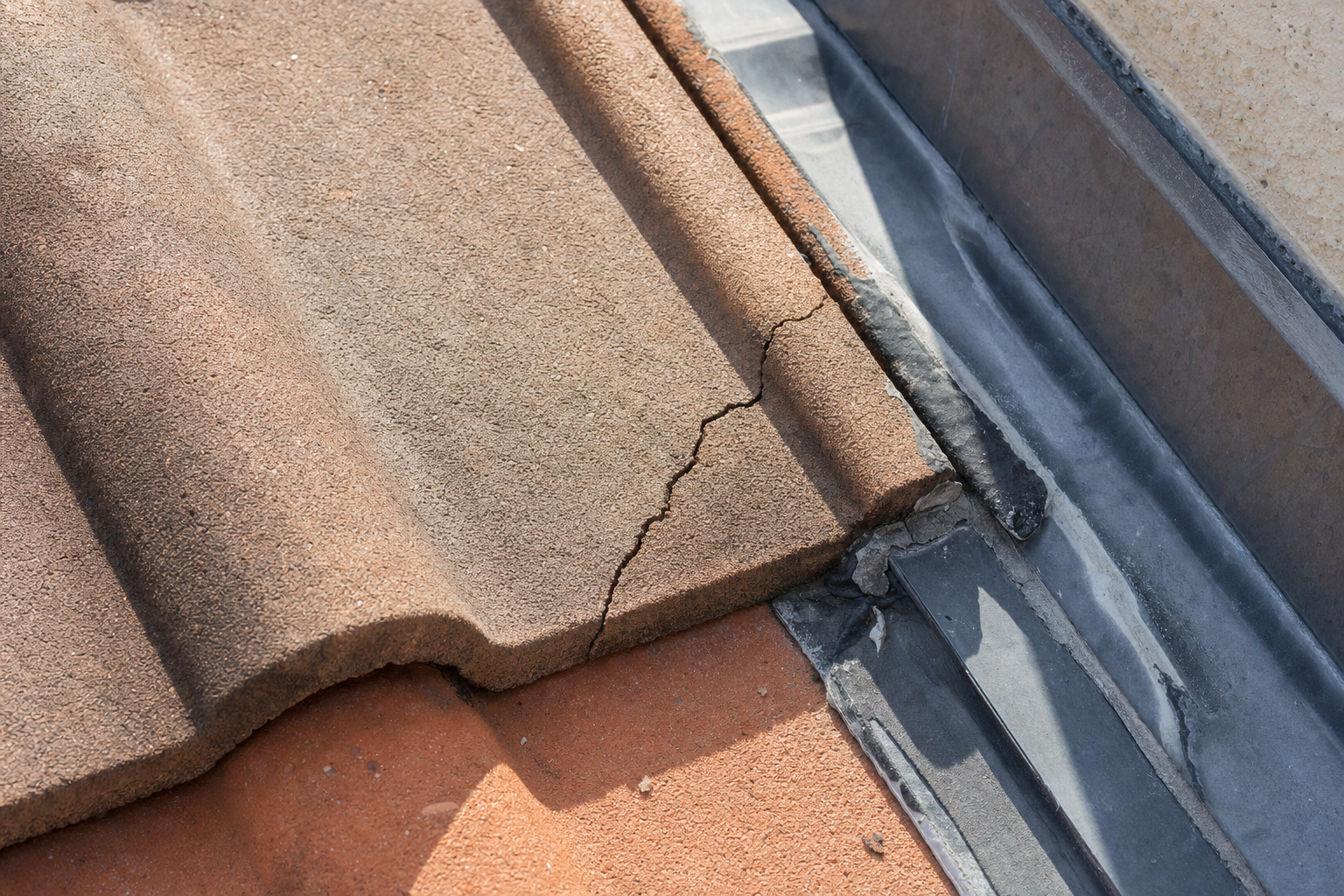
What a Miami Roof Inspection Should Include
A Miami roof inspection should check roof edges, flashing, valleys, penetrations, drainage, and attic moisture signs. Roof penetrations are vents, pipes, skylights, chimneys, or other openings through the roof surface.
Before the contractor arrives, gather anything that helps explain the roof’s history: prior repair invoices, permit records, roof age, photos of past leaks, insurance documents, and notes about rooms where stains or moisture have appeared. If the home has a flat or low-slope roof, drainage deserves extra attention before hurricane season because ponding water, clogged scuppers, blocked gutters, and slow roof drains can turn heavy rain into a leak source.
Miami-Dade County and Broward County are part of Florida’s High-Velocity Hurricane Zone, often called HVHZ, so roof condition, attachment details, and code history matter more than they might in calmer markets. A South Florida roof inspection should be practical, not alarmist: identify visible concerns, document what is found, and explain whether the next step is maintenance, roof leak repair, wind damage roof repair, or a larger roofing estimate.
A roofing contractor inspection is not the same as an insurance inspection. The contractor documents roof condition and repair needs. The insurance carrier determines policy coverage, underwriting decisions, deductibles, exclusions, deadlines, and claim outcomes.
Check by Roof Type: Shingle, Tile, and Metal
Different South Florida roof systems fail in different ways. A useful Miami roof inspection is specific to the material, not a generic glance at the roofline.
Asphalt Shingle Roof Inspection
For asphalt shingle roofs, check for missing tabs, lifted corners, exposed nails, granule loss, brittle edges, and dark streaking where water may be lingering. Shingles near roof edges, valleys, and penetrations deserve extra attention because wind pressure and water flow concentrate there.
Tile Roof Inspection
For tile roofs, look for cracked tiles, displaced tiles, loose ridge caps, missing mortar, exposed underlayment, and debris collecting in valleys. Tile is durable, but the waterproofing system below the tile still matters. A broken tile can expose underlayment to sun, salt air, and repeated rain.
Metal Roof Inspection
For metal roofs, check seams, clips, fasteners, sealant points, edge details, and any corrosion near coastal exposure. In Miami-Dade, Monroe County, and other coastal areas, salt air can accelerate wear around exposed metal components. The roof may still be serviceable, but small corrosion points should be documented before storm season.
This is where a professional roof inspection can help a homeowner separate cosmetic wear from risk. Not every flaw means the roof needs replacement. Some findings call for a targeted repair, some call for monitoring, and some require a deeper look at the roof deck or underlayment.
Document the Roof Before There Is a Claim Question
Good documentation starts before damage happens. If a storm affects your neighborhood later, pre-season photos can help show what changed. A Miami roof inspection also gives homeowners a clearer baseline for roof storm damage documentation if wind, debris, or water intrusion becomes a question later.
Create a simple roof file with:
- Photos from all four sides of the home
- Close-ups of visible wear, staining, loose materials, or prior repairs
- Receipts for recent roof repairs or maintenance
- Permit records if the roof was replaced
- Inspection reports from licensed contractors
- Insurance policy declarations and deductible details
- Notes on the roof’s approximate age and material
After a storm, take new photos from the same angles if it is safe to do so. Photograph the roofline, ceilings, attic signs, fallen debris, gutters, fencing, and any water intrusion. Avoid temporary repairs that remove evidence before the damage is documented, unless you need to prevent further water entry. If emergency tarping or mitigation is needed, photograph the condition before and after. For post-storm roof concerns, homeowners can also review storm damage roofing in Miami resources before deciding what to document next.
A roofing contractor can document observed roof conditions, but homeowners should still speak directly with their insurance carrier about policy terms, coverage, deadlines, and claim requirements. Avoid anyone who promises a specific insurance outcome. No contractor can guarantee approval, coverage, or payment.
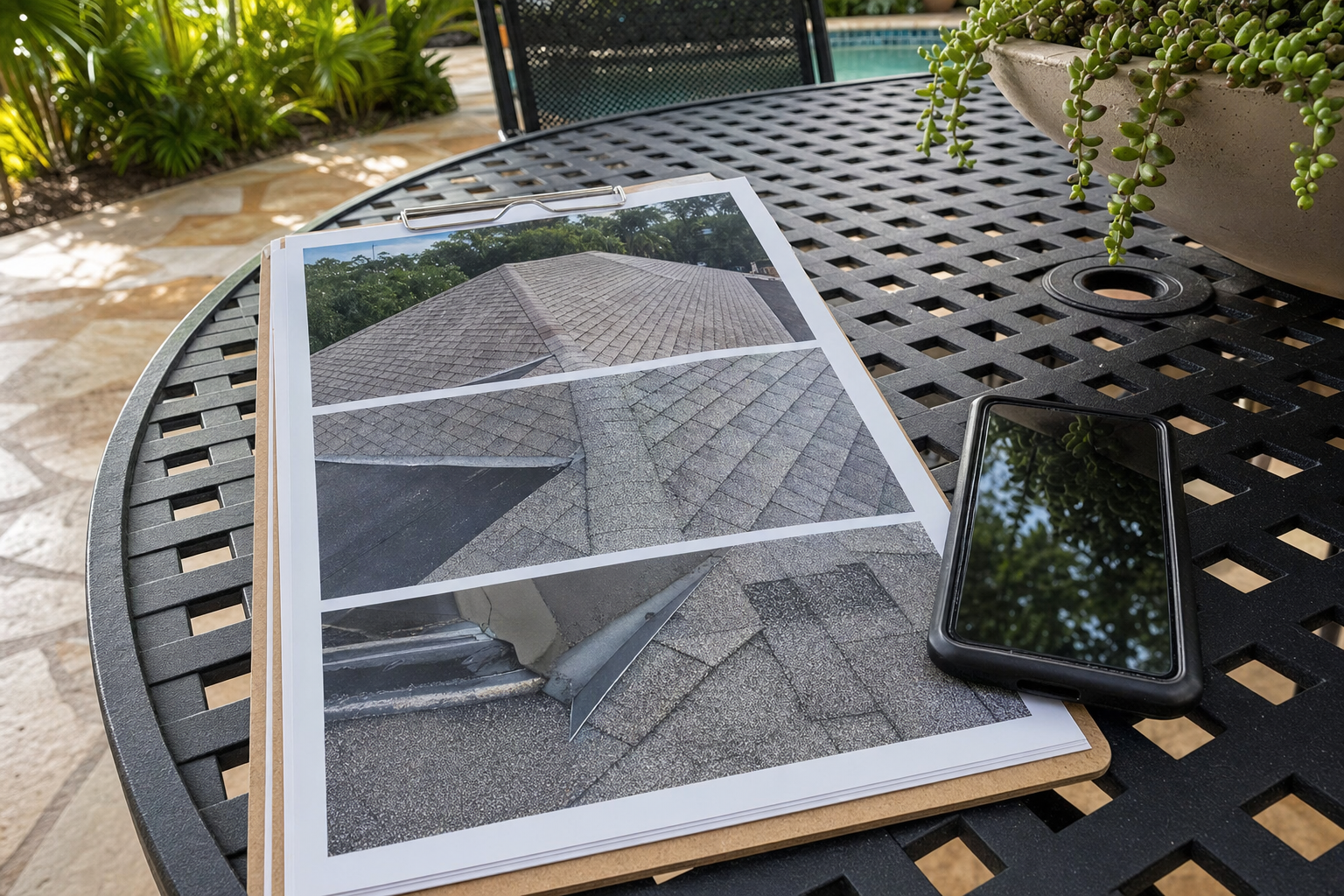
Know the Florida Roof-Age Issue Before Renewal Season
Roof age matters in Florida insurance conversations, but the rules are often misunderstood. Florida’s consumer insurance guidance says an insurer cannot refuse to issue or renew a homeowners policy solely because a roof is less than 15 years old, and if a roof is 15 years old or older, the insurer must allow an inspection before requiring replacement as a condition of issuing or renewing coverage. [2]
Florida Statute 627.7011 also states that when an authorized inspection shows a roof has five years or more of useful life remaining, an insurer may not refuse to issue or renew solely because of roof age. [3]
That does not mean every older roof will pass underwriting. It means documentation matters. Florida roof-age documentation matters most when inspection findings connect age, condition, and remaining useful life. If your roof is approaching 15 years or older, a pre-season Miami roof inspection can help you understand the actual condition before a renewal notice, storm warning, or buyer inspection creates pressure.
For South Florida homeowners with 20-year-old roofs, the inspection should be more than a surface check. It should consider roof covering condition, attachment concerns, flashing, active leaks, decking signs, prior repairs, and whether the roof has enough remaining service life to justify repair versus replacement planning.
Understand Wind, Uplift, and Wind-Driven Rain
Hurricane categories are based on sustained wind speed, not every possible hazard. Category 1 hurricane winds begin at 74 mph. The National Hurricane Center defines Category 1 hurricane winds as 74-95 mph and Category 3 “major hurricane” winds as 111-129 mph. [4]
For a roof, the concern is not only direct impact from debris. Wind can create uplift pressure, especially at edges, corners, ridges, and overhangs. Once a roof covering lifts, wind-driven rain can enter beneath the surface. Wind-driven rain can enter beneath lifted roof materials before a ceiling stain appears. That water may travel before showing up as a ceiling stain, which is why homeowners sometimes see interior damage away from the roof defect.
Impact damage is different. It may come from branches, loose outdoor items, broken tile pieces, or flying debris. After a storm, a contractor should document both the visible damage and the surrounding roof condition. The difference matters because a roof with long-term wear, old repairs, and fresh storm damage needs a clearer explanation than “the hurricane damaged it.”
The practical pre-season question is simple: where could wind or water get a head start?
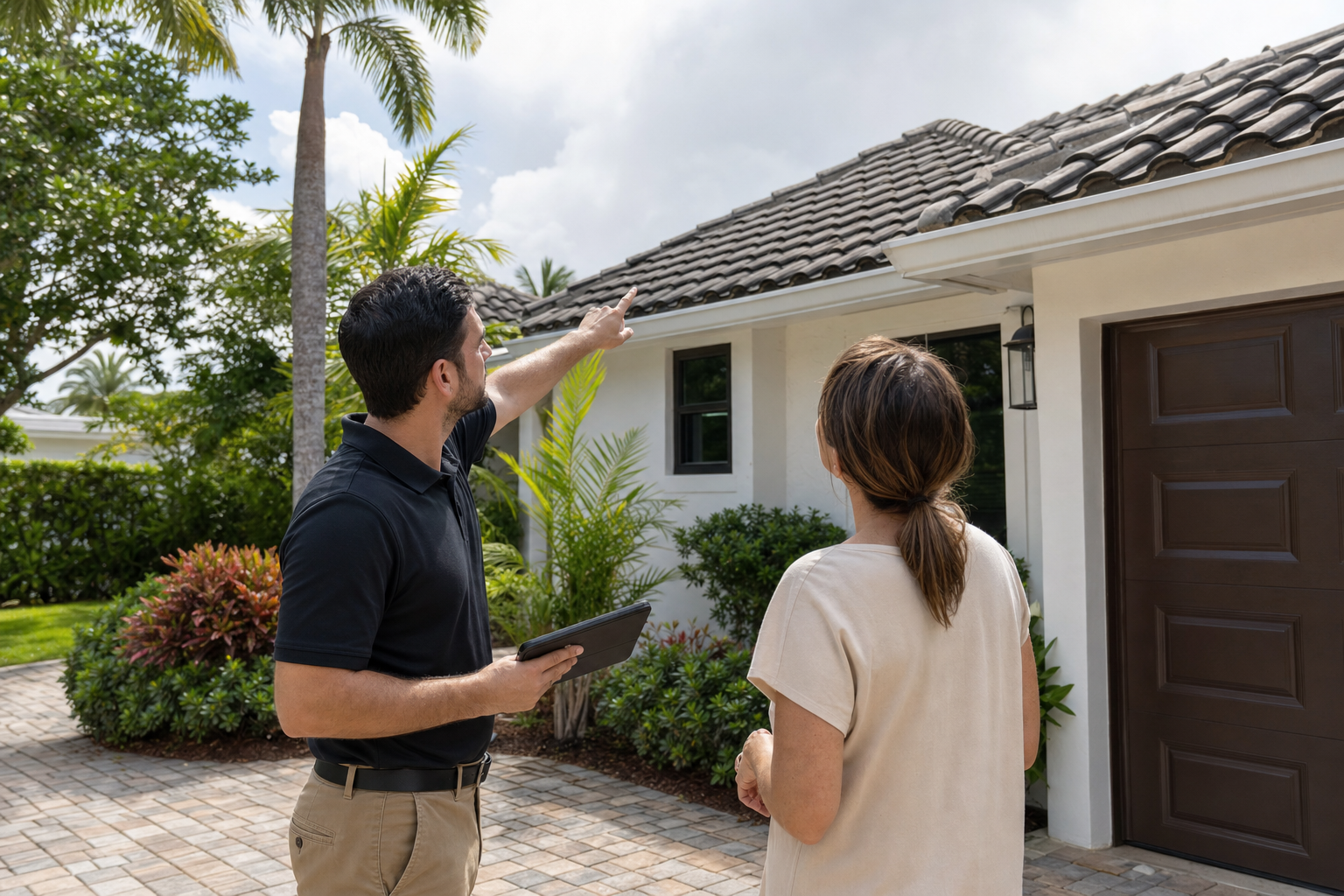
FAQ: Miami Roof Inspections Before Hurricane Season
What should a Miami roof inspection include before hurricane season?
A Miami roof inspection should include the roof covering, edges, flashing, valleys, penetrations, gutters, attic moisture signs, prior repairs, and photo documentation. The goal is to find weak points before wind-driven rain, debris, or heavy summer storms expose them.
Is a roof inspection the same as an insurance inspection?
No. A roofing contractor inspection documents roof condition and repair needs, while the insurance carrier determines policy coverage, underwriting decisions, deductibles, exclusions, and claim outcomes.
Why inspect the roof before June 1 in South Florida?
June 1 is the official start of Atlantic hurricane season, and early inspections leave more time for repairs before storm activity increases. If you miss that window, schedule as early in the season as possible and again after any significant wind event if you see leaks, debris impact, missing materials, or new ceiling stains.
What roof types should be checked differently in Miami?
Shingle roofs need tab, nail, edge, and granule checks. Tile roofs need cracked tile, ridge cap, valley, and underlayment checks. Metal roofs need seam, fastener, sealant, edge, and corrosion checks, especially near coastal exposure.
Should homeowners climb on the roof to inspect it?
No. Homeowners should photograph visible conditions from safe locations and let a licensed roofing contractor inspect the roof surface. Roof surfaces can be slick, brittle, steep, or unstable, especially on older tile, shingle, metal, flat, or low-slope systems.
Closing CTA
If your South Florida roof is aging, showing signs of wear, or has not been checked before hurricane season, schedule a free consultation with Duke Contractors. Our team can complete a Miami roof inspection for homes in Miami-Dade, Broward, Palm Beach, or Monroe County, document visible conditions clearly, and help you understand practical repair or replacement options before the weather makes the decision for you. Homeowners in Doral and across South Florida can schedule a roofing estimate when they need a clear next step before storm season.
References
